
Side-by-Side Comparison: All Three Printing Methods
| Characteristic | Block Print | Screen Print | Digital Print |
|---|---|---|---|
| Process | Hand-carved wooden blocks dipped in dye, stamped repeatedly by hand | Ink pushed through a mesh screen onto fabric using squeegees | Inkjet printer sprays pigment directly onto fabric from a digital design file |
| Human involvement | Very high — skilled artisan controls every impression | Moderate — machine-assisted but requires setup and operation | Low — mostly automated once the digital file is prepared |
| Color precision | Imprecise — slight variations in every repeat are part of the beauty | High — consistent color registration within color limits | Very high — photographic quality, unlimited colors |
| Colors possible | Typically 2–5 colors; more is possible but rare and costly | Up to 10–12 colors with spot colors; gradient is limited | Unlimited — any photograph or complex design is printable |
| Price | Highest — labor intensive, slow | Medium — efficient once set up | Lowest to medium — very low per-unit cost for large runs |
| Authenticity for ethnic wear | Highest — traditional Indian craft heritage | Medium — widely used; not inherently traditional | Lower — very new technology; no traditional heritage |
| Washfastness | Varies by dye type — natural dyes can fade; chemical dyes are more stable | Generally good with quality inks | Varies — pigment prints can crack; reactive digital prints are better |
| Environment impact | Low to medium depending on dye type; natural dye versions are most sustainable | Medium — uses significant water and chemicals in cleanup | Medium — lower water use than screen print but chemical inks |
Block Printing: The Heritage Craft
Block printing is practiced across India but is most famously associated with Rajasthan (Sanganer, Bagru), Gujarat (Ahmedabad, Kutch), and West Bengal (Murshidabad). Each region has its own motif vocabulary and color palette. The slight imperfection in a block-printed fabric — where the repeat is not perfectly aligned, where the color has a slight variation — is not a defect but the fingerprint of human craft. This is what makes each block-printed piece unique.
How to Identify Genuine Block Print
- Look at the repeat: In genuine block print, the repeat is slightly imperfect — the spacing varies by a millimeter or two, and individual motifs show slight variations in ink density
- Check the reverse side: Hand block-printed fabric typically shows dye penetration on the reverse side, though not as vivid as the front
- Color boundaries: Genuine block print has slightly rough, slightly uneven color edges — not laser-sharp outlines
- Misregistration: Where two colors meet, there may be a very slight overlap or gap — this is hand-blocking artifact, not a defect
- If every single repeat is perfectly identical in color, spacing, and outline — it is not hand block print; it is likely screen print misrepresented as block
Screen Printing: The Industrial Standard
Screen printing (also called silk screen printing) is the dominant commercial printing method for Indian ethnic wear and is responsible for the majority of printed fabric sold in India today. It is not inherently inferior — some of the most beautiful printed sarees and kurtas are screen printed with excellent quality dyes. The problem arises only when screen-printed fabric is misrepresented as hand-printed or hand-blocked.
How to Identify Screen Print
- Perfect repeat: Every motif in a screen-printed fabric is identical — same size, same color density, same outline sharpness
- Sharp color edges: The color boundaries are clean and precise
- Flat color: Screen print creates flat, even color fields without the subtle variation of hand application
- Limited colors: Standard screen print typically uses spot colors that fill defined areas; gradients are difficult to achieve
- Reverse side: Screen print usually shows only faint color penetration on the reverse
Digital Printing: The New Technology
Digital printing on fabric has transformed what is possible in ethnic wear design. Complex photographic prints, watercolor effects, ombre gradients, and intricate multicolor floral designs that would be impossible with block or screen printing are all achievable with digital print. The technology is improving rapidly and quality digital print on natural fabrics can now be very high quality.
How to Identify Digital Print
- Photographic detail: Extremely fine lines, gradients, shading, and photographic-quality images that would be impossible by hand or screen
- Unlimited colors: Subtle color transitions, ombre effects, and thousands of colors used simultaneously
- Clean edges: As precise as screen print but with the ability to handle complex, non-repeating compositions
- Check the back: Digital print rarely shows significant dye penetration on the reverse side — the print is often mostly on the surface
- Price: High-quality digital print on silk or linen is more expensive than digital print on polyester or synthetic fabric
Price Guide by Printing Method
| Fabric + Print Method | Price Range (Kurta / Saree) | Value Indicator |
|---|---|---|
| Natural dye block print on cotton (genuine) | Rs. 800–3,000 kurta / Rs. 2,000–8,000 saree | Very high — sustainable craft, heirloom quality |
| Chemical dye block print on cotton | Rs. 400–1,500 kurta / Rs. 1,000–4,000 saree | High — still handcraft, durable |
| Screen print on cotton/georgette | Rs. 200–800 kurta / Rs. 500–2,000 saree | Medium — good quality at accessible price |
| Digital print on silk/linen | Rs. 500–2,000 kurta / Rs. 1,500–5,000 saree | Medium to high — quality depends on dye type |
| Digital print on polyester/art silk | Rs. 150–500 kurta / Rs. 300–1,000 saree | Low — mass market, disposable fashion |
What Is Better for Different Purposes?
| Purpose | Best Print Method | Reason |
|---|---|---|
| Heirloom piece / collector's item | Natural dye block print | Irreplaceable handcraft; unique piece; cultural heritage |
| Daily wear durability | Screen print with reactive dyes | Good washfastness and color retention over many washes |
| Complex floral or photographic design | Digital print | Only technique that can achieve photographic detail and complex gradients |
| Sustainable / eco-conscious | Natural dye block print | Lowest environmental impact when natural dyes are used |
| Budget-conscious festive wear | Screen print on cotton or georgette | Best quality-to-price ratio for festive use |
| Gift with cultural meaning | Block print from a specific region | Regional craft heritage makes the piece a cultural statement |
Who Should Buy
- Conscious shoppers who want to understand what they are paying for and whether the price is justified by the printing technique
- Collectors or saree enthusiasts who specifically seek genuine handcraft Indian textile traditions
- Online shoppers who cannot physically examine fabric and need techniques to identify printing methods from photos and seller descriptions
- Gift buyers who want to ensure they are giving an authentic handcrafted piece rather than a machine-printed one at artisan prices
Skip If
- You primarily buy ready-made garments from organized retail where the printing method is standardized and consistently labeled
- You are only concerned with visual appearance and color, not the production method — all three techniques can produce beautiful fabric
- You are buying for a one-time occasion where longevity and authenticity are not your primary concerns
Shop Printed Ethnic Wear
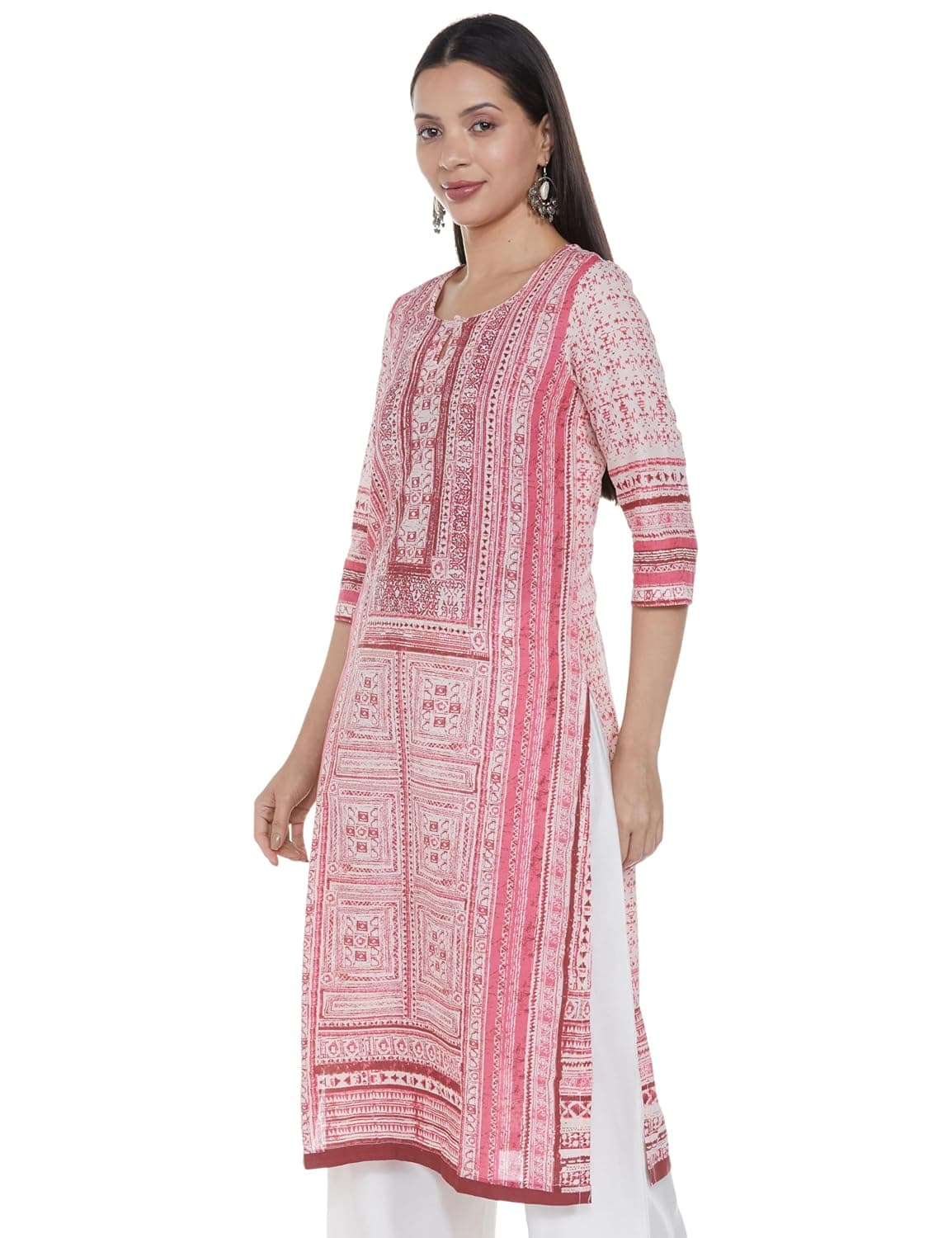 COD Available
biba
BIBA Women's Cotton Straight Printed Kurta
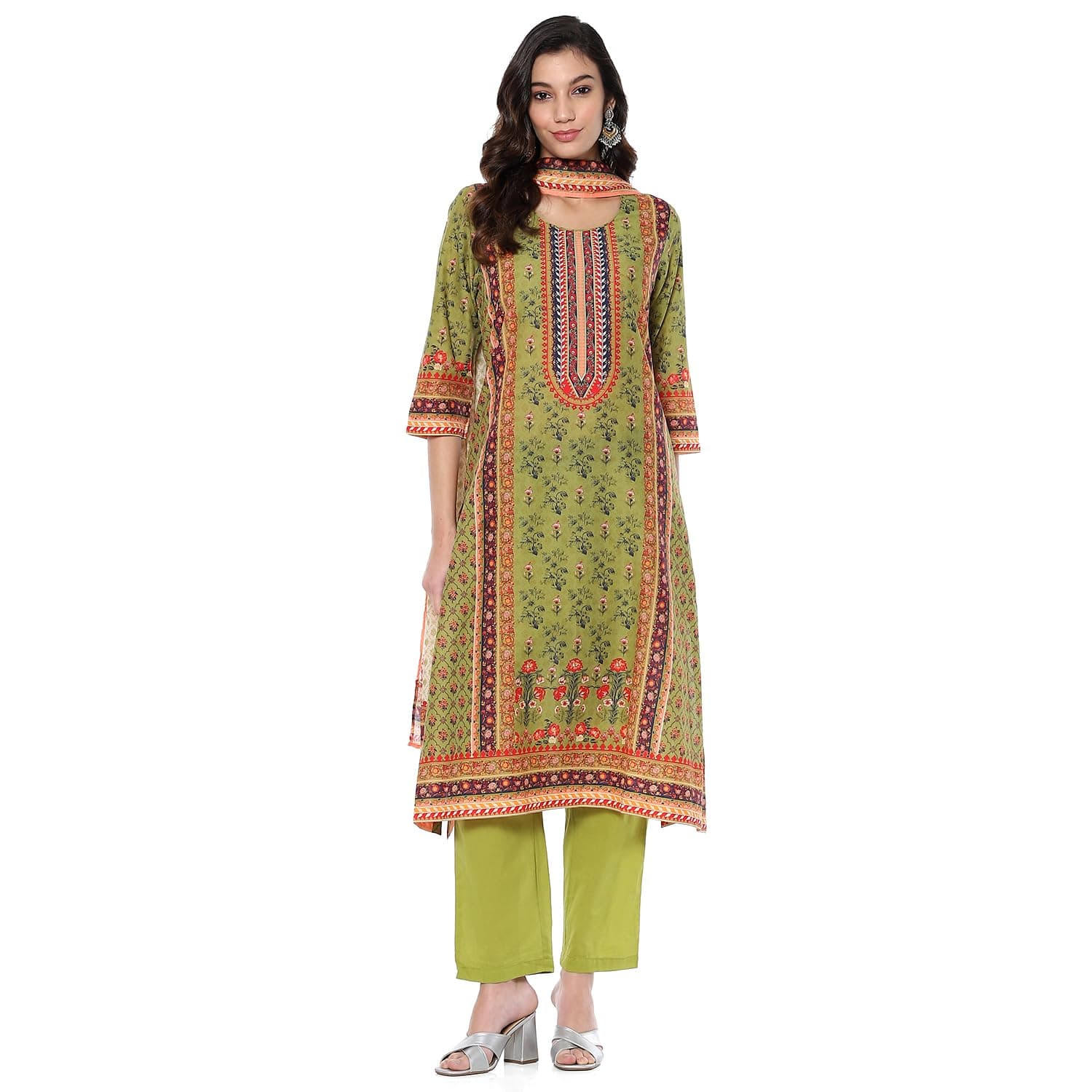 COD Available
biba
BIBA Women's Cotton Printed Kurta Set with Dupatta
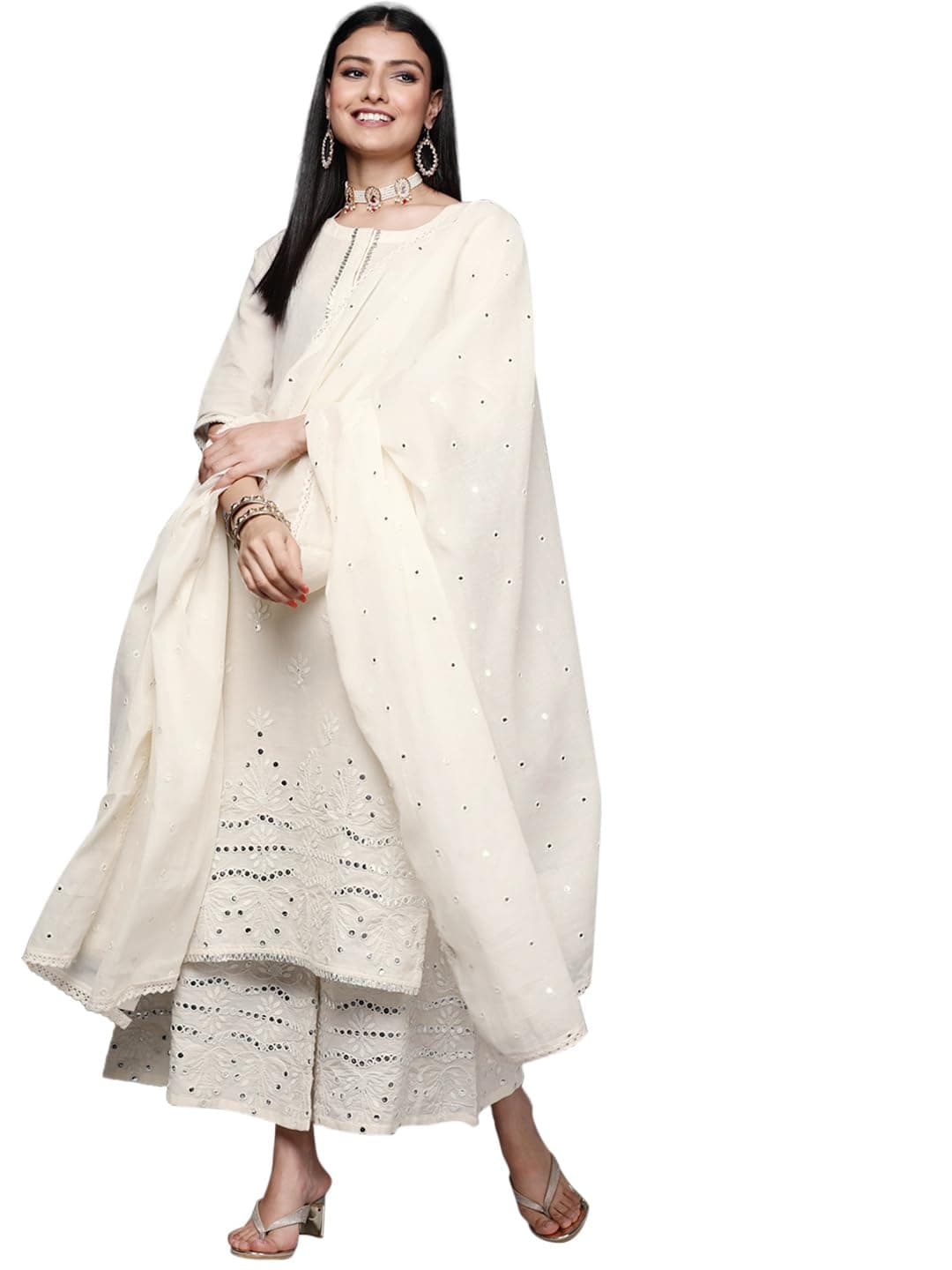 COD Available
libas
Libas Women's Embroidered Cotton Straight Kurta with Palazzos & Dupatta
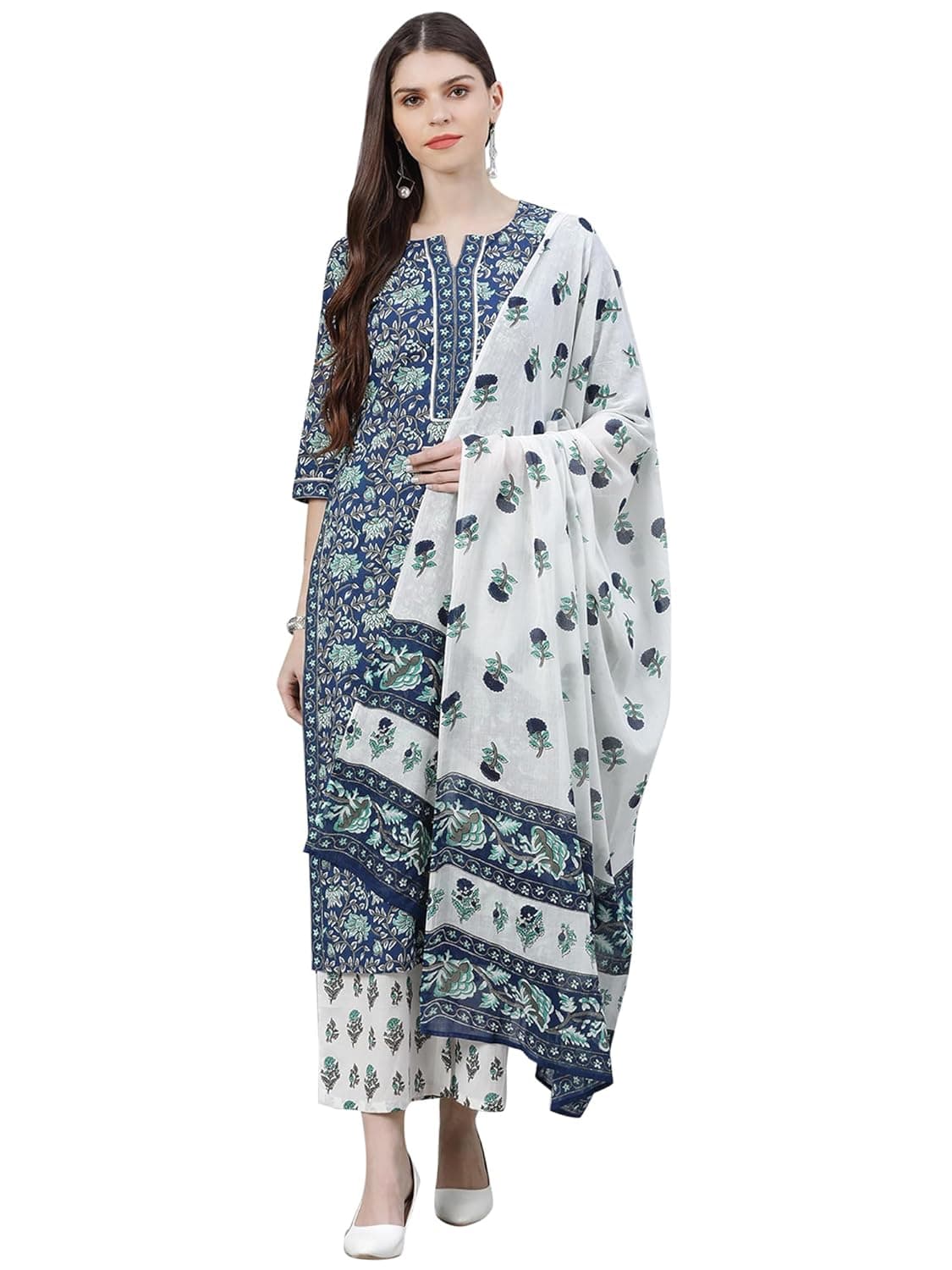 COD Available
libas
Libas Women's Cotton Printed Kurta Set Multicoloured
OUR VERDICT
Block print, screen print, and digital print are each excellent techniques for different purposes — none is inherently better than the others in all contexts. The problem is only when one is misrepresented as another. A beautifully executed screen-printed saree at an honest price is a better purchase than a poorly executed block print at an inflated 'artisan' premium. Know what you are buying, verify the printing method using the identification techniques in this guide, and pay a price that reflects the actual technique used. That is the most empowered approach to Indian ethnic textile shopping.