
After Every Wear: Immediate Care Steps
- Air the saree for 2–4 hours in a shaded, well-ventilated area immediately after wearing — do not fold and store while still warm from your body or slightly damp from perspiration
- Check for any stains or marks while the fabric is still fresh — fresh stains are always easier to treat than dried, set stains
- Gently shake out the saree to remove any dust or surface particles before folding
- Store the saree loosely folded in a clean muslin cloth — never fold tightly immediately after wearing
Washing Silk Sarees: When and How
Silk sarees do not need to be washed after every wear. A light cotton or georgette saree worn for a few hours may be refreshed by airing. Washing should only happen when the saree has visible sweat marks, stains, or has been worn in a high-activity setting.
Method 1: Professional Dry Cleaning (Recommended for All Zari Sarees)
Any silk saree with real zari (gold or silver metallic weaving) must be dry cleaned, not washed at home. Water and detergent can cause zari to tarnish, oxidize, or break down. Dry clean after every 3–5 wears for regular use, and always dry clean before long-term storage. Use a reputable dry cleaner who has experience with silk — tell them explicitly that it is a handwoven silk with real zari and should be treated gently.
Method 2: Home Hand Washing (For Pure Silk Without Zari Only)
- Fill a clean basin or bathtub with cold water — never warm or hot water, which causes silk to shrink and lose luster
- Add 1 teaspoon of mild baby shampoo or a specialized silk wash solution (not regular detergent, which is alkaline and damages silk)
- Immerse the saree gently and press it softly — do not rub, wring, or scrub
- Soak for no more than 5 minutes, then rinse thoroughly in cold water until all soap is removed
- To set the color and add luster, add a tablespoon of white vinegar to the final rinse water — vinegar is slightly acidic and helps restore silk's natural sheen
- Gently press excess water out by rolling the saree in a clean dry towel — never wring or twist
- Dry flat in the shade on a clean dry surface — never hang a wet silk saree as the weight stretches the fabric, and never dry in direct sunlight as UV light fades silk
Stain Removal: What Works and What Destroys Silk
| Stain Type | Safe Treatment | What to Avoid |
|---|---|---|
| Food (fresh) | Blot immediately with cold water and white cloth; do not rub | Hot water (sets the stain), rubbing (spreads it) |
| Oil or ghee | Sprinkle cornstarch to absorb; then dry clean professionally | Water — oil and water on silk creates a worse mark |
| Lipstick or make-up | Gently dab with a cotton ball dipped in cold water; then dry clean | Acetone, nail polish remover, or alcohol-based solvents — destroy silk fibers |
| Sweat marks | Gentle sponge with diluted mild shampoo; rinse with cold water with vinegar | Bleach or any oxidizing agent — will permanently damage silk |
| Turmeric (haldi) | Immediate cold water blot; then professional cleaning — this stain is very difficult to remove completely | Delay — turmeric sets quickly and becomes permanent |
| Red wine or dark drinks | Blot immediately; dry clean as soon as possible | Salt on silk (common advice that works for cotton but harms silk) |
Storing Silk Sarees: Long-Term Care
- Always wrap silk sarees individually in clean muslin (malmal) cloth — muslin allows the fabric to breathe while protecting from dust
- Never store silk in plastic bags or airtight containers — plastic traps moisture and causes silk to yellow and develop an unpleasant odor
- Fold sarees along padded rolls or tissue-lined rolls to prevent permanent crease lines — fold marks weaken fabric over time if left in the same position for years
- Change the fold direction of stored sarees at least twice a year — this prevents permanent crease damage
- Store in a cool, dark, dry place — avoid moisture-prone areas like near bathrooms or kitchens
- Add neem leaves or cedar blocks as natural pest repellents — these are safer than mothballs, which contain naphthalene that can damage silk
- Never store silk with zari next to silk without zari — zari can scratch and snag delicate silk surfaces
Ironing Silk Sarees
- Use the lowest heat setting on your iron — silk scorches easily at high temperatures
- Always iron on the reverse (wrong) side of the saree to protect the surface
- Place a clean white cloth between the iron and the silk for additional protection
- Never iron directly on zari — the heat can cause zari to crack or lose its metallic quality
- Silk that is slightly damp irons most easily — never iron when completely dry or completely wet
Care Comparison by Silk Saree Type
| Silk Type | Washable at Home? | Dry Clean Frequency | Storage Special Note |
|---|---|---|---|
| Kanjivaram (pure silk, zari) | No — dry clean only | Every 5–7 wears | Store folded on a flat board to prevent crease damage to heavy fabric |
| Banarasi (silk with zari) | No — dry clean only | Every 5–7 wears | Store zari face-inward to prevent scratching |
| Tussar (wild silk) | Yes — gentle cold wash | As needed | May develop a distinctive honey scent when stored — this is natural |
| Chiffon silk (georgette silk) | Yes — very gentle cold wash | As needed | Very lightweight — store without folding if possible, lay flat |
| Mysore silk | Yes — gentle cold wash | As needed | Known for durability; slightly more forgiving than Kanjivaram |
Who Should Buy
- New owners of a silk saree (gifted or purchased) who have never cared for silk before
- Women who have inherited silk sarees from family and want to restore and maintain them properly
- Anyone who has had a bad experience with a silk saree being damaged by incorrect washing
- Brides building a trousseau who want their investment sarees to last for decades
Skip If
- Your 'silk' saree is actually art silk or synthetic — these are much easier to care for and most can be machine washed on delicate cycle
- You are comfortable taking all your sarees to a professional dry cleaner and do not want to DIY any care
- You are asking about cotton, linen, or synthetic sarees — this guide covers silk specifically
Shop Sarees
 COD Available
ishin
Ishin Women's Silk Blend Teal & Green Woven Design Saree with Blouse
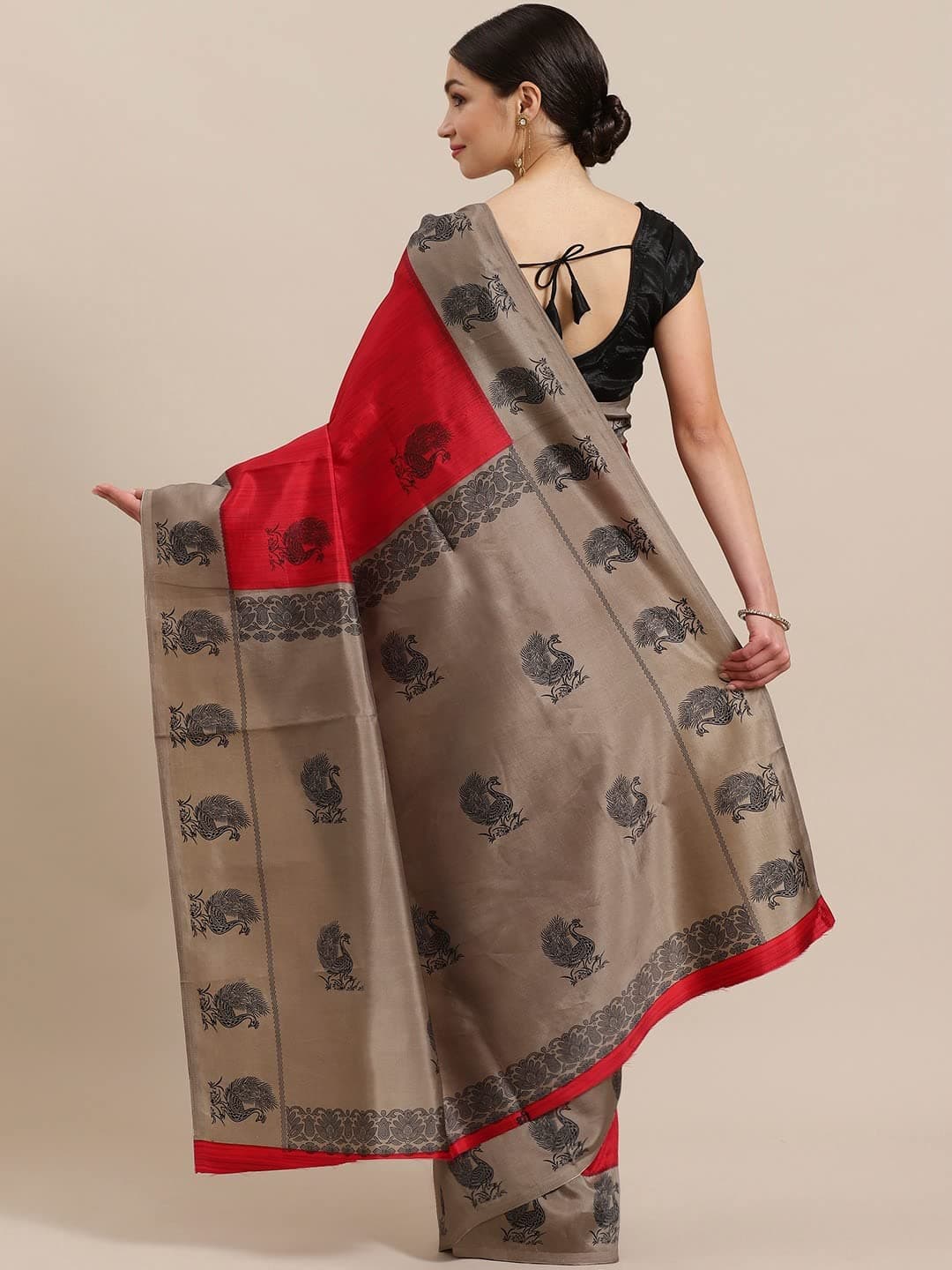 COD Available
ishin
Ishin Women's Art Silk Maroon & Taupe Printed Saree
 COD Available
ishin
Ishin Women's Art Silk Navy Blue Saree with Blouse Piece
 COD Available
ishin
Ishin Women's Art Silk Dark Blue & Orange Saree with Blouse
OUR VERDICT
The core rule of silk saree care is: cool, dark, dry, and breathable. Cool water for washing, dark storage away from sunlight, a dry environment free from humidity, and breathable muslin wrapping for storage. Follow these four principles and your silk saree will outlast you. The biggest enemy of silk is not time — it is improper storage in plastic and improper washing with alkaline detergents. Avoid those two mistakes and your investment is protected.