
The Core Principle: Jewellery Should Complement, Not Compete
Your necklace should fill the visual space created by your neckline. A high neckline leaves no space for a necklace and pairs best with long drops or statement earrings alone. A deep V-neck creates a triangular space that a V-shaped or Y-necklace fills perfectly. A sweetheart neckline creates a curved top edge that a choker or princess-length necklace echoes beautifully.
Neckline-by-Neckline Jewellery Guide
| Neckline | Best Necklace | Best Earrings | Avoid |
|---|---|---|---|
| Deep V-neck (blouse/choli) | Y-necklace or long pendant that follows the V angle | Drop earrings or chandeliers | Choker that sits above the V — creates visual disconnect |
| Sweetheart/Heart-shaped | Choker or princess length (16 inches) that echoes the curve | Small to medium studs or drops | Long necklace that falls inside the sweetheart curve |
| Boat neck (horizontal) | No necklace — earrings only; or a very long chain | Long chandelier, tassel, or jhumka | Choker or wide necklace — they duplicate the horizontal line |
| Off-shoulder | No necklace; or a very long chain that falls past the collarbone | Statement chandelier or tassel earrings | Any necklace that competes with the exposed shoulder-collarbone area |
| High neck / mandarin collar | Long layered chains or none | Statement earrings, jhumkas, tassel earrings | Chokers or any necklace close to the neck — they crowd the neckline |
| Round neck | Princess (16-18 inch) or collar necklace | Studs, small drops | Y-necklace or lariat that creates unflattering angles |
| Square neck | Short square-shaped or geometric necklace that mirrors the shape | Simple drops or angular earrings | Round or curved necklaces that contrast awkwardly with the square frame |
| Halter neck | No necklace — the halter strap acts as the focal point | Long drops or statement chandeliers | Any necklace — it overlaps the halter strap and creates clutter |
Jewellery Styles Used in Indian Ethnic Wear
| Jewellery Style | Description | Best With | Occasion Level |
|---|---|---|---|
| Choker | Sits right at the collarbone, 14–16 inches | Sweetheart, scoop, round neck | Semi-formal to bridal |
| Kundan necklace | Flat-set gemstones in gold foil setting | Lehenga, heavy saree, sweetheart neck | Wedding, festive |
| Polki necklace | Uncut diamond or glass in gold setting | Bridal lehenga, silk saree | Bridal, very formal |
| Temple jewellery | Gold with deity motifs | South Indian saree, Kanjivaram | Wedding, classical dance |
| Oxidized silver | Darkened silver with intricate patterns | Cotton saree, block print kurta | Casual to semi-formal |
| Layered chains | Multiple thin gold/silver chains at different lengths | High neck, round neck kurta, casual saree | Casual to office |
| Meenakari necklace | Colorful enamel work on gold base | Rajasthani outfits, festive sarees | Festive, semi-formal |
Jewellery for Specific Outfits
Saree
A saree blouse neckline dictates your necklace choice, but sarees also allow for an additional maangtika (forehead ornament), nath (nose ring), and kangan (bangles) that form a complete jewelry set. For a silk or festive saree, choose a matching or complementary full set. For a cotton daily saree, earrings alone are sufficient.
Lehenga
Lehenga cholis typically have intricate necklines, so choose jewellery that does not obscure the choli embroidery. If your choli has heavy embroidery at the neckline, wear a simple necklace (or none) and statement earrings instead. If the choli neckline is plain, a heavy necklace becomes the focal point.
Kurta
Casual kurtas with simple round or V-necks benefit from minimal jewelry. An embroidered kurta that is itself a statement piece needs only earrings — a jhumka or drop earring in a complementary metal. Plain or solid kurtas invite more jewelry but should still follow the neckline-matching principle.
Metal Guide: Gold vs Silver for Indian Outfits
| Outfit Color | Best Metal | Why |
|---|---|---|
| Red, orange, yellow, green | Gold | Warm colors are enhanced by warm gold tones |
| Blue, purple, grey, white | Silver or white gold | Cool colors pair better with cool metals |
| Black, navy | Either gold or silver | Neutrals work with both metal tones |
| Ivory, beige, cream | Gold (warm) or antique gold | Warm neutrals are enhanced by golden tones |
| Pastels (pink, mint, lavender) | Rose gold, light gold, or silver | Light delicate colors need light delicate metals |
Who Should Buy
- Women who own beautiful jewellery but are unsure which pieces to pair with which outfits
- Brides and bridesmaids who want a complete jewellery plan for multiple wedding events with different outfits
- Women who feel their ethnic outfits look incomplete but cannot identify what is missing — it is usually the jewellery proportion
- Gift-buyers looking to buy jewellery for someone and wanting to ensure it pairs well with the recipient's typical outfits
Skip If
- You prefer not to wear jewellery at all — a bold outfit stands alone without any accessories and is a completely valid choice
- You are buying jewellery for a very tight budget — one quality pair of jhumkas is worth more than a complete set of cheap fashion jewellery
- You are looking for Western occasion jewellery guidance — this guide focuses specifically on Indian ethnic outfit neckline pairings
Shop Jewellery
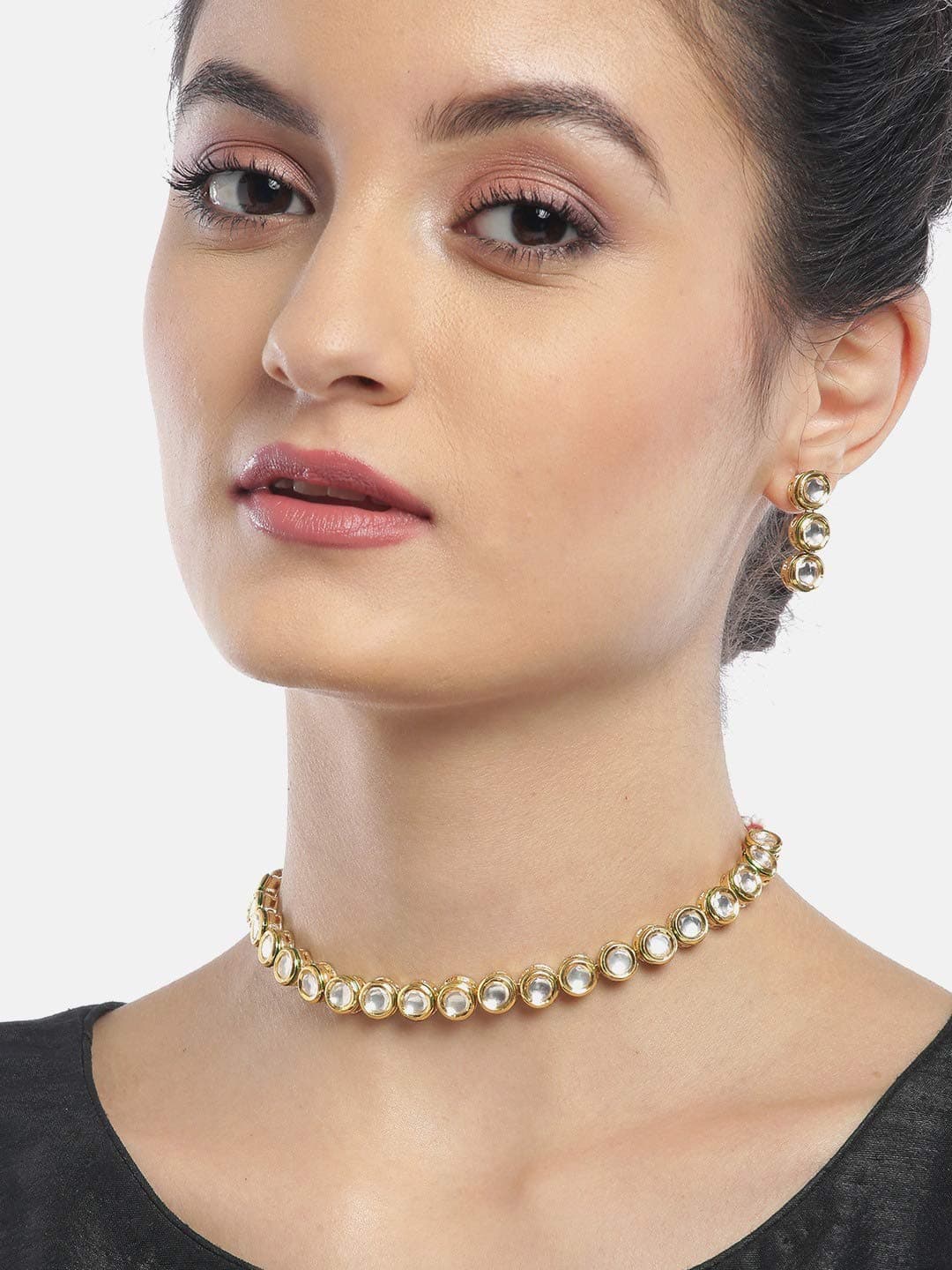 COD Available
priyaasi
Priyaasi Traditional Gold-Plated Kundan Jewellery Set with Earrings
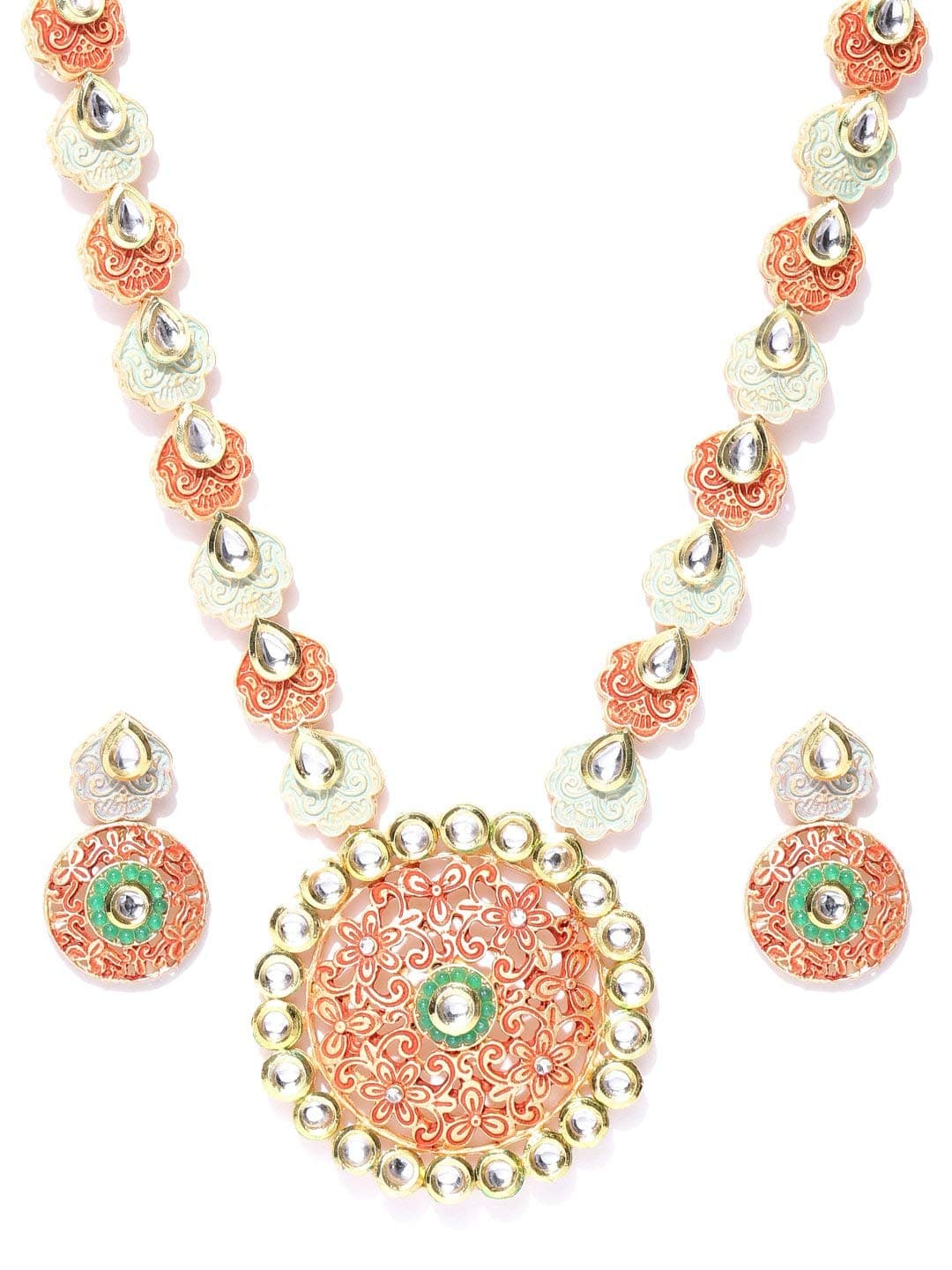 COD Available
priyaasi
Priyaasi Gold-Plated Traditional Kundan Jewellery Set Red
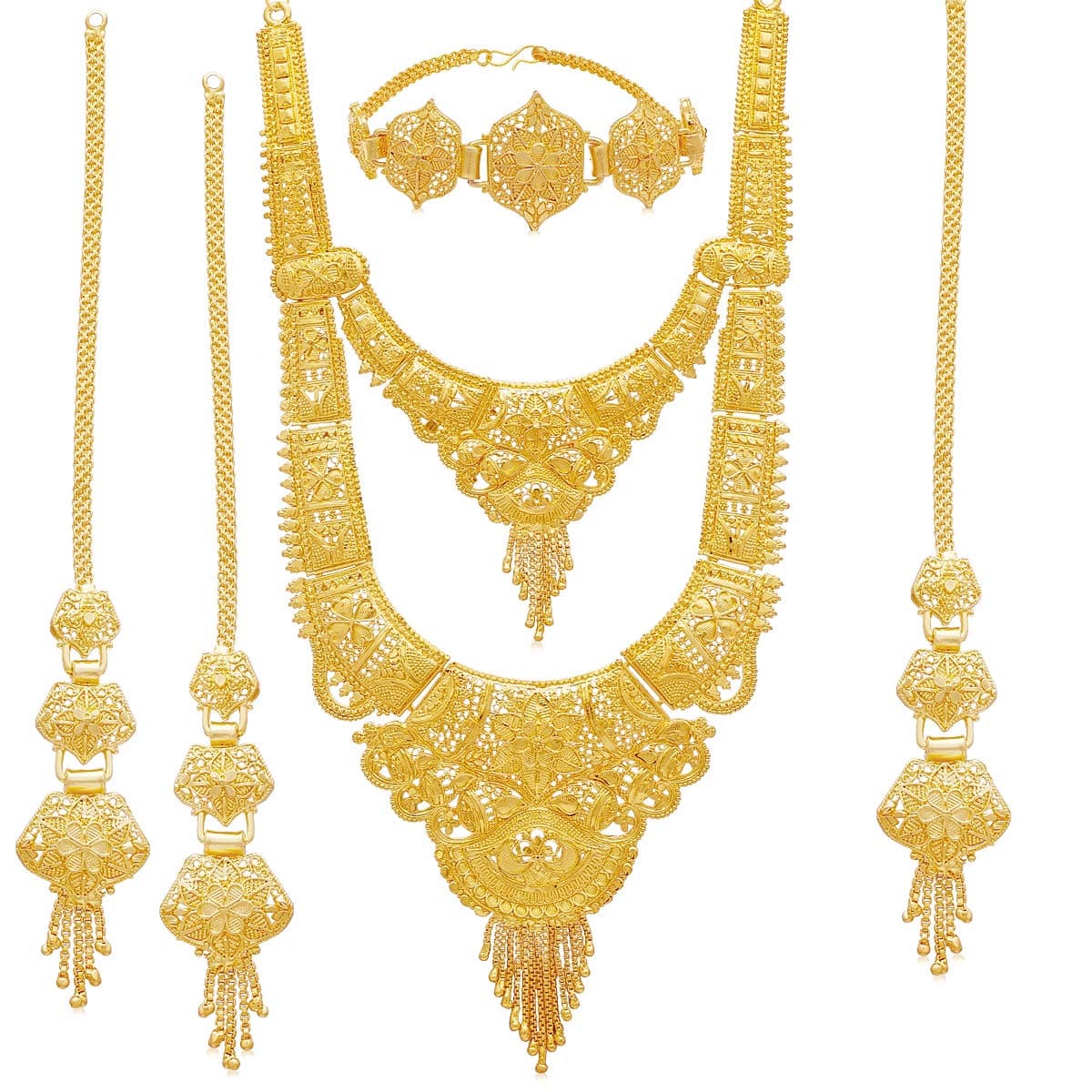 COD Available
sukkhi
Sukkhi Wedding Jewellery Set for Women Golden
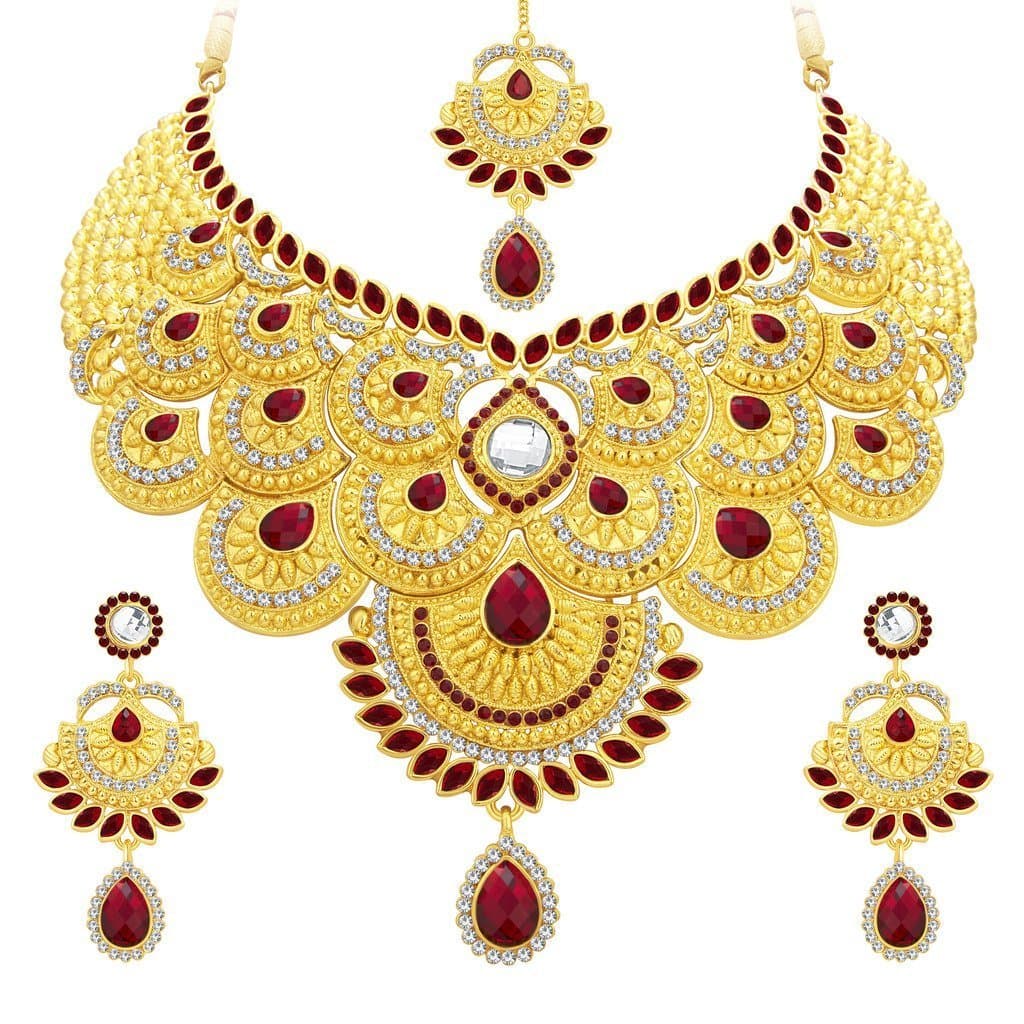 COD Available
sukkhi
Sukkhi Elegant Gold Plated AD Necklace Set for Women
OUR VERDICT
When in doubt about jewellery for any Indian outfit, default to this three-step rule: (1) identify your neckline shape, (2) choose a necklace that either mirrors the neckline shape or creates complementary contrast, and (3) let one piece of jewellery be the star — either the necklace or the earrings, never both competing equally. The most elegantly dressed Indian women at any event are those who chose one bold jewellery decision and committed to it, rather than wearing everything they own at once.