
| Outfit Type | Appropriateness | Budget Range | Best For |
|---|---|---|---|
| Cotton or Silk Saree | Most traditional and respectful | Rs 500 – 5,000 | Temple visits, home pujas, all ages |
| Salwar Kameez with Dupatta | Excellent — modest and practical | Rs 700 – 3,000 | Everyday temple visits, all ages |
| Long Kurta with Leggings or Churidar | Good — acceptable for most temples | Rs 500 – 2,000 | Regular temple visits, young women |
| Lehenga / Festive Ethnic Wear | Good for special pujas and festivals | Rs 2,000 – 10,000 | Festival days, Navratri, Diwali puja |
| Jeans and T-shirt | Not recommended — disrespectful | - | Not appropriate for temples or home pujas |
| Shorts, Skirts, Sleeveless tops | Not allowed at most temples | - | Not appropriate |
Temple Visit Dress Code: The Universal Rules
Different temples and religious traditions have specific rules, but there are universal guidelines that apply almost everywhere:
- Cover your legs: No shorts, short skirts, or short dresses. Ankle-length or at least knee-covering clothing is required at most temples in India.
- Cover your shoulders: No sleeveless tops. Shoulders should be covered — if you are wearing a sleeveless blouse with a saree, drape your pallu over your shoulder for entering the temple.
- Remove footwear: You will remove your shoes at the entrance — leather chappal, heels, and fancy shoes should be left securely at the counter.
- Cover your head: Many temples (especially in South India and at Sikh gurudwaras) require women to cover their heads. Carry a dupatta or stole to use as a head covering.
- Avoid leather accessories: Many orthodox temples do not allow leather handbags or belts inside. Carry a cloth or fabric bag.
- Wear clean clothes: Simple as it sounds — your clothes should be freshly washed and clean. This is both a hygienic and spiritual requirement.
- Avoid very tight or body-hugging clothes: Modesty applies to fit as well as coverage.
Colours for Pooja and Temple Visits
- Auspicious: Yellow, red, orange, saffron, green, peacock blue — these are traditionally associated with prosperity, devotion, and celebration.
- White: Pure, clean, and associated with peace — appropriate for some puja contexts (Saraswati puja, certain Shiva temples) but associated with mourning in others.
- Avoid black: At many traditional temples, black is considered inauspicious and is discouraged. Always check before visiting a temple you are unfamiliar with.
- Day-specific colours: Some families and communities follow day-specific sacred colours for pooja — yellow on Thursday for Vishnu puja, white on Monday for Shiva puja, red on Friday for Lakshmi puja.
- Bright and festive colours on festival days: On Navratri, Diwali, Janmashtami etc., wearing the festival's associated colours to the temple is appropriate and celebratory.
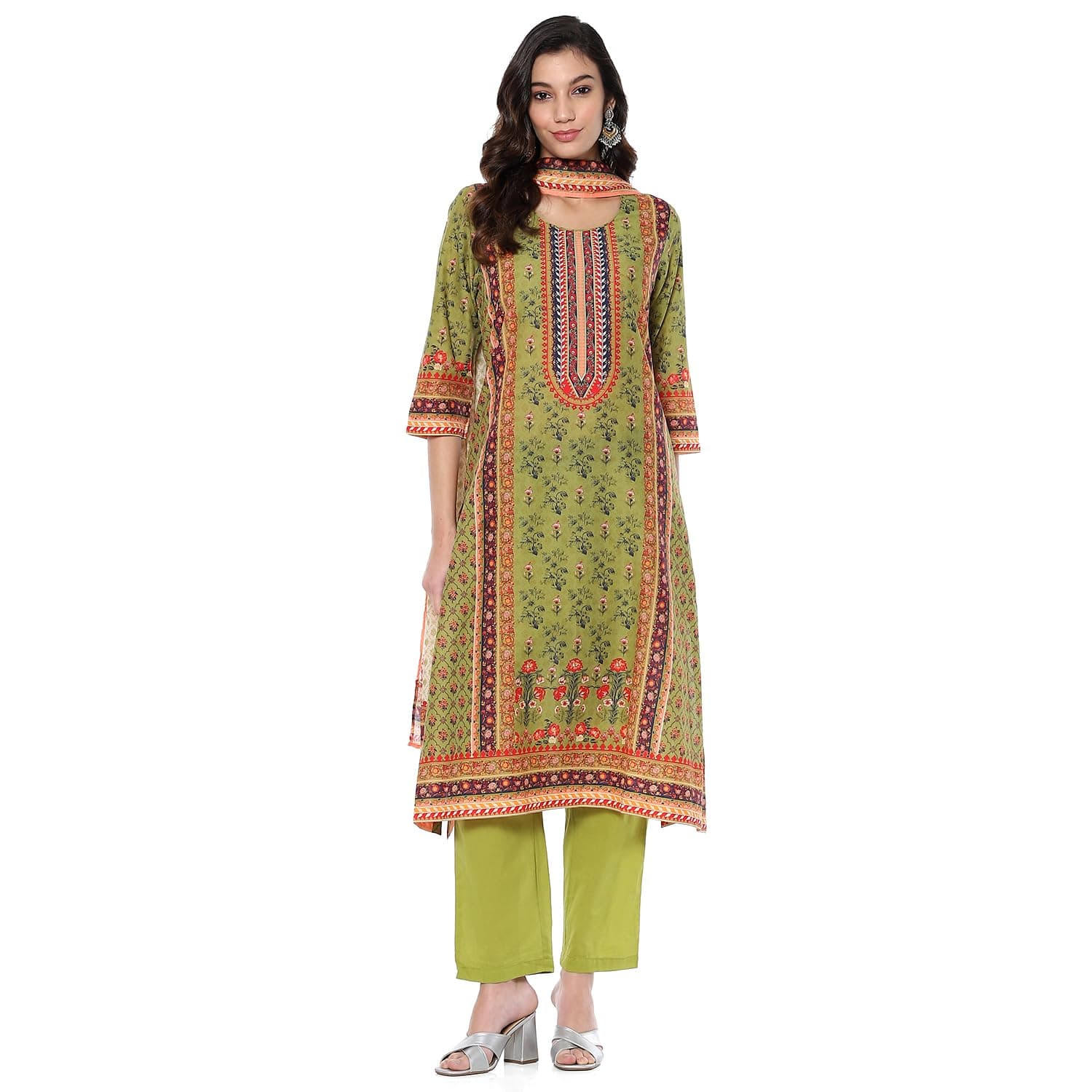 COD Available
biba
BIBA Women's Cotton Printed Kurta Set with Dupatta
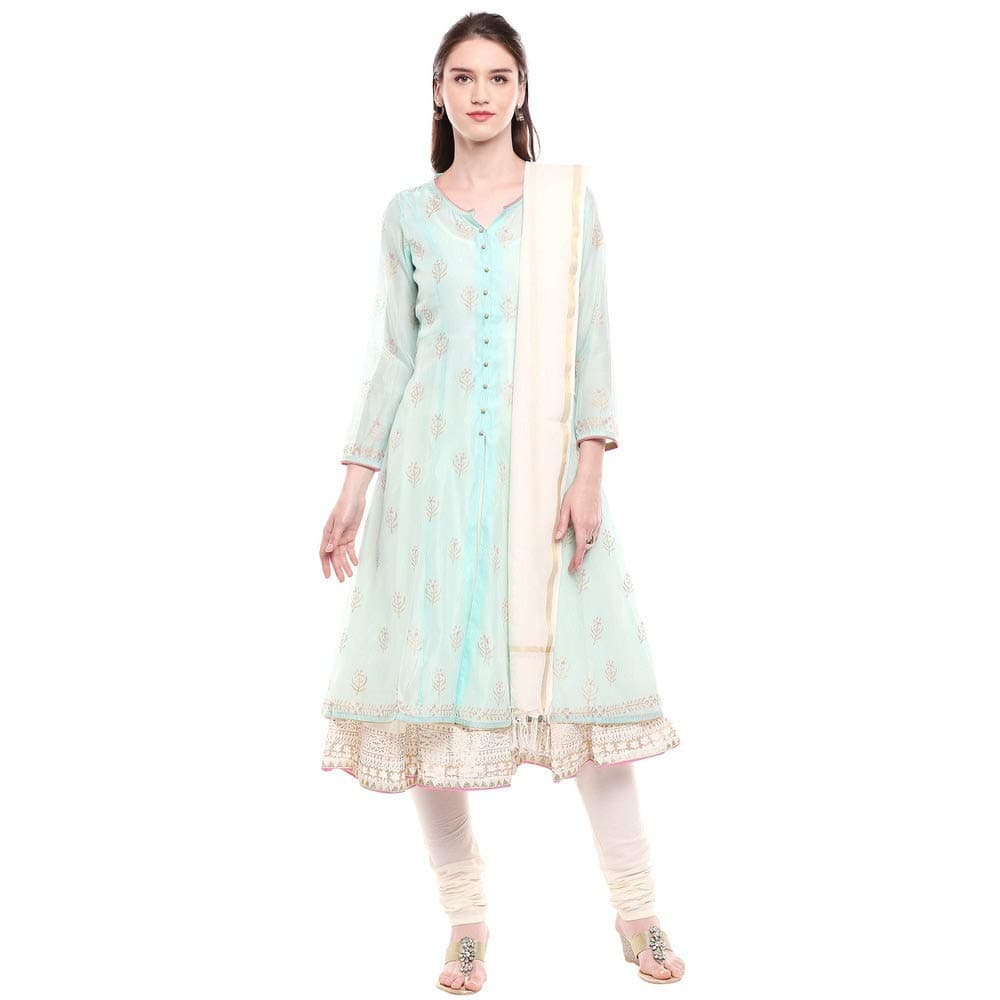 COD Available
biba
BIBA Women's Cotton A-Line Churidar Suit
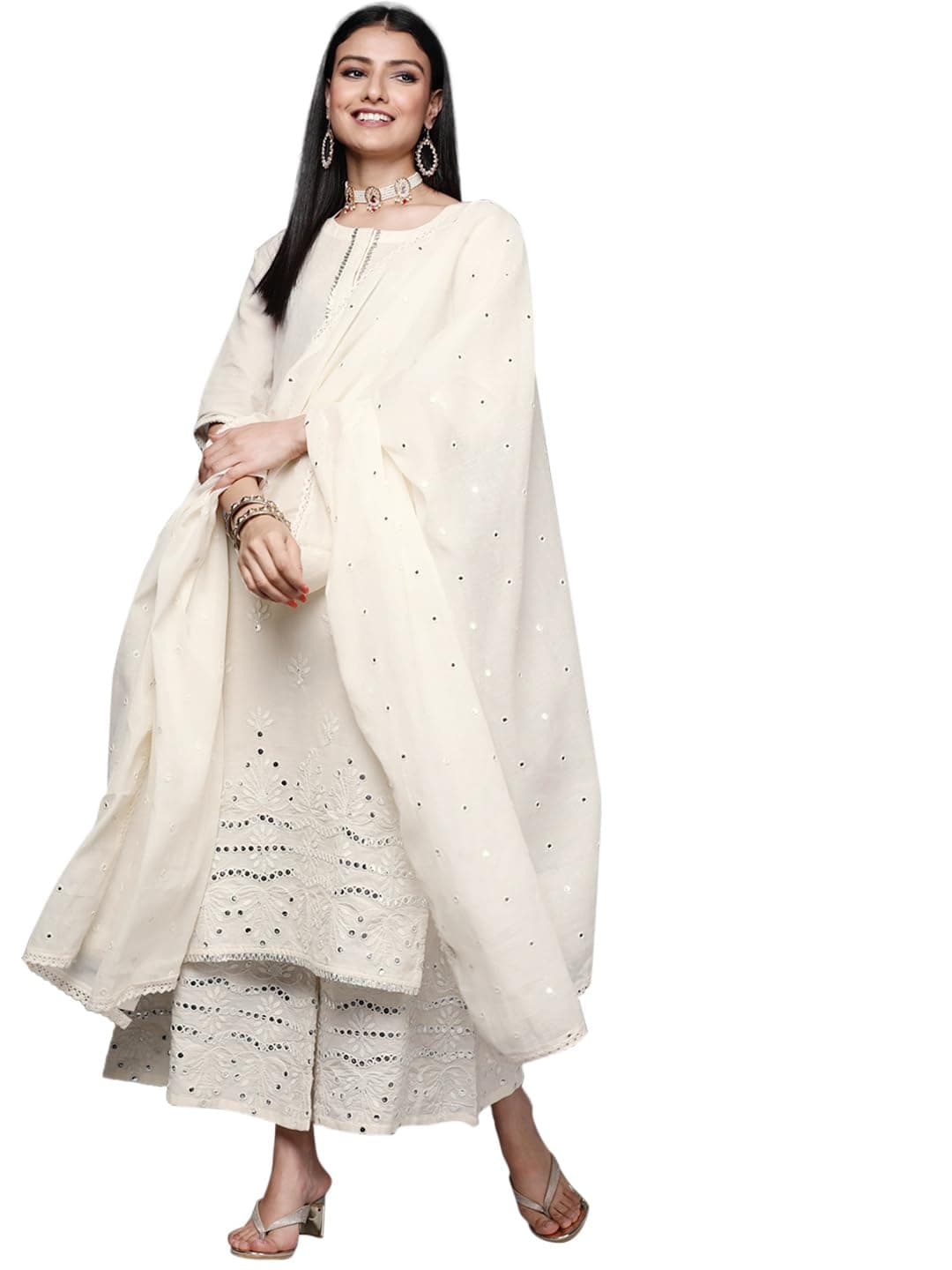 COD Available
libas
Libas Women's Embroidered Cotton Straight Kurta with Palazzos & Dupatta
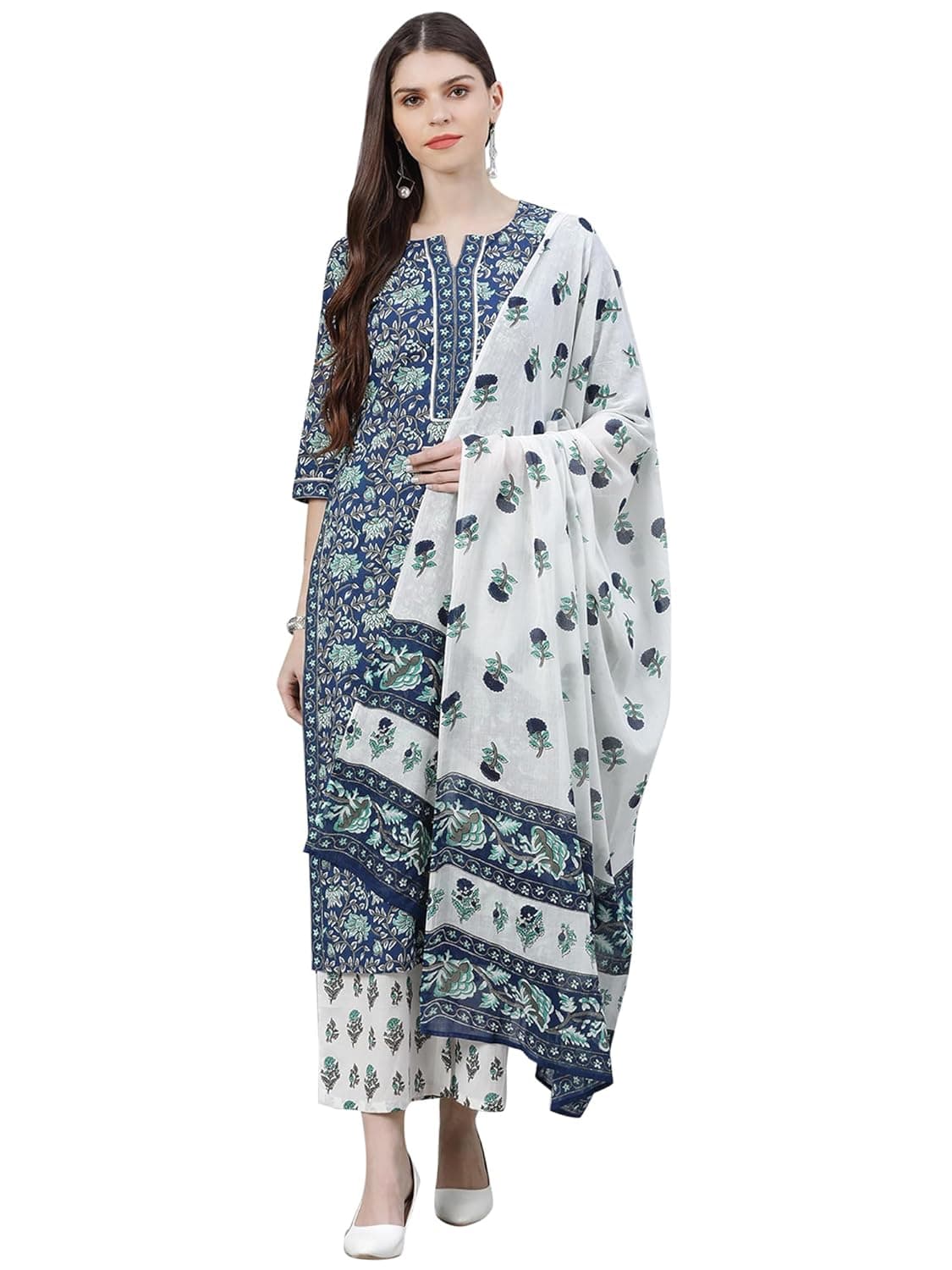 COD Available
libas
Libas Printed Silk Blend Round Neck Kurta Pant Set Pink
What to Wear to a Home Pooja
Home poojas — Satyanarayan Katha, Griha Pravesh, Vastu Puja, Lakshmi Puja — typically have slightly more relaxed dress codes than temples, but the same principles of modesty and cleanliness apply:
- A salwar kameez with dupatta is ideal — you will be sitting on the floor for an extended period and a salwar suit is far more comfortable than a saree for this.
- A simple cotton or silk saree is also very appropriate and traditionally preferred by older women.
- Carry a dupatta even if your outfit already has one — you will want to cover your head during key moments of the puja.
- Sit comfortably: Your outfit must allow you to sit cross-legged on the floor for 30 minutes to 2 hours depending on the puja. Avoid very tight churidars or pencil-cut bottoms.
- Wear something you can wash easily — the prasad (offerings) can drip, the diyas can smudge, and the turmeric and kumkum can transfer during the ritual.
Festival Day Temple Visits
- Diwali temple visit: Silk saree or an embroidered salwar suit in red, gold, or green. This is a festive occasion — dressing up is appropriate.
- Navratri temple visit: Wear the specific day colour (see our Navratri guide) — a salwar suit or chaniya choli in the corresponding colour.
- Janmashtami: Wear blue, yellow, or peacock colours — associated with Lord Krishna.
- Karva Chauth: Red is traditional — a red salwar kameez or saree.
- Ganesh Chaturthi: Yellow or saffron are auspicious — a yellow salwar suit or saree.
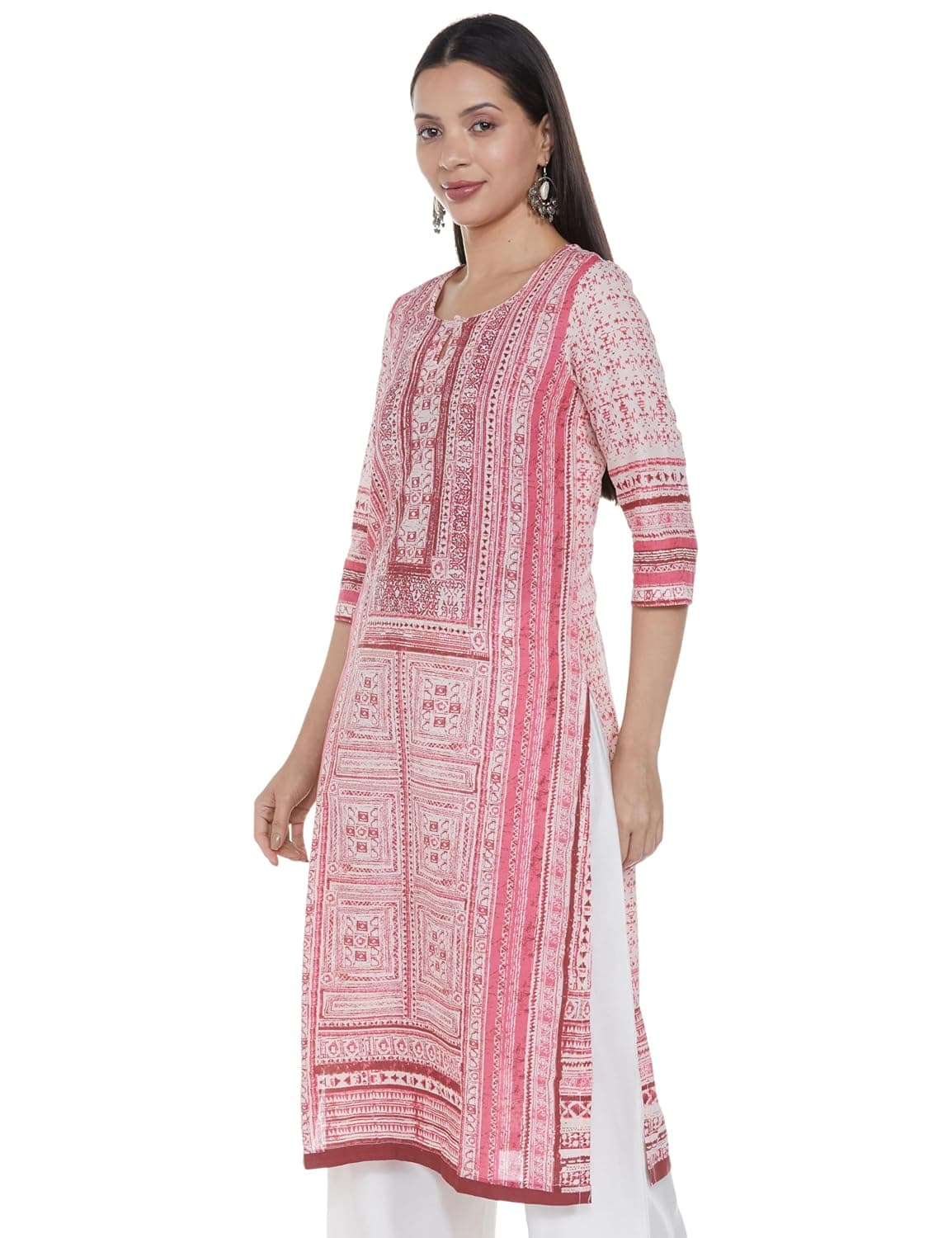 COD Available
biba
BIBA Women's Cotton Straight Printed Kurta
COD Availablebiba
BIBA Women's Cotton Printed Kurta Set with Dupatta
COD Availablelibas
Libas Women's Embroidered Cotton Straight Kurta with Palazzos & Dupatta
COD Availablelibas
Libas Women's Cotton Printed Kurta Set Multicoloured
Who Should Buy
- Women attending regular temple visits who want a simple, respectful, and reusable outfit — a few well-chosen cotton salwar suits in auspicious colours cover all occasions.
- Festival pooja attendees who want to dress appropriately for the specific festival — match the festival's colour palette and choose silk or festive fabric.
- Young women new to attending religious ceremonies who are unsure about dress codes — a salwar kameez with dupatta is universally acceptable.
- Non-Hindu guests visiting a temple or attending a friend's pooja for the first time — a salwar suit in a bright, simple colour shows respect and effort.
Skip If
- You are visiting a specific heritage temple with very strict dress codes (Tirupati, Padmanabhaswamy, etc.) — look up the specific requirements before planning your outfit.
- You are attending a pooja of a different religion (Eid puja equivalent, Sikh ardas) — those have different dress code traditions.
- The home pooja is a modern, informal gathering — the family may be less strict about dress code; check with the host.
OUR VERDICT
A cotton or cotton-silk salwar kameez with a dupatta in auspicious colours (yellow, red, orange, green) is the perfect all-purpose outfit for a temple visit or home pooja. It is modest, comfortable, easy to wash, and respectful. For festival occasions, step up to a silk saree or embroidered salwar suit in the festival's traditional colours. Always carry a dupatta to cover your head and leave leather accessories at home.