
The Three Most Confused: Zari, Zardozi, and Gota Patti
| Feature | Zari | Zardozi | Gota Patti |
|---|---|---|---|
| What it is | Metallic thread woven into fabric during weaving | Heavy metallic embroidery stitched onto fabric after weaving | Woven metallic ribbon cut and appliqued onto fabric |
| Origin | Persia, perfected in Varanasi and Surat | Persia/Mughal court; Lucknow and Hyderabad centers | Rajasthan (Jaipur) |
| Technique | Thread woven on loom — part of the fabric structure | Embroidered by needle — applied on top of fabric | Ribbon strips folded and sewn — applied on top of fabric |
| Weight | Light to heavy depending on proportion | Very heavy — significant weight added to garment | Medium — adds some weight, less than zardozi |
| Feel when touched | Smooth — part of the fabric surface | Raised, dimensional, textured | Flat ribbon edges, smooth but has dimension at folds |
| Price indicator | Woven into fabric — cost reflects fabric value; real gold zari is expensive | Very expensive for genuine work; labor intensive | Moderate — varies by ribbon quality and intricacy |
| Common on | Banarasi sarees, brocade fabric, silk sarees | Bridal lehengas, sherwani, heavy sarees | Rajasthani lehengas, dupattas, bridal wear |
Zari: Thread in the Weave
Zari is not embroidery in the traditional sense — it is a metallic thread that is woven into the fabric during the weaving process, becoming part of the fabric structure itself. This is why when you look at the reverse side of a Banarasi saree, you see the zari threads as part of the weave. There are three types of zari: real zari (gold or silver wrapped around a silk core), tested zari (copper with gold lacquer — more affordable), and imitation zari (chemical-coated thread — the cheapest). See our Banarasi silk identification guide for the zari rub test.
Zardozi: The Royal Embroidery
Zardozi comes from the Persian words 'zar' (gold) and 'dozi' (embroidery) — literally gold embroidery. It was the favored embroidery of Mughal royalty and reached its peak in Lucknow and Hyderabad. Genuine zardozi uses thick gold and silver wire, beads, sequins, and sometimes semi-precious stones, embroidered in high relief using a hooked needle (aari) or hand needle on a stretched fabric frame. The weight of a genuine zardozi garment is immediately noticeable — a zardozi-embroidered bridal lehenga can weigh 5–15 kilograms.
Gota Patti: Rajasthani Ribbon Art
Gota patti uses strips of woven gold or silver ribbon (gota) that are folded, shaped, and stitched onto fabric to create geometric and floral patterns. Unlike zardozi which uses loose wire and beads, gota patti uses pre-woven ribbon that retains its flat, shiny quality. The characteristic shimmer of gota patti work is from the smooth ribbon surface catching light. It is deeply associated with Rajasthani bridal wear and lehengas but has become mainstream across bridal and festive Indian fashion.
Eight Other Major Indian Embroidery Styles
| Embroidery Style | Region of Origin | Characteristic | Common On |
|---|---|---|---|
| Chikankari | Lucknow, Uttar Pradesh | Delicate white threadwork on white or pastel fabric; multiple stitch types | Kurtas, sarees, dupattas — all occasion levels |
| Phulkari | Punjab | Colorful floral threadwork (floss silk) on handwoven fabric; dense, geometric | Dupattas, shawls, salwar suits |
| Kantha | West Bengal and Bangladesh | Running stitch on recycled fabric; figurative or abstract motifs | Sarees, jackets, dupattas |
| Aari / Maggam work | Andhra Pradesh, Tamil Nadu | Chain stitch using a hooked aari needle; used for zardozi-level embellishment | Bridal blouses, lehengas, sarees |
| Mirror work (Shisha) | Gujarat, Rajasthan | Small round mirrors embroidered onto fabric with colorful threadwork surround | Ghagra, dupattas, kurtas, home textiles |
| Kashmiri Kashida | Kashmir | Dense chain stitch floral motifs in vivid colors on wool shawls and fabric | Phirans, shawls, jackets |
| Kutchi embroidery | Kutch, Gujarat | Colorful geometric and floral patterns with mirrors and various stitches | Blouses, ghagra cholis, dupattas |
| Toda embroidery | Nilgiri Hills, Tamil Nadu | Red and black geometric patterns on white cotton; one of the rarest traditions | Shawls, special garments |
How to Tell Handmade Embroidery from Machine Embroidery
- Thread variation: Hand embroidery shows slight tension variations in the thread — some areas tighter, some slightly looser. Machine embroidery is perfectly uniform
- Reverse side: Genuine hand embroidery has a characteristic knotted, uneven reverse side. Machine embroidery has a very clean, parallel-thread reverse (the bobbin thread)
- Starting and ending points: Hand embroidery knots are often visible or slightly raised at the beginning and end of a section. Machine embroidery start-stop points are invisible
- Price: If a garment has extensive embroidery and costs suspiciously little, it is almost certainly machine-embroidered regardless of the label
- Slight imperfections: A motif that is not perfectly symmetrical, where individual petals differ very slightly, is evidence of human hand — not a defect
Price Guide by Embroidery Type
| Embroidery Type | Hand Work Price Indicator | Machine Version Price | Quality Marker |
|---|---|---|---|
| Genuine Zardozi (hand) | Rs. 15,000–5,00,000+ for bridal | Rs. 2,000–15,000 | Weight, 3D texture, visible wire and bead work |
| Chikankari (hand) | Rs. 1,500–20,000 for kurta | Rs. 300–1,500 | Stitch variety, reverse side quality |
| Gota Patti (hand) | Rs. 3,000–30,000 for lehenga | Rs. 800–5,000 | Ribbon quality, precision of folding |
| Phulkari (hand) | Rs. 2,000–15,000 for dupatta | Rs. 400–2,000 | Thread density, wrong-side evenness |
| Kashmiri Kashida (hand) | Rs. 5,000–50,000 for shawl | Rs. 500–3,000 | Color gradients (hand work can shade; machine cannot) |
Who Should Buy
- Shoppers who want to make informed purchases of embroidered ethnic wear and understand whether the price matches the embroidery quality
- Women building heirloom-quality ethnic wardrobes who want to invest in genuine handcraft embroidery traditions
- Online shoppers who cannot touch the fabric and need identification criteria to evaluate seller photographs
- Gift buyers who want to give a culturally meaningful, genuinely artisanal embroidered Indian textile
Skip If
- You primarily buy everyday ethnic wear where embroidery is decorative rather than investment-grade — machine embroidery is completely fine for daily use
- You are on a tight budget — acknowledging that something is machine-embroidered and pricing it accordingly is honest; you can find beautiful machine-embroidered pieces at excellent value
- You are buying for a child — machine embroidery is more practical for children's ethnic wear as it withstands more washing
Shop Embroidered Ethnic Wear
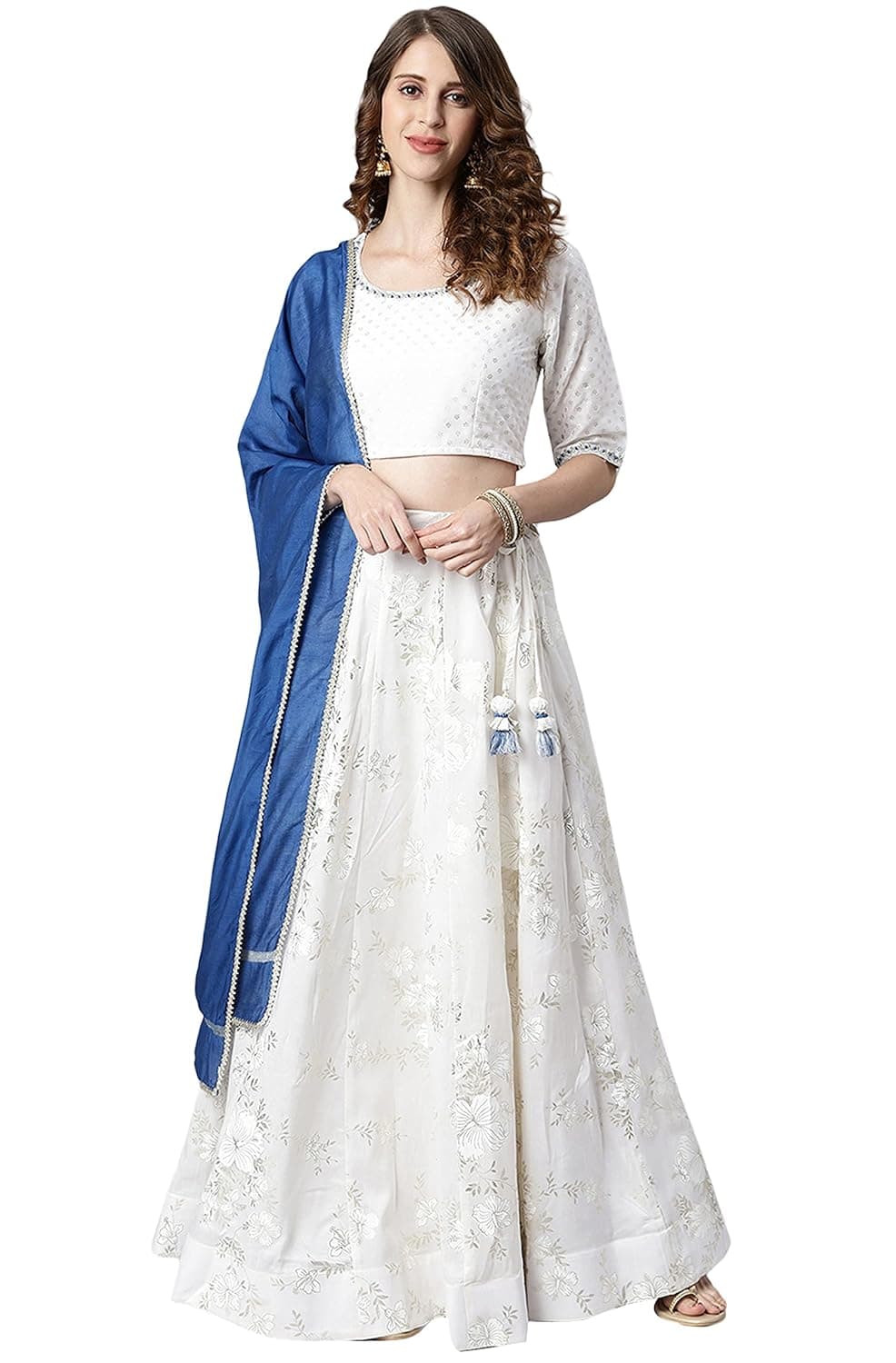 COD Available
janasya
Janasya Women's White Poly Silk Lehenga Choli with Dupatta
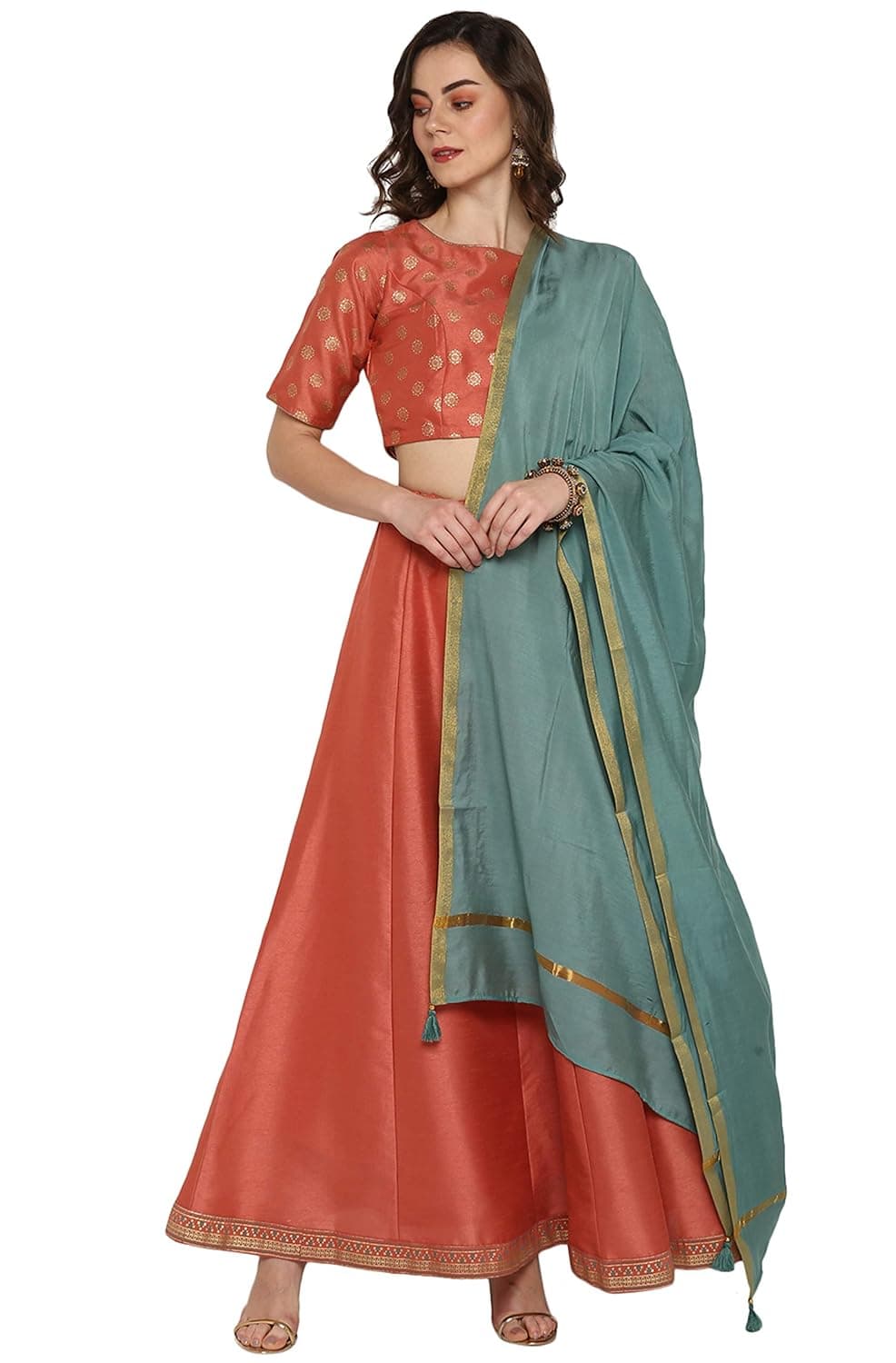 COD Available
janasya
Janasya Women's Peach Silk Lehenga Choli with Gota Patti
 COD Available
m.r.p:
Women's Satin Silk Embroidery Lehenga Choli (Wedding-Party-Bridal-Lehenga-White) Free Size | Finish Type: Semi-stitched
 COD Available
m.r.p:
Women's Embroidered Georgette Crop Top Lehenga Choli For Women (Party-Wedding-Bridal-Latest-New-Stylish; Free Size)
OUR VERDICT
India's embroidery traditions are among the most sophisticated and diverse in the world. Understanding even the basics — that zari is woven in, zardozi is stitched on, and gota patti is appliqued — gives you the foundational vocabulary to evaluate any embroidered ethnic garment you encounter. The reverse side test is your most reliable tool: flip any embroidered garment and look at what the back tells you about how the front was made. A seller who will not let you see the reverse side of an expensive embroidered piece should raise immediate concern.