
Manyavar has been in the Indian ethnic wear market since 1999 and now operates over 650 stores across India. They've become the default answer to 'where do I buy a sherwani?' for urban Indian families — and with that dominance comes a specific set of trade-offs. Mohey, their women's division launched in 2019, has quickly become a mainstream option for brides who want a reliable, widely available alternative to smaller boutiques and designer wear.
| Aspect | Manyavar (Sherwani) | Mohey (Bridal Lehenga) | Notes |
|---|---|---|---|
| Price Paid | Rs 14,200 | Rs 18,500 | Mid-range for both brands |
| Fabric Quality | 7/10 — good brocade | 6/10 — decent but not premium | Both use machine-woven brocade, not handwoven |
| Embellishment Quality | 7/10 — consistent zardosi | 6/10 — some uneven sections | Machine and hand embellishment mix |
| In-store Experience | 8/10 — attentive staff | 7/10 — busy, waited 20 min | Both stores were reasonably professional |
| Alterations Quality | 8/10 — well-done in-house | 6/10 — minor blouse issues | Manyavar alterations were notably better |
| Delivery on Time | Yes — 3 days early | One day late | Called ahead and warned about delay |
| Day-of Performance | 9/10 — no wardrobe issues | 7/10 — hook came loose at reception | Critical issue for bride — see review |
The Good
The Manyavar sherwani experience was, broadly, what you pay for — a well-organised, professional in-store experience where the salesperson knew the product range well, understood the occasion requirements, and suggested combinations (sherwani, churidar, dupatta, and accessories) that worked as an ensemble without being overly pushy. The sherwani fabric itself — a tussar silk brocade in deep navy with gold zari — was quality industrial brocade. It's not handloom, and it doesn't pretend to be, but it photographs beautifully and held up for a 12-hour wedding day without visible deterioration.
Manyavar's in-house alterations at our Delhi store were excellent. The churidar needed significant shortening and the sherwani waist needed taking in — both were done precisely, with the seams matching the original stitching line. Alterations were completed 5 days before the wedding as promised, which is important given that wedding timelines have zero margin for error. This logistical reliability is undervalued when assessing wedding wear brands.
Mohey's lehenga design was genuinely beautiful — the specific piece chosen was a deep rose with gold gota patti work on the skirt, and the effect in photographs was stunning. Whatever fabric compromises were made, Mohey's design team produces pieces that photograph exceptionally well, which matters enormously for a wedding where the photographs outlast the day. The dupatta draping style the Mohey stylist suggested was also genuinely flattering.
The Bad
Mohey's lehenga had a hook-and-eye closure failure during the reception that was genuinely stressful. One of the hooks on the blouse back came loose — a structural failure on a garment worn for one day. The blouse had been custom-altered by Mohey's in-house tailors, and the alteration stitching near the hook was not reinforced correctly. For a bride spending Rs 18,500 on wedding wear, a hook failure at the reception is unacceptable and could have been far worse. We managed with safety pins, but it was a source of anxiety during the most photographed moments of the evening.
Manyavar's pricing transparency is an ongoing issue I've heard from multiple customers. The initial price quoted at the counter and the price after adding 'recommended' accessories, dupatta upgrades, and 'premium embellishment' add-ons can diverge significantly. We went in expecting to spend Rs 10,000-12,000 and left with a Rs 14,200 receipt — the salesperson was skilled at suggesting premium add-ons at each stage. The final product was worth the money, but the upsell process felt manipulative. Know your firm budget before entering the store and stick to it verbally.
Both brands use primarily machine-made embellishments and machine-woven brocades, which is completely legitimate at their price points — but the store experience and marketing language can imply more artisan involvement than is actually the case. If you're expecting handloom silk or hand-embroidered zardosi work at Rs 15,000-20,000, you'll be disappointed. If you understand you're buying quality industrial fashion, you'll be satisfied.
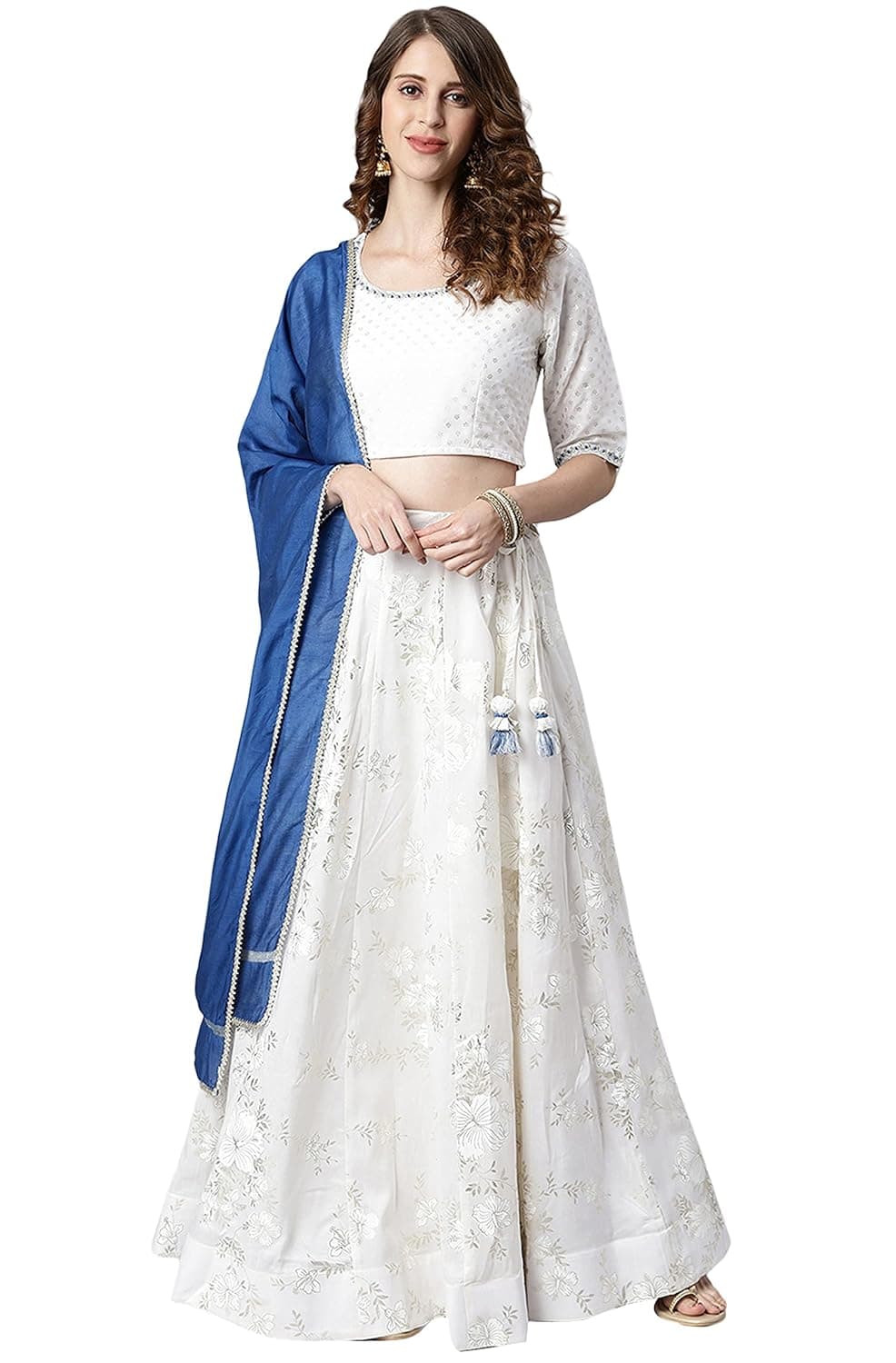 COD Available
janasya
Janasya Women's White Poly Silk Lehenga Choli with Dupatta
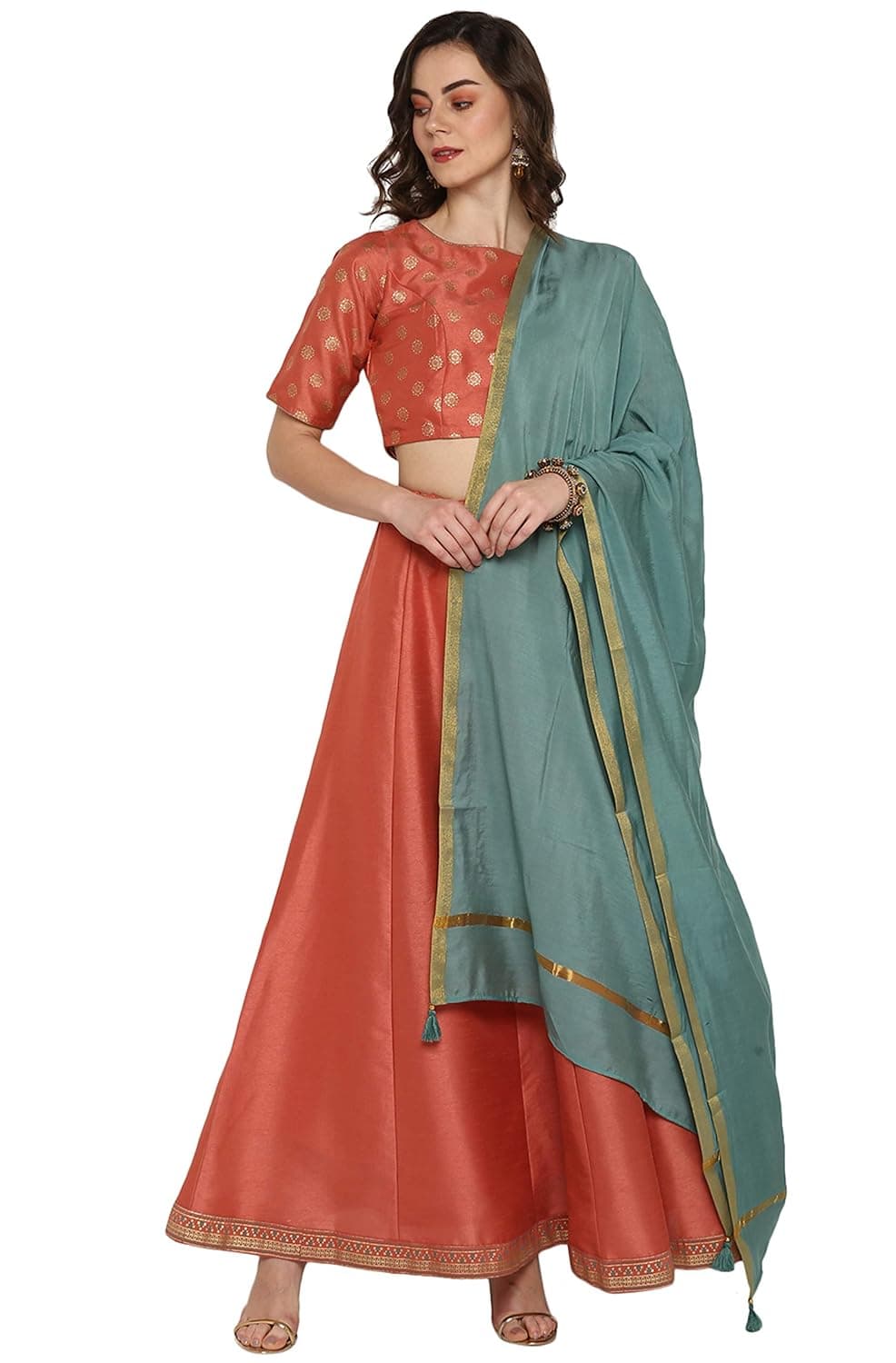 COD Available
janasya
Janasya Women's Peach Silk Lehenga Choli with Gota Patti
 COD Available
m.r.p:
Women's Satin Silk Embroidery Lehenga Choli (Wedding-Party-Bridal-Lehenga-White) Free Size | Finish Type: Semi-stitched
 COD Available
m.r.p:
Women's Embroidered Georgette Crop Top Lehenga Choli For Women (Party-Wedding-Bridal-Latest-New-Stylish; Free Size)
Value for Money
Manyavar and Mohey occupy a useful middle market between local boutique tailoring (variable quality, no brand accountability) and designer labels (Rs 50,000-5,00,000+). At Rs 10,000-25,000, they deliver reliable aesthetics, professional store experience, and generally dependable garments for one-time occasion wear. The value is good if your expectations match the tier — quality industrial wedding fashion, not artisan craft. If the hook-on-blouse issue and fabric limitations I described are acceptable risks for you, both brands deliver broadly as promised.
Who Should Buy
- Couples wanting reliable, well-presented wedding wear without the uncertainty of local tailors or the budget of designer labels — Manyavar and Mohey are the accountable middle ground
- Grooms in particular — Manyavar's sherwani range is genuinely the best organised and most professionally executed in the organised retail segment
- Families shopping for multiple wedding events where a consistent, brand-backed experience across multiple occasions matters more than unique individual pieces
- Those with a Rs 12,000-25,000 per outfit budget who want maximum visual impact and photography performance — both brands deliver excellent photographs
Skip If
- You're a bride who wants something unique or crafted — Mohey's designs are beautiful but you'll see the same lehenga on several brides across the wedding season; consider a local boutique or designer for exclusivity
- You're a detail-oriented buyer who wants genuine artisan credentials — both brands use industrial embellishment and machine weaving at accessible price points; manage expectations accordingly
- You have a very tight budget under Rs 8,000 — at the lower end of Manyavar and Mohey's ranges, the quality drops noticeably; it's better to allocate budget deliberately than to compromise in ways that show on camera
OUR VERDICT
Manyavar is the best organised retail option for groom's wedding wear in India — their store experience, alteration quality, and delivery reliability are genuinely professional. Mohey is solid for brides but has quality consistency issues (our blouse hook failure was not an isolated complaint based on reviews I've read) that you should be aware of before buying. Both brands deliver good value at their price tier if you go in with calibrated expectations about artisan craft versus quality industrial fashion.