
sarees
How to Drape a Saree: 10 Styles Every Woman Should Know
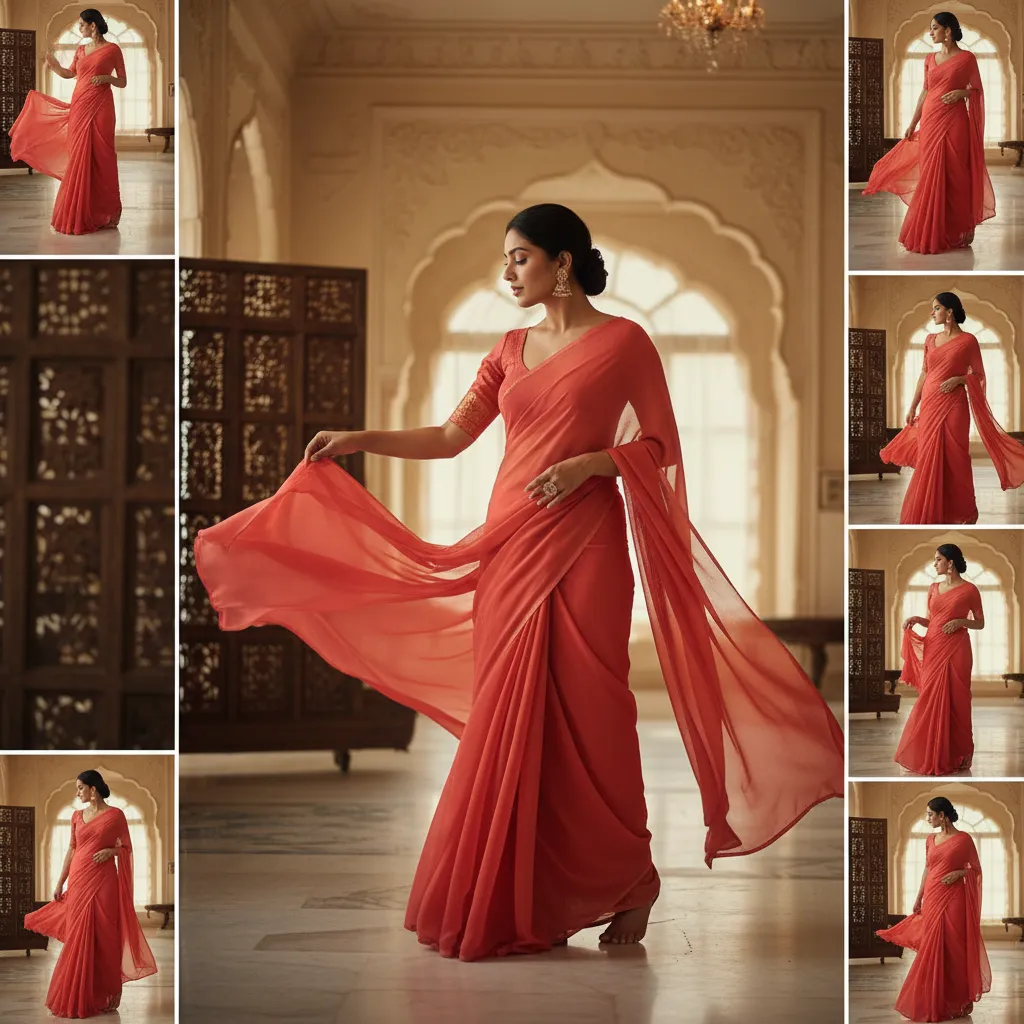
Why Learning Multiple Draping Styles Matters
A saree is one garment, but the way you drape it can create dozens of completely different looks. Most women learn one draping style from their mothers or grandmothers and use it for every occasion, never realising that a simple change in technique can transform the same six yards of fabric into something entirely new. A flowing Nivi drape makes a georgette saree look graceful and formal. The same saree draped in a butterfly style becomes a bold fashion statement. A lehenga-style drape turns it into an outfit that rivals any designer lehenga choli.
Learning multiple draping styles also means you get more value from every saree you own. Instead of buying separate outfits for a wedding, a party, and a puja, you can restyle the sarees already in your wardrobe to suit each occasion. Beyond practicality, different drapes connect you to the textile traditions of different Indian regions. Each style carries cultural significance and reflects the aesthetic sensibility of the community that developed it.
This guide covers ten draping styles that range from everyday classics to statement-making contemporary techniques. Whether you are a complete beginner or someone who has been wearing sarees for decades, at least a few of these styles will be new to you.
What You Need Before You Start
Before you begin draping, gather these essentials so you are not searching for pins midway through the process.
Petticoat (underskirt): A well-fitted cotton petticoat with a sturdy drawstring is the foundation of every drape. It should sit snugly at your waist without being too tight. Match the petticoat colour to your saree for a seamless look. Avoid satin petticoats as they cause the saree to slip.
Safety pins: Keep at least six to eight safety pins of various sizes within reach. Small pins for discreet tucks and larger pins for securing the pallu at the shoulder. Gold-toned pins are less visible on most sarees.
Full-length mirror: Essential for checking pleat alignment, pallu positioning, and overall drape symmetry. If possible, use two mirrors angled to see yourself from front and side simultaneously.
Blouse: Ensure your blouse fits well and is tucked into the petticoat before you begin. A poorly fitted blouse will undermine even the most expert draping.
Flat surface: A clean floor or large table nearby helps when you need to measure and fold pleats evenly.
Style 1: The Nivi Drape — The Universal Classic
The Nivi drape originated in Andhra Pradesh and is now the most widely worn saree style across India. Its popularity comes from its simplicity, elegance, and versatility. This is the style you see in Bollywood films, at offices, at weddings, and at temples. If you learn only one draping style, make it this one.
Step-by-step instructions:
Start by tucking one end of the saree into the petticoat at your right hip. Wrap the fabric around your body from right to left, making one complete round. When the fabric returns to your front centre, begin making pleats. Create five to seven even pleats, each about four to five inches wide, all facing the left. Tuck the pleated section into the petticoat at your front centre, slightly to the left of your navel. Smooth the remaining fabric around your right hip and bring it across your body and over your left shoulder from back to front. This draped portion over your shoulder is the pallu. Secure the pallu at the shoulder with a safety pin.
Best fabrics: The Nivi drape works with virtually every fabric, but it looks particularly elegant in georgette, chiffon, crepe, and silk. Cotton and linen sarees also drape well in this style, though the pleats may need pressing to stay crisp.
Best occasions: Weddings, office wear, festivals, family functions, temple visits, and any formal or semi-formal event. The Nivi is truly an all-occasion drape.
Style 2: Gujarati Seedha Pallu
The Gujarati drape, also called seedha pallu, is the signature style of Gujarat and is instantly recognisable by the pallu falling at the front of the body rather than over the back shoulder. This positioning showcases the pallu design prominently, which is why many women prefer this style when wearing sarees with heavily embroidered or embellished pallus.
Step-by-step instructions:
Begin by tucking the saree end at your right hip, just as you would for the Nivi. Wrap the fabric once around your body from right to left. When you reach the front again, create pleats as you would in the Nivi style and tuck them in at the front centre. Here is where the Gujarati style diverges: instead of draping the remaining fabric over your left shoulder from behind, bring the pallu from the back, across your chest, and over your right shoulder. The pallu now falls from the right shoulder toward the front and is pinned at the shoulder. The decorative end of the pallu is displayed across your chest and stomach.
Best fabrics: Patola silk, Bandhani, and heavily embroidered sarees look stunning in the Gujarati drape because the design on the pallu becomes the centrepiece of the outfit. Georgette and chiffon also work well for a lighter, everyday Gujarati drape.
Best occasions: Navratri celebrations, Gujarati weddings, festive gatherings, and any occasion where you want to showcase a beautiful pallu design. This style is also practical for women who find the Nivi pallu difficult to manage, as the front pallu stays more secure.
Style 3: Bengali Aat-Poure Drape
The Bengali drape is one of the most distinctive and graceful saree styles in India. Unlike other draping methods, it traditionally does not use pleats at the front, creating a softer, more fluid silhouette. The key feature is the way the pallu is draped over both shoulders, sometimes with a fan-shaped arrangement, and a decorative bunch of keys (chabi) hung at the left waist.
Step-by-step instructions:
Tuck the saree end at your front centre (not at the hip as in the Nivi). Wrap the fabric around your body from left to right — note this is the opposite direction from the Nivi drape. Do not make any pleats at the front. Instead, let the fabric wrap smoothly around you, creating a clean, unpleated line. When you have wrapped the fabric once around, bring the remaining length over your left shoulder from back to front, letting it fall in generous folds. Take the end of the pallu and bring it across your body, tucking it lightly at the right side of the waist or draping it over the right arm.
Best fabrics: The Bengali drape is traditionally done with tant cotton (Bengal handloom cotton) or Dhakai Jamdani sarees. The unpleated style works best with fabrics that have some body and stiffness, such as cotton, silk cotton blends, and starched organza. Very slippery fabrics like satin are difficult to manage in this style without extra pins.
Best occasions: Bengali weddings, Durga Puja celebrations, cultural events, art exhibitions, and any occasion where you want an elegant, intellectual aesthetic. The Bengali drape has a distinct character that sets you apart from the standard Nivi style.
Style 4: Maharashtrian Nauvari — The Nine-Yard Power Drape
The Nauvari is Maharashtra's iconic draping style, done with a nine-yard saree rather than the standard six yards. It is a bold, practical drape that resembles a dhoti and was historically worn by Maratha warrior queens because it allowed full freedom of movement. Today it is worn at Maharashtrian weddings, Ganesh Chaturthi celebrations, and Lavani dance performances.
Step-by-step instructions:
The Nauvari requires a nine-yard saree (approximately 8 to 9 metres). Begin by holding the saree at its full width in front of you. Make broad pleats in the back portion and tuck them between your legs from back to front, creating the dhoti-like trouser effect. The front portion is then wrapped around the waist and hips. The upper section is pleated and tucked at the waist, then draped over the left shoulder. The key is creating the trouser-like lower section first, which gives this style its distinctive look.
This is one of the more complex draping styles, so allow yourself several practice sessions before wearing it to an event. Many women watch their mothers or grandmothers perform the drape before attempting it independently.
Best fabrics: Traditional Nauvari sarees are made from stiff cotton or Paithani silk. The fabric needs enough body to hold the trouser-like pleats securely. Avoid georgette, chiffon, or any very slippery fabric for this style.
Best occasions: Maharashtrian weddings, Ganesh Chaturthi celebrations, Lavani performances, and cultural events celebrating Marathi heritage. Some modern women also wear the Nauvari for its powerful, athletic silhouette at fashion events.
Style 5: Lehenga Style Saree Drape
The lehenga-style drape transforms your saree into something that looks like a lehenga choli, combining the elegance of a saree with the structured silhouette of a lehenga. This is a popular choice for weddings, receptions, and parties where you want a grand look without investing in a separate lehenga.
Step-by-step instructions:
Start by making wide pleats in the entire lower portion of the saree, treating the fabric like a lehenga skirt rather than a wrap. Tuck all the pleats into the petticoat at the front centre, fanning them out evenly around your waist so the saree falls like a flared skirt. The pleats should open outward as they fall, creating the signature lehenga volume. Once the skirt portion is secured, take the remaining upper portion of the saree and drape it across your chest and over your left shoulder as the pallu, pinning it neatly at the shoulder.
The key to a convincing lehenga drape is making the pleats wide enough and ensuring they fan out symmetrically. Using a stiff, flared petticoat underneath enhances the lehenga effect.
Best fabrics: Net, organza, and embroidered georgette are ideal because they hold the flared shape well. Heavy silk sarees also work beautifully in this style, creating a rich, structured look. Avoid very soft or limp fabrics as they will not maintain the lehenga volume.
Best occasions: Wedding receptions, engagement parties, sangeet nights, festive celebrations, and any event where you want the grandeur of a lehenga without actually wearing one. Browse our lehenga collection for design inspiration that translates well to this draping style.
Style 6: Butterfly / Mumtaz Drape
The butterfly drape, also called the Mumtaz drape after actress Mumtaz who popularised it in the 1970 film Brahmachari, is a retro-glam style that continues to be a showstopper. The defining feature is the pallu draped in a sweeping, wing-like arrangement that creates dramatic volume and movement.
Step-by-step instructions:
Begin with the standard Nivi tuck at the right hip and wrap the fabric around once. Instead of making all the pleats at the front, make only two or three narrow pleats and tuck them at the front centre. Now, take the pallu end and bring it over your left shoulder from behind, but instead of letting it hang straight, create wide, fan-shaped pleats in the pallu section. Pin these pleats at the left shoulder so they cascade down your back in a butterfly-wing formation. The pleats should open out gradually, creating a wide, dramatic sweep from the shoulder down to the lower back.
Some variations involve draping the fanned pallu across the front of the body instead, but the classic Mumtaz drape has the fan effect at the back.
Best fabrics: Chiffon is the quintessential fabric for the butterfly drape because it is lightweight enough to create the flowing, wing-like effect. Georgette and thin silk also work well. Avoid heavy or stiff fabrics as they will make the pallu look bulky rather than graceful.
Best occasions: Parties, cocktail events, receptions, fashion gatherings, and any occasion where you want to make a bold style statement. This is not an office or temple drape — it is a look designed to turn heads.
Style 7: Modern One-Shoulder Drape
The one-shoulder drape is a contemporary fusion style popularised by fashion designers and celebrities on the red carpet. It creates a sleek, modern silhouette that works beautifully with a fitted or strapless blouse. This style is for women who want to push the boundaries of traditional saree dressing.
Step-by-step instructions:
Start with the standard tuck and wrap as in the Nivi. Make narrow, tightly pressed pleats at the front and tuck them neatly. Now, instead of draping the pallu over the left shoulder, bring the fabric diagonally across your chest and over your right shoulder. Pin the pallu firmly at the right shoulder and arrange it to fall straight down your back. The effect is a clean, asymmetric neckline that bares one shoulder completely while the other is elegantly covered by the pallu.
Best fabrics: Satin, crepe, and matte georgette work best for this modern style because they create clean lines without excess volume. Sequin-embellished and metallic sarees are particularly stunning in a one-shoulder drape.
Best occasions: Cocktail parties, receptions, fashion events, and formal dinners. This is a statement drape best suited for evening occasions where contemporary styling is appreciated.
Style 8: Rajasthani Seedha Pallu
The Rajasthani seedha pallu is the traditional draping style of Rajasthan, distinct from both the Gujarati seedha pallu and the Nivi. In this style, the pallu falls from the right shoulder toward the front and is then tucked back at the waist, keeping the entire drape secure and close to the body. This practical arrangement evolved because Rajasthani women needed to move freely while carrying out daily work, and a loose pallu would be impractical in the desert wind.
Step-by-step instructions:
Tuck the saree at the right hip and wrap it around your body from right to left. Make pleats at the front centre and tuck them in. Bring the remaining fabric from behind, across your right shoulder, and let the pallu fall at the front. Take the end of the pallu and tuck it into the petticoat at the back of your waist, or secure it at the waist on the right side. The pallu sits snugly against the body and does not blow or slip.
Best fabrics: Bandhani, leheriya, and cotton prints are the traditional fabrics for the Rajasthani seedha pallu. Georgette and chiffon bandhani sarees also drape well in this style. The style suits fabrics with vibrant colours and bold patterns that are characteristic of Rajasthani textiles.
Best occasions: Daily wear in Rajasthan, Teej celebrations, Gangaur festival, family pujas, and traditional Rajasthani functions. This is the style you will see most commonly at our Kishangarh store among local customers. If you are visiting Rajasthan and want to dress in authentic local style, this is the drape to learn.
Style 9: Pant-Style Saree Drape
The pant-style saree drape is a modern fusion concept where the lower portion of the saree is draped to resemble fitted trousers or cigarette pants rather than a flowing skirt. This style has gained popularity among younger women who find the traditional skirt-like drape restrictive for active lifestyles.
Step-by-step instructions:
Begin by draping the saree end between your legs from front to back, creating a trouser-like base similar to the Nauvari but with a standard six-yard saree. Bring the fabric to the front and wrap it around each leg individually, creating a close-fitting pant effect. Tuck the fabric securely at the waist. The remaining upper portion is pleated and draped as a pallu over the left shoulder in the Nivi style. The result is a structured lower half that mimics pants and a flowing upper half with a traditional pallu.
Best fabrics: Cotton and linen work well because they hold the pant-like shape. Matte crepe and thick georgette can also achieve this look. Very thin or slippery fabrics are difficult to work with for this style.
Best occasions: Casual outings, brunches, college events, and fashion-forward gatherings. This is a conversation-starter drape that blends traditional and contemporary aesthetics.
Style 10: Pre-Stitched / Ready-to-Wear Saree
Pre-stitched sarees are not a draping style in the traditional sense — they are engineered garments that eliminate the need for draping altogether. The saree comes pre-pleated and stitched, often with a zip or hook closure, so you can step into it and have it ready in under two minutes. This is a practical solution for women who love the saree look but find the draping process time-consuming or intimidating.
How they work:
Most pre-stitched sarees have the pleats permanently stitched and the pallu attached at the shoulder. You simply step into the lower portion like a skirt, fasten the closure at the waist, and arrange the pallu over your shoulder. Some designs have the pallu pre-pinned, while others leave it loose for a more natural look.
Best fabrics: Pre-stitched sarees are available in all fabrics, from cotton for daily wear to heavily embroidered georgette for weddings. The stitching works best with fabrics that hold their shape well, such as crepe, satin, and cotton blends.
Best occasions: Office wear, travel, events where you need to dress quickly, and for women who are new to sarees and want to build confidence before learning traditional draping. Visit our stores in Kishangarh and Makrana to try pre-stitched options alongside traditional sarees.
Fabric Matters: Which Sarees Drape Best
The fabric of your saree has a profound impact on how well it drapes and which styles work best. Understanding this relationship will save you from frustrating draping sessions where the fabric refuses to cooperate.
Cotton is the most forgiving fabric for beginners. It grips the petticoat, holds pleats without pins, and does not slip. Cotton sarees work well with almost every draping style except the butterfly drape, where you need more flow. For daily wear and the Nivi or Rajasthani seedha pallu, cotton is unbeatable.
Georgette is the most versatile draping fabric. It flows beautifully for the Nivi and butterfly drapes, holds pleats with minimal pinning for the Gujarati style, and has enough weight to stay in place. If you are building a saree wardrobe, georgette is the fabric that will serve you across the most draping styles.
Chiffon is lightweight and ethereal, making it ideal for the butterfly drape and the modern one-shoulder style. However, its slippery nature can be challenging for beginners. Use a textured cotton petticoat to prevent chiffon from sliding. For a deeper dive into fabric differences, read our chiffon vs georgette comparison.
Silk offers the most luxurious drape. Heavy silk sarees like Banarasi and Kanjivaram create structured, regal pleats in the Nivi and Gujarati styles. They are too stiff for the butterfly drape but look magnificent in the lehenga-style drape. Tussar silk, being lighter, offers more versatility.
Organza has a unique stiff-yet-transparent quality that creates sharp, architectural pleats. It works beautifully for the lehenga-style and Nivi drapes but is too rigid for the flowing Bengali or butterfly styles.
Net is similar to organza but softer, making it a good choice for the lehenga-style drape where you want volume without stiffness. Net sarees need a contrast lining for opacity.
For a deeper understanding of saree fabrics and how to choose the right one for your needs, read our comprehensive saree buying guide that covers fabric types, quality testing, and care instructions for every material.
Common Draping Mistakes to Avoid
Even experienced saree wearers make these mistakes. Fixing them will instantly improve how your drape looks and feels.
Mistake 1: Uneven pleats. Rushing through the pleating process creates messy, uneven folds that make the entire drape look haphazard. Take your time to make each pleat the same width. Lay the fabric on a flat surface if needed.
Mistake 2: Wrong petticoat colour. A dark petticoat under a light saree creates a visible shadow, especially in photographs. Always match your petticoat colour to the base shade of your saree, not the border or pallu.
Mistake 3: Skipping the pin at the shoulder. Many women rely on gravity to hold the pallu in place, which works until they raise an arm or bend forward. A single pin at the shoulder keeps the pallu secure without being visible. Use a matching pin or pin from the inside.
Mistake 4: Too-tight petticoat string. A petticoat tied too tightly creates a visible bulge at the waist and restricts movement. Tie it firmly enough to stay up but loose enough that you can slide a finger between the string and your waist.
Mistake 5: Ignoring the fall (extra fabric strip at the hem). The fall is a strip of fabric stitched to the inner bottom edge of the saree to add weight and prevent wear on the delicate saree fabric. If your saree does not come with a fall pre-stitched, get one added by a tailor before wearing it. A saree without a fall does not hang properly and wears out faster at the hem.
Where to Find the Perfect Saree in Rajasthan
Finding the right saree is the first step — once you have a beautiful piece in your hands, the draping styles in this guide will help you present it at its best. At Barkha Boutique, we stock sarees across every fabric and price range, from everyday cotton prints to premium Banarasi silk and designer embroidered pieces. Our collections are curated for the full spectrum of draping styles discussed here.
Visit our Kishangarh store or Makrana store to see and feel the fabrics in person. Our staff can demonstrate draping techniques and help you choose fabrics that suit your preferred style. For women in the Ajmer, Nagaur, and broader Rajasthan region, our stores are conveniently accessible and offer a personalised shopping experience that online shopping cannot match.
Browse our saree collection online for a preview, and visit us in store for the complete experience. Every saree at Barkha Boutique comes with our assurance of fabric quality, colour fastness, and finishing — so you can drape with confidence.
Frequently Asked Questions
How many meters of fabric do you need for a saree?
A standard saree is 5.5 meters (6 yards). Maharashtrian Nauvari sarees require 8-9 meters (9 yards). Most draping styles work with standard 5.5-meter sarees.
Which saree draping style is easiest for beginners?
The Nivi drape is the most beginner-friendly. It works with all fabric types, requires minimal pins, and is forgiving of imperfect pleats. Start with a cotton or crepe saree for your first attempt.
Can you drape a saree without a petticoat?
The Bengali Aat-Poure style is traditionally done without a petticoat, but most modern drapers use one for comfort. You can also use a long skirt or palazzo pants as a base for fusion styles.
How do you keep a saree from slipping?
Use safety pins at three key points: where the saree tucks into the petticoat, at the shoulder where the pallu sits, and at the front pleats. A textured petticoat (cotton, not satin) also prevents slipping.
What is the difference between Nivi and Gujarati draping?
In Nivi draping, the pallu goes over the left shoulder from back to front and hangs behind. In Gujarati (seedha pallu), the pallu comes over the right shoulder from back to front. Gujarati style showcases the pallu design more prominently.
VISIT US TODAY
Shop the Collection at Barkha Boutique
Visit our stores in Kishangarh & Makrana, Rajasthan or browse our online collection.