
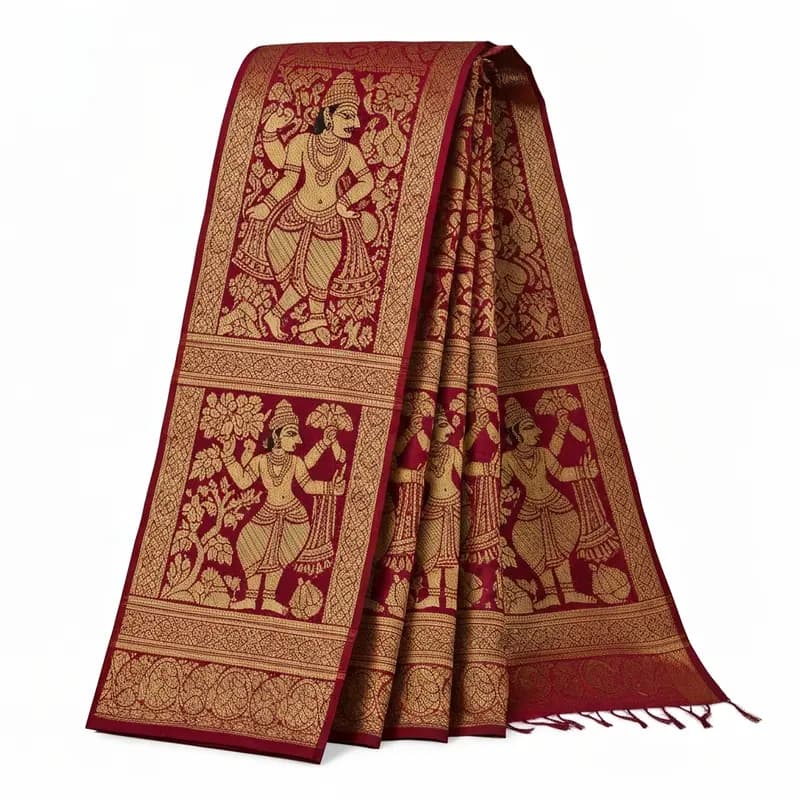
History & Origin
Baluchari weaving originated in Baluchar, a village in Murshidabad during the reign of the Nawabs in the 18th century, under the patronage of Nawab Murshid Quli Khan. After a devastating flood in the late 19th century destroyed Baluchar, the weavers migrated to Bishnupur under the patronage of the Malla kings, where the craft continues to this day. The craft was revived in the modern era by the legendary Subho Tagore in the 1950s with support from the Craft Council of West Bengal.
What makes Baluchari extraordinary is its narrative quality — the pallu and borders carry detailed figurative scenes from mythological stories, including depictions of Krishna, Radha, the Mahabharata war, and the coronation of Ram. These are not printed but woven in using extra-weft untwisted silk thread, making them an integral part of the fabric structure. No two elaborate Baluchari pallus are ever exactly alike.
How to Identify Authentic Baluchari Silk
- Look at the pallu — genuine Baluchari has large, complex figurative scenes woven into the pallu with fine silk thread. Printed or embroidered imitations lack the depth and texture of true weaving.
- Check the thread — Baluchari uses untwisted silk (resham) thread for the motifs, giving them a distinctive flat, matte appearance against the shinier body of the saree.
- Examine the border — the borders of genuine Baluchari are also woven with geometric or narrative motifs, not printed.
- GI tag — look for GI certification from West Bengal; authentic Bishnupur Baluchari sellers should provide this.
- Price point — complex Baluchari with detailed mythological scenes starts at Rs 15,000 and upward. Simple geometric or floral Baluchari start at Rs 4,000–6,000 for genuine handloom.
Types of Baluchari Silk
| Type | Weight | Price Range | Best For |
|---|---|---|---|
| Traditional Mythological Baluchari | Medium-Heavy | Rs 15,000 – Rs 80,000 | Weddings, Durga Puja, cultural events |
| Swarnachari (with zari) | Heavy | Rs 20,000 – Rs 80,000 | Festive, bridal |
| Geometric/Floral Baluchari | Medium | Rs 4,000 – Rs 15,000 | Daily ethnic, casual festive |
| Baluchari Dupatta | Light-Medium | Rs 2,000 – Rs 10,000 | Gifting, festive styling |
Best Brands for Baluchari Silk
Look for Bengal government-supported weavers cooperative sellers and West Bengal Handloom on Amazon. Bishnupur Handicrafts and individual weaver collectives on marketplace platforms are reliable. Satrani and Mimosa occasionally carry Bengal silk sarees in Baluchari style.
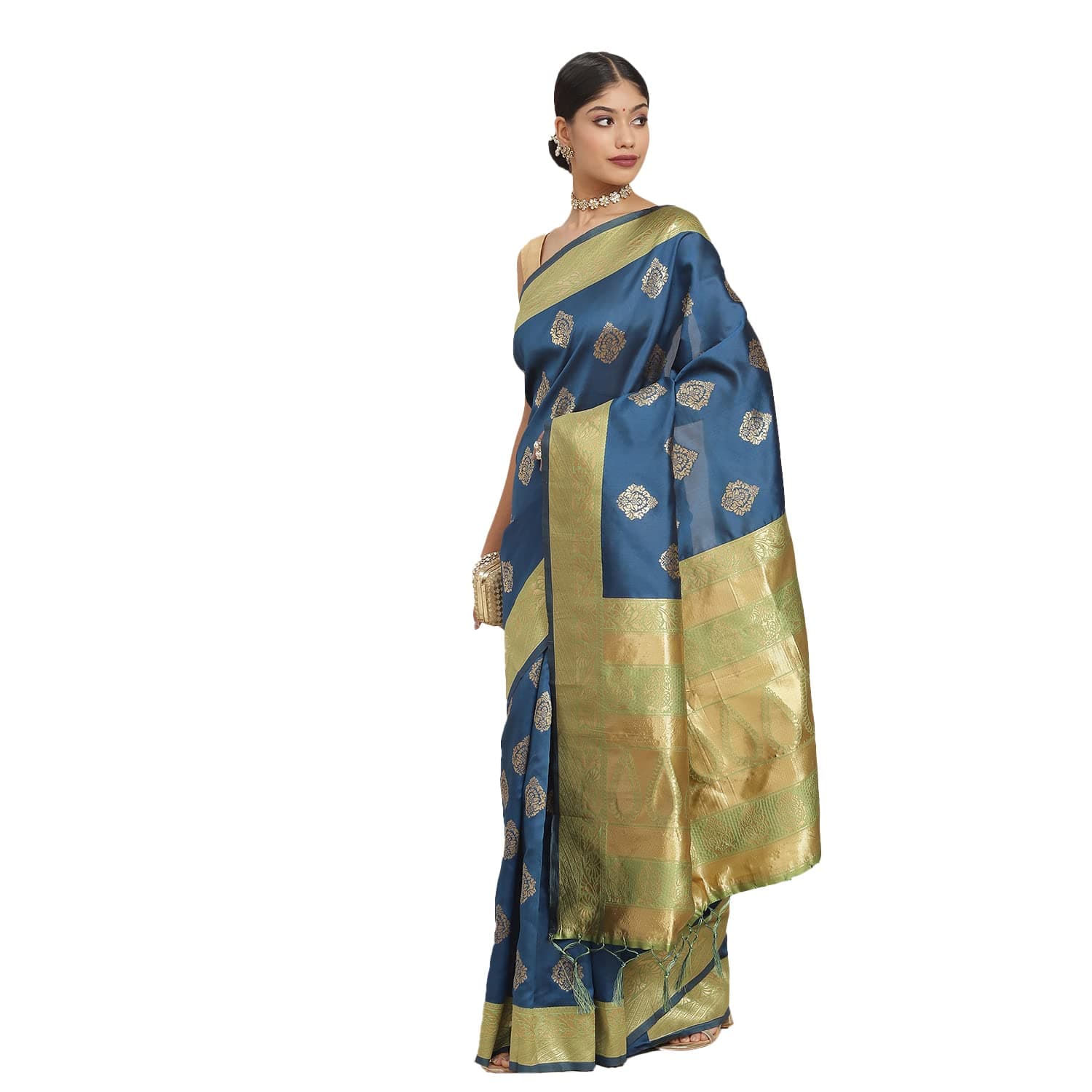 COD Available
ishin
Ishin Women's Silk Blend Teal & Green Woven Design Saree with Blouse
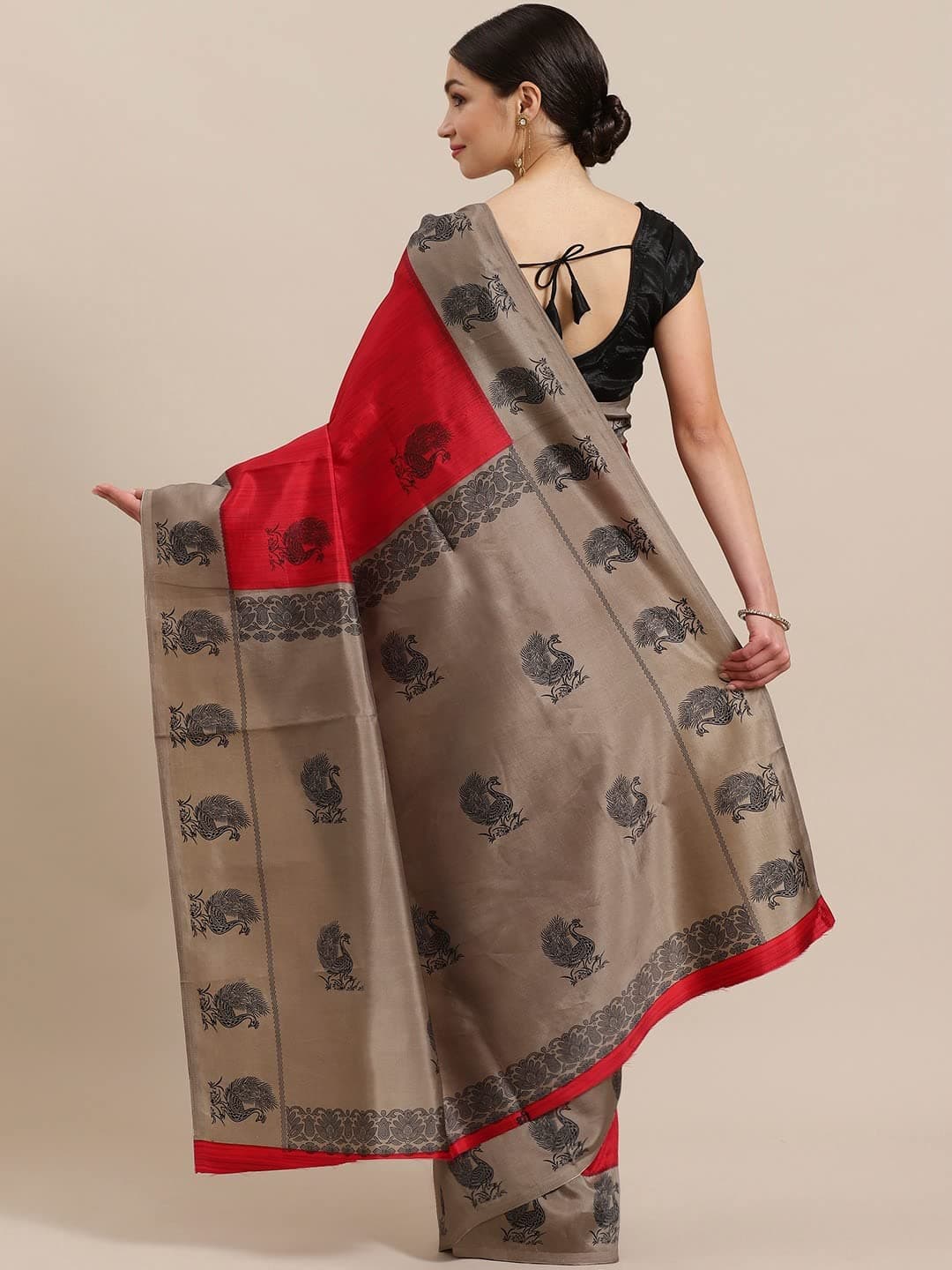 COD Available
ishin
Ishin Women's Art Silk Maroon & Taupe Printed Saree
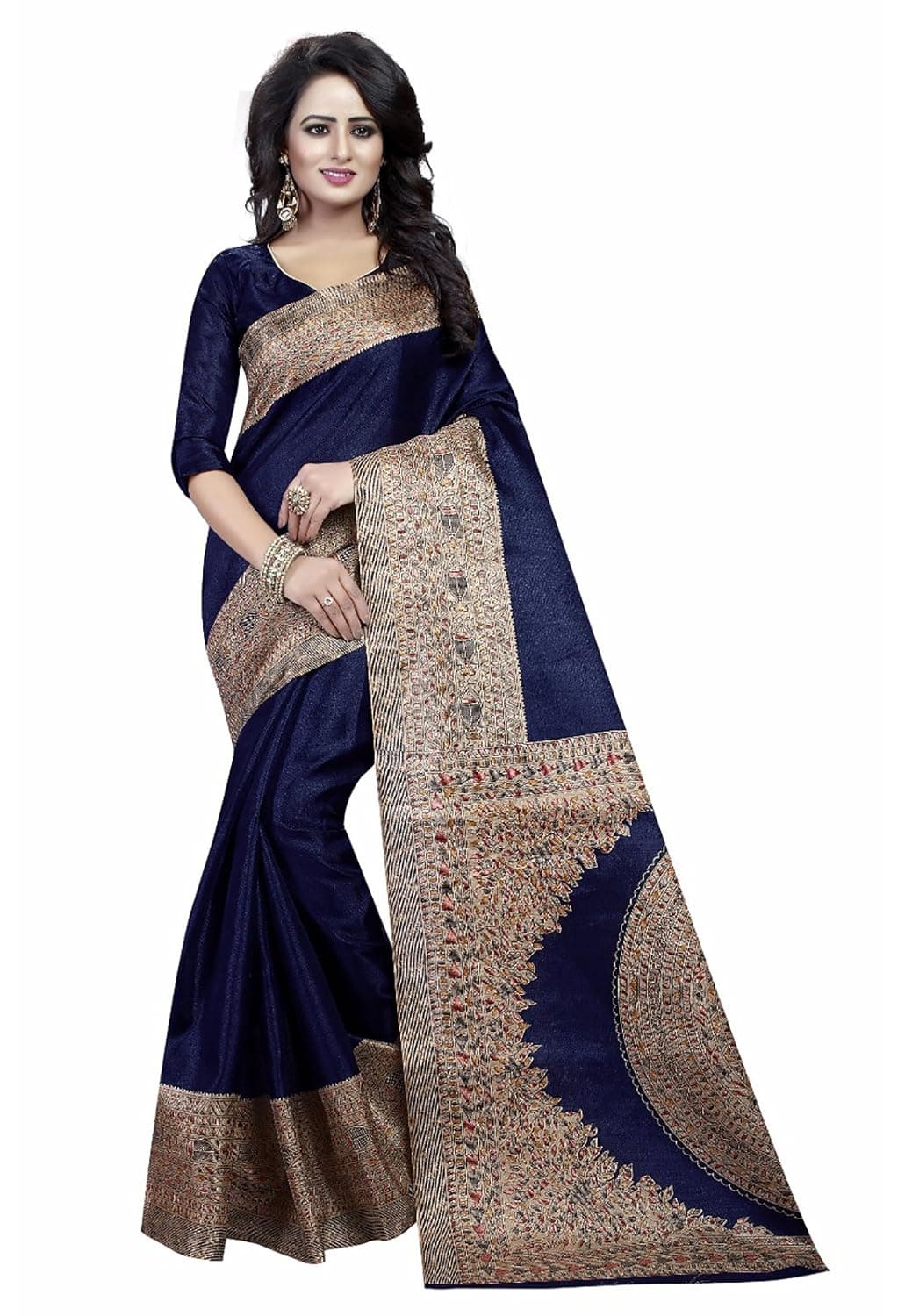 COD Available
ishin
Ishin Women's Art Silk Navy Blue Saree with Blouse Piece
 COD Available
ishin
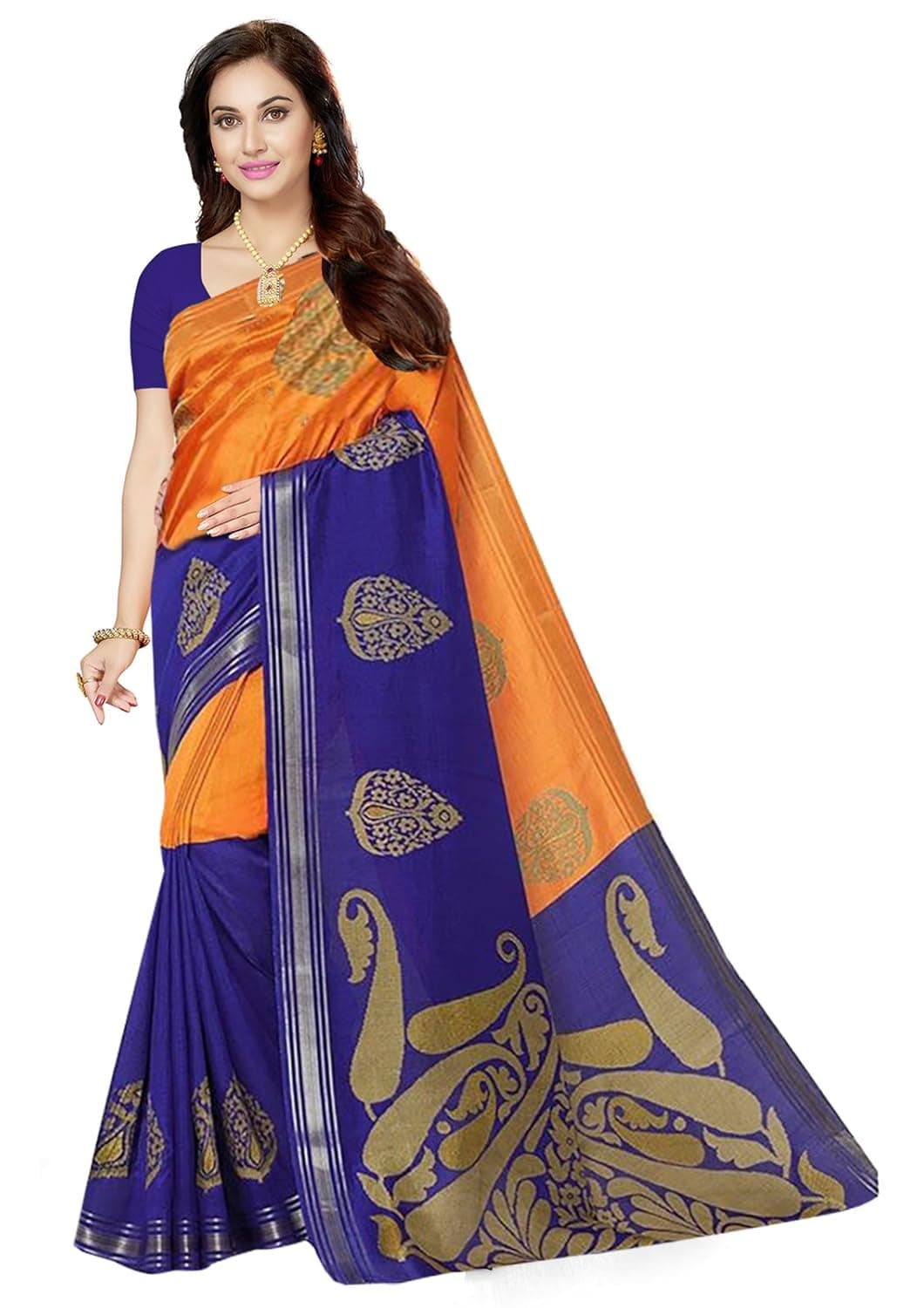
Ishin Women's Art Silk Dark Blue & Orange Saree with Blouse
 COD Available
mimosa
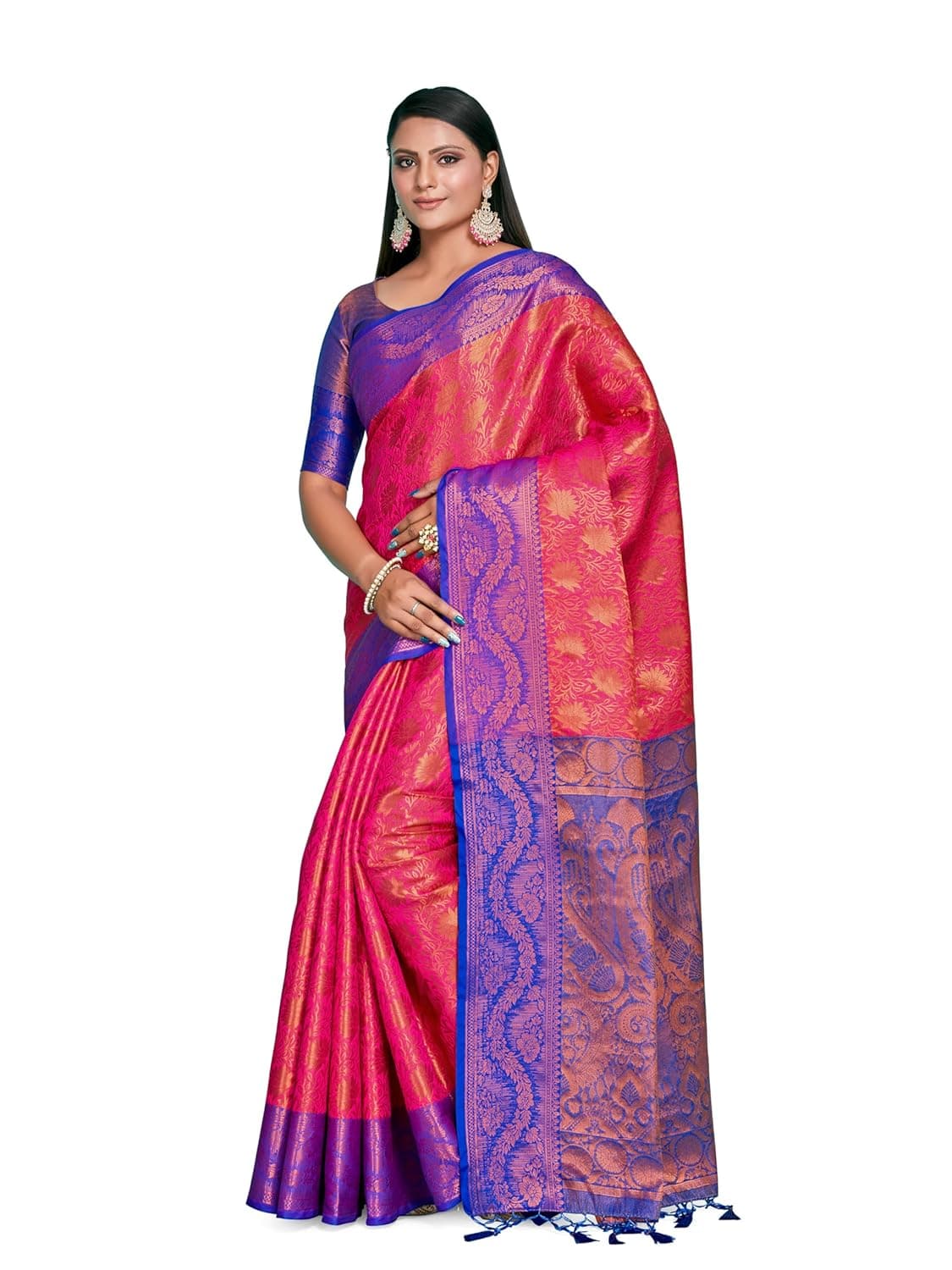
MIMOSA Women's Woven Design Kanjivaram Art Silk Saree Rani
 COD Available
mimosa
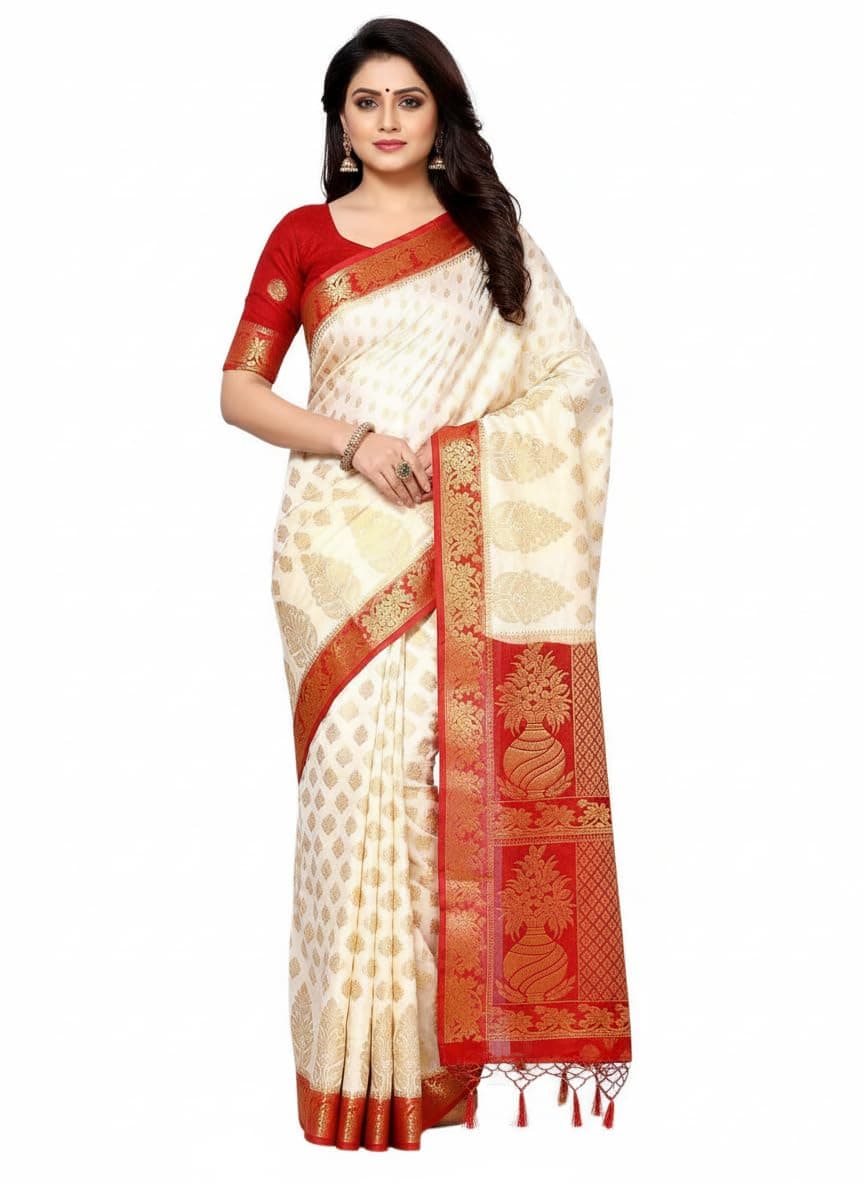
MIMOSA Women's Art Silk Saree Kanjivaram Style Beige
Price Guide
| Tier | Price Range | What You Get |
|---|---|---|
| Budget | Rs 4,000 – Rs 10,000 | Geometric or simple floral Baluchari; handloom; good for daily ethnic wear |
| Mid-Range | Rs 10,000 – Rs 30,000 | Handloom Baluchari with figurative mythological motifs; suitable for Durga Puja and festive |
| Premium | Rs 30,000 – Rs 80,000+ | Elaborate narrative pallu with Swarnachari (zari) elements; master weaver pieces |
Care & Maintenance
- Dry-clean only — the untwisted silk resham threads in Baluchari are delicate and can distort with water.
- Store in pure muslin cloth, away from moisture; untwisted silk can fray if stored carelessly.
- Handle the pallu with care when draping — the elaborate weaving is structurally strong but the decorative threads can snag on rough surfaces.
- Iron at low heat on the reverse side through a cotton pressing cloth; never steam the pallu directly.
Styling Tips
Baluchari's elaborate figurative pallu demands that the saree itself be the centrepiece. Wear it with simple, elegant jewellery — a classic Bengali chur (gold bangles), a small necklace, and Jhumka earrings are traditional. The Bengali drape showcases the pallu beautifully. For a cultural event or art exhibition, a Baluchari with silver jewellery and a minimal silk blouse is a conversation-starting look that celebrates Indian craft beautifully.
OUR VERDICT
Baluchari is for those who see their saree as an expression of culture and artistic sensibility rather than mere fashion. It is particularly meaningful during Durga Puja celebrations or cultural events. Invest in one piece with a pallu story that resonates with you personally — it will be a lifelong treasure.