
History & Origin
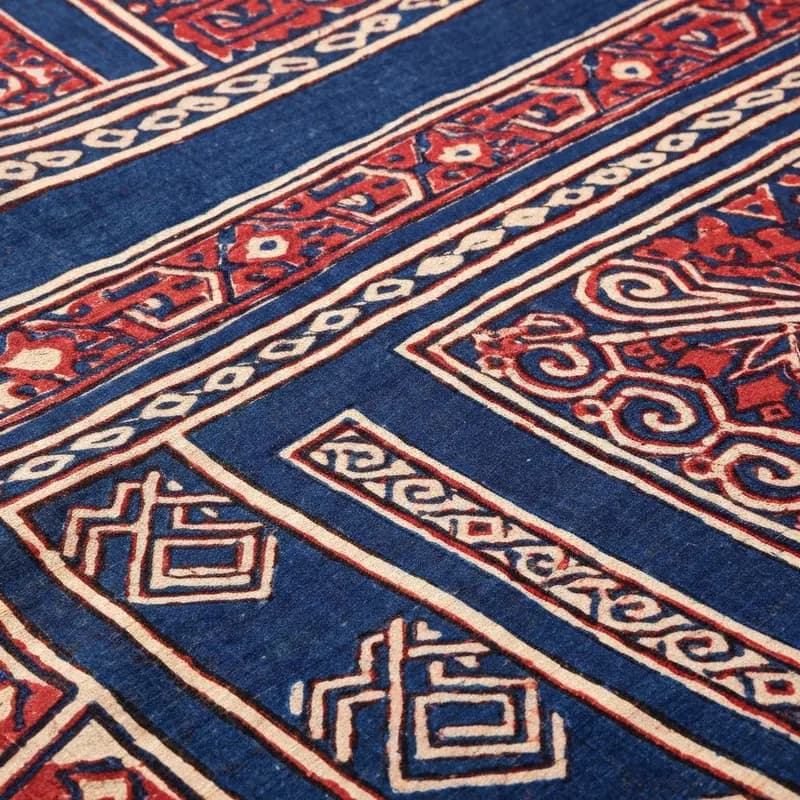
Ajrakh printing has been practiced by the Khatri community of Kutch for over 3,000 years, with connections to similar traditions in Sindh (now Pakistan) and Rajasthan. The craft migrated with the Khatri artisans during partition in 1947, and Kutch became its primary centre in India. Ajrakh reached a crisis point after the devastating 2001 Kutch earthquake, which destroyed many artisan workshops, but a remarkable revival led by master craftspeople like Ibrahim Khatri brought it back to global prominence.
The technique was awarded GI (Geographical Indication) status, recognising its cultural and geographic specificity. Today, Dhamadka and Ajrakhpur villages in Kutch are the heartlands of authentic ajrakh production, where river water chemistry and mineral-rich soil play an active role in the dyeing process.
How to Identify Authentic Ajrakh
- Check both sides of the fabric — genuine ajrakh is printed on both sides (double-sided printing), giving the pattern equal vibrancy on the reverse; single-sided printing indicates a lesser quality or imitation
- Look for natural dye characteristics — authentic ajrakh colours have a slightly muted, earthy quality compared to the harsh brightness of synthetic-dyed imitations; the indigo should look deep and complex, not flat electric blue
- Examine the pattern repeat — hand block printing shows slight variations in alignment and pressure marks; perfect machine-printed repeats are a red flag
- Ask for provenance — reputable sellers will identify the artisan village (Dhamadka or Ajrakhpur) and ideally the craftsperson's name; this is standard practice for GI-certified pieces
Types / Varieties
| Type | Characteristic | Price Range | Best For |
|---|---|---|---|
| Traditional Ajrakh (Natural Dye) | 16-step process, indigo and madder, double-sided print | Rs 4,500 – Rs 22,000 | Collectors, special occasions, gifting |
| Synthetic Dye Ajrakh | Faster production, brighter colours, single-sided | Rs 1,200 – Rs 5,000 | Daily wear, budget buyers |
| Ajrakh on Silk | Traditional patterns on Gaji or Mulberry silk | Rs 6,000 – Rs 22,000 | Weddings, festive wear |
| Contemporary Ajrakh | Ajrakh patterns on modern silhouettes, fusion colours | Rs 2,000 – Rs 8,000 | Everyday fusion, urban wear |
Best Brands
For authentic natural-dye ajrakh, look for direct artisan brands from Kutch — Ismail Khatri and Ibrahim Khatri's workshops in Ajrakhpur are internationally recognised. Indie brands like Ikai by Ragini Ahuja, Raw Mango, and Jaypore curate vetted ajrakh from verified artisans. For accessible options, Good Earth carries curated ajrakh products with documented provenance.
 COD Available
ishin
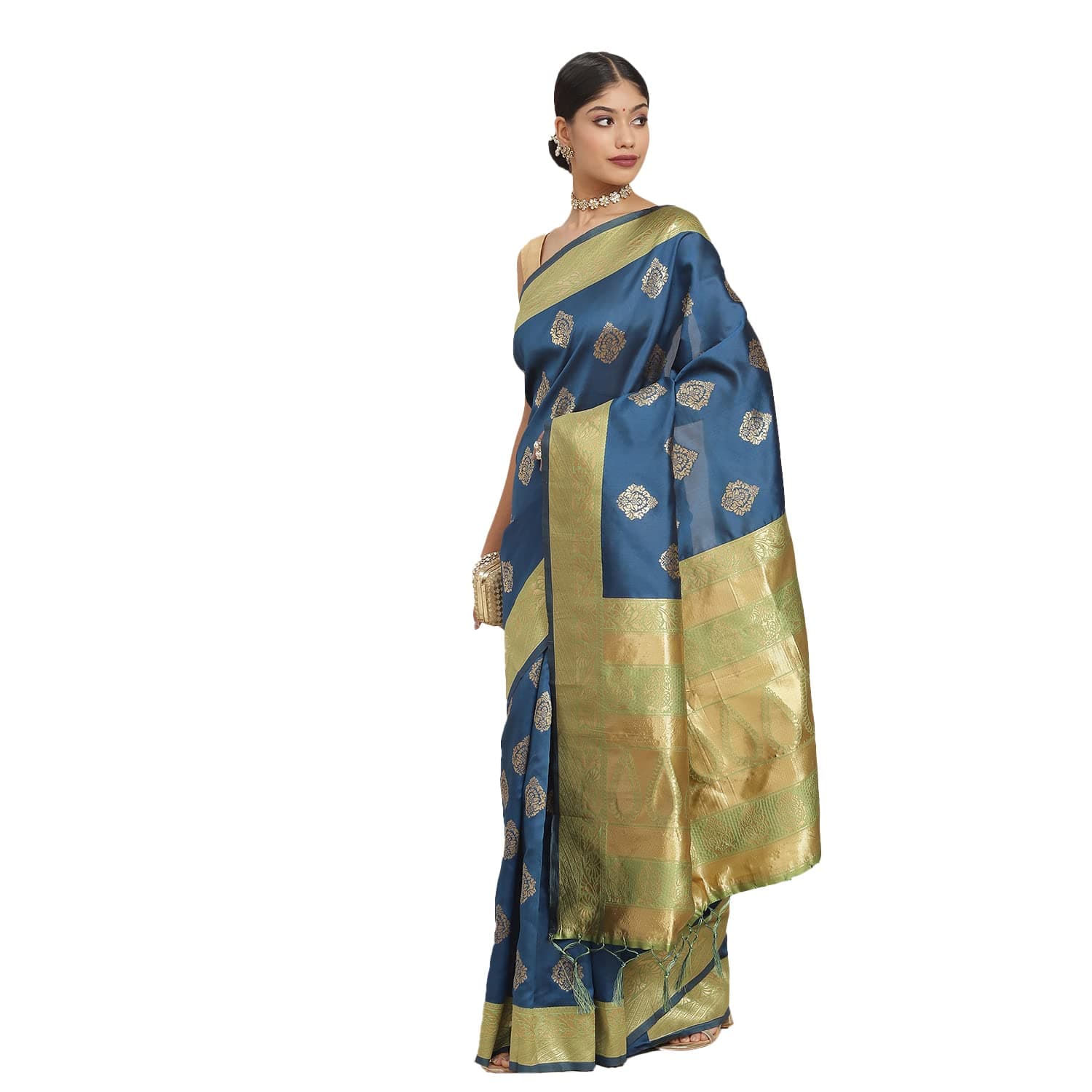
Ishin Women's Silk Blend Teal & Green Woven Design Saree with Blouse
 COD Available
ishin
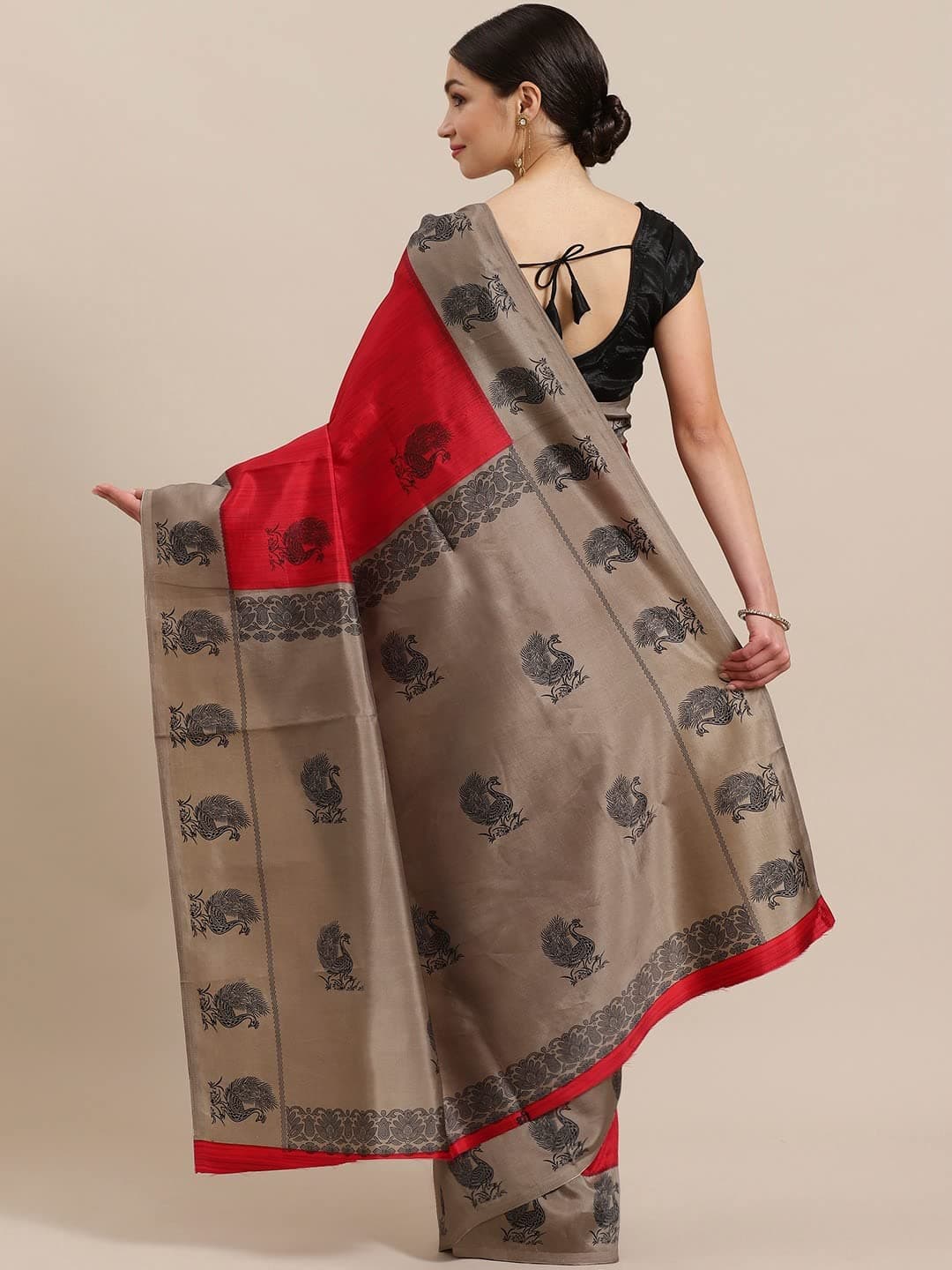
Ishin Women's Art Silk Maroon & Taupe Printed Saree
 COD Available
ishin
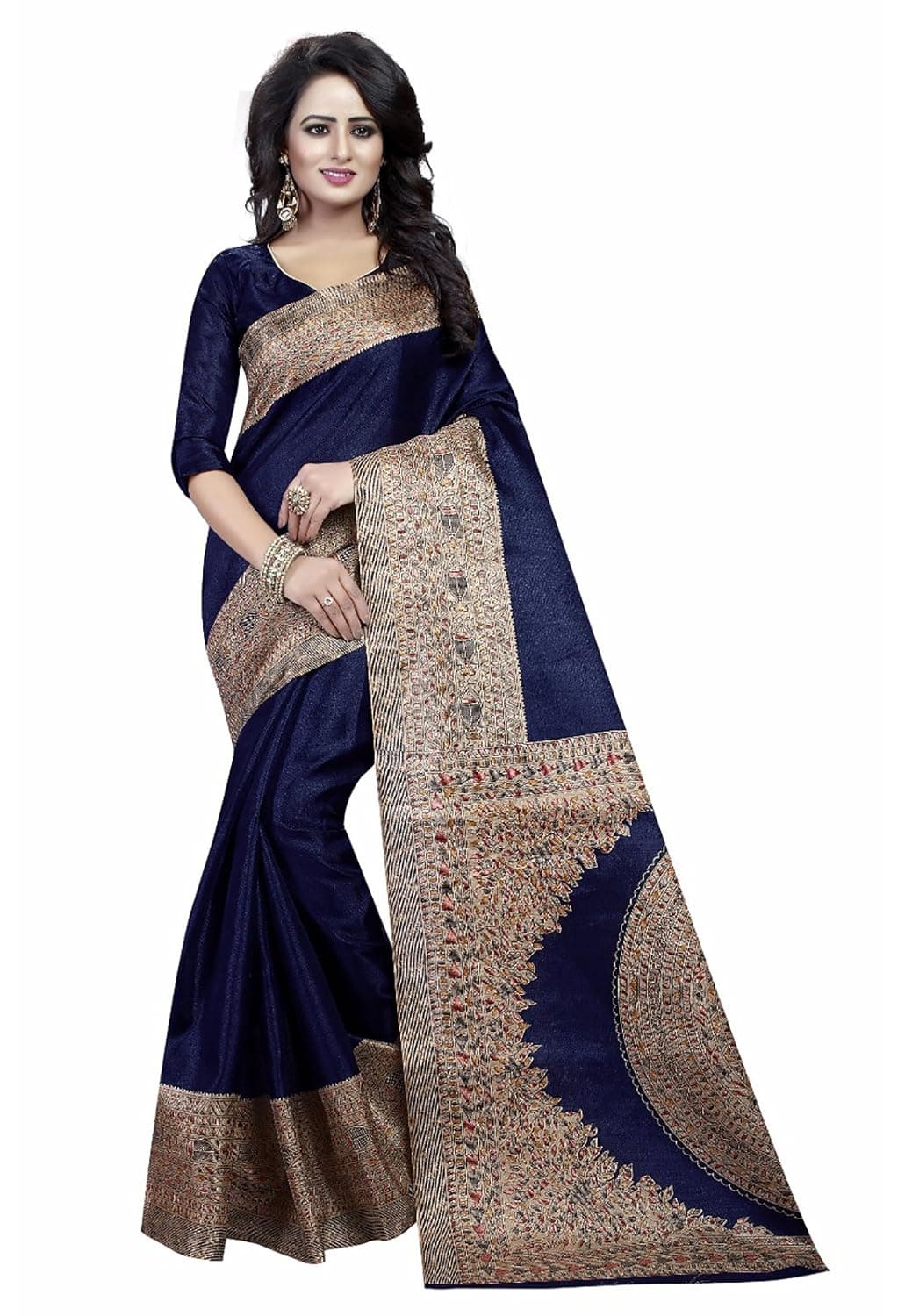
Ishin Women's Art Silk Navy Blue Saree with Blouse Piece
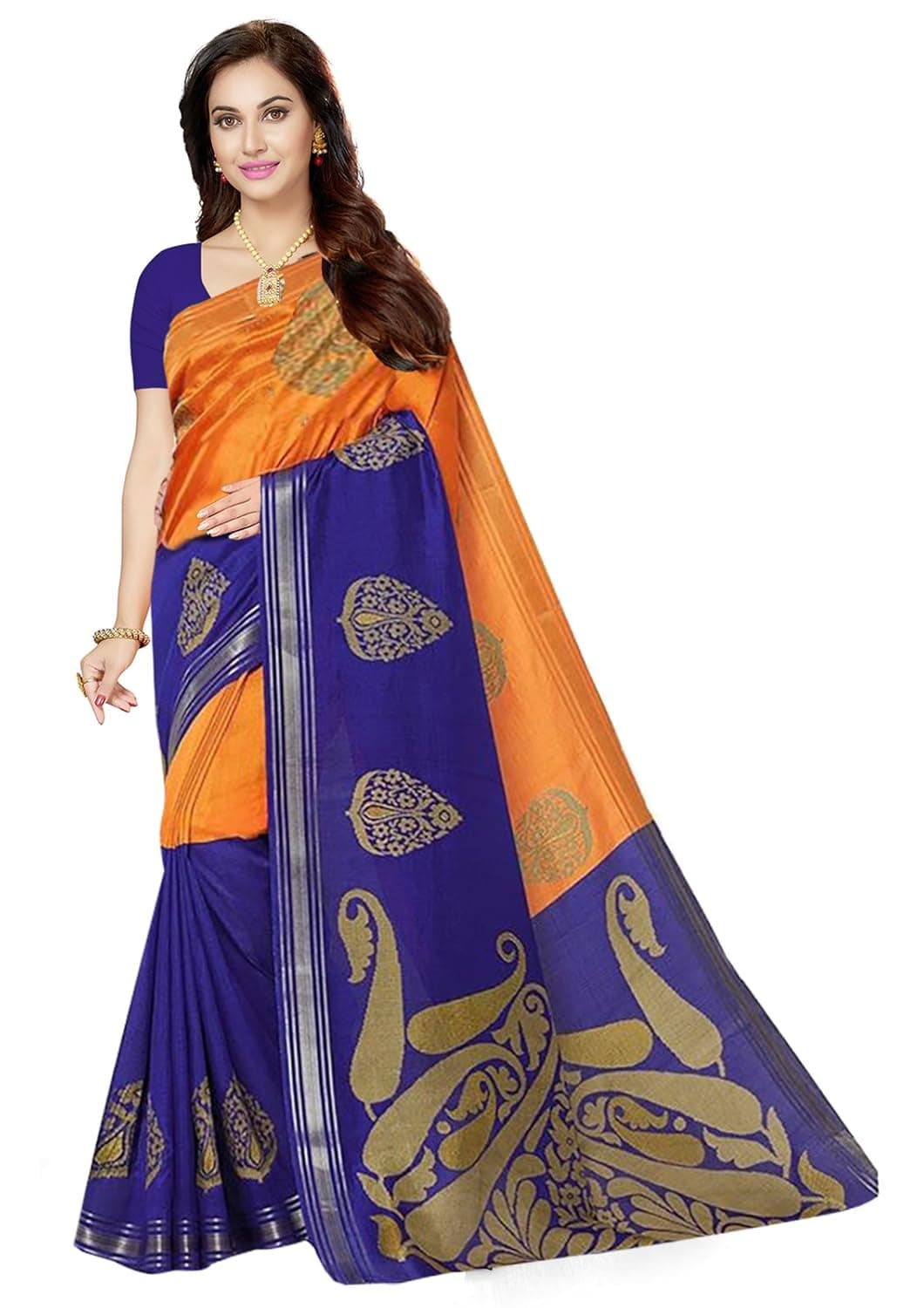 COD Available
ishin
Ishin Women's Art Silk Dark Blue & Orange Saree with Blouse
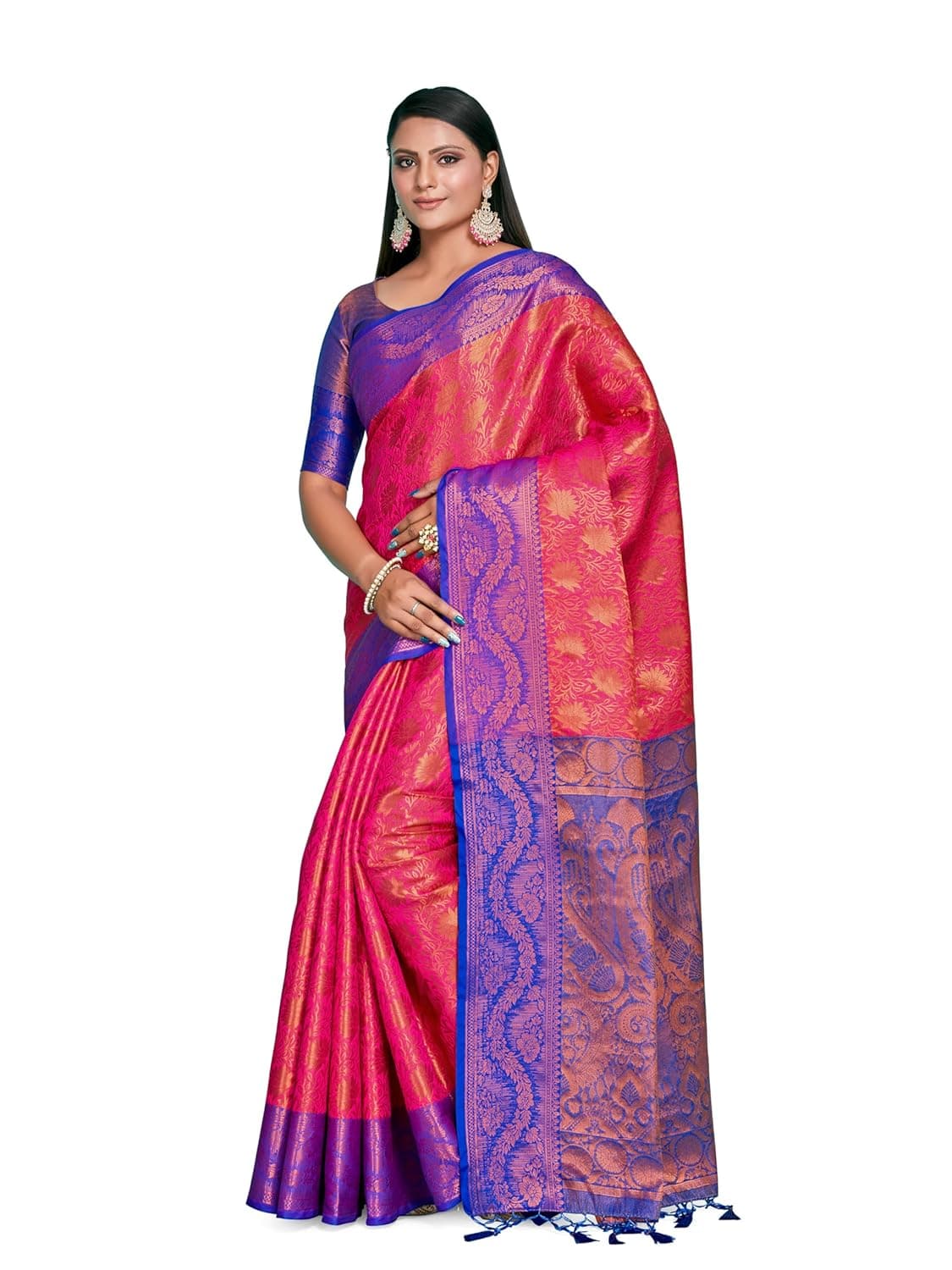 COD Available
mimosa
MIMOSA Women's Woven Design Kanjivaram Art Silk Saree Rani
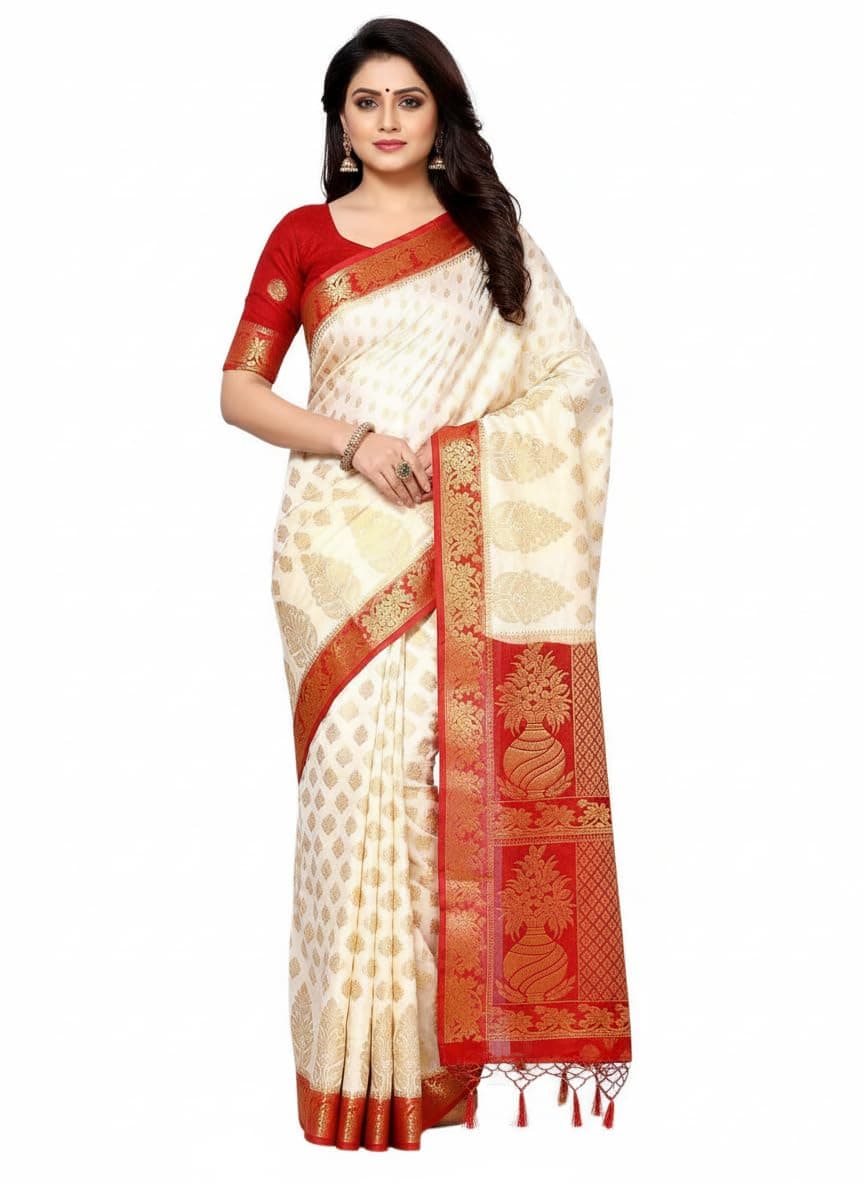 COD Available
mimosa
MIMOSA Women's Art Silk Saree Kanjivaram Style Beige
Price Guide
| Tier | Price Range | What You Get |
|---|---|---|
| Entry | Rs 1,200 – Rs 3,500 | Synthetic-dye ajrakh on cotton, single-sided, good for everyday use |
| Mid | Rs 3,500 – Rs 8,000 | Natural or semi-natural dye ajrakh on cotton, double-sided print |
| Premium | Rs 8,000 – Rs 22,000+ | Full natural-dye ajrakh from named Kutchi artisans, silk base available, GI certified |
Care & Maintenance
- Hand wash in cold water — natural dyes can bleed slightly, especially indigo; always wash separately for the first few washes
- Use mild soap or fabric-specific detergent — harsh detergents strip natural dyes faster and can alter the earthy colour palette
- Dry in shade away from direct sunlight — prolonged sun exposure fades natural indigo and madder dyes more rapidly than synthetic colours
- Do not bleach or use chemical stain removers — these destroy natural dye mordants and will permanently alter the colour
Styling Tips
Ajrakh's earthy palette — dominated by navy blue, rust red, and black — pairs naturally with warm metallics like bronze and antique gold jewellery. A classic ajrakh saree or dupatta looks stunning against a solid ivory or cream base. For contemporary styling, an ajrakh block-printed kurta with plain cigarette pants lets the print take centre stage. Ajrakh also works exceptionally well as a stole or jacket fabric for Indo-Western looks. Its bold geometric patterns mean accessories should be kept minimal.
OUR VERDICT
Ajrakh is not just a fabric — it's a philosophy of sustainable craft. The natural dyeing process connects the cloth to the earth, river, and sky in a literal sense. If you're going to invest in one heritage Indian textile, make it a natural-dye ajrakh from a named Kutchi artisan. It will outlast trends, age beautifully, and carry a story worth telling.