
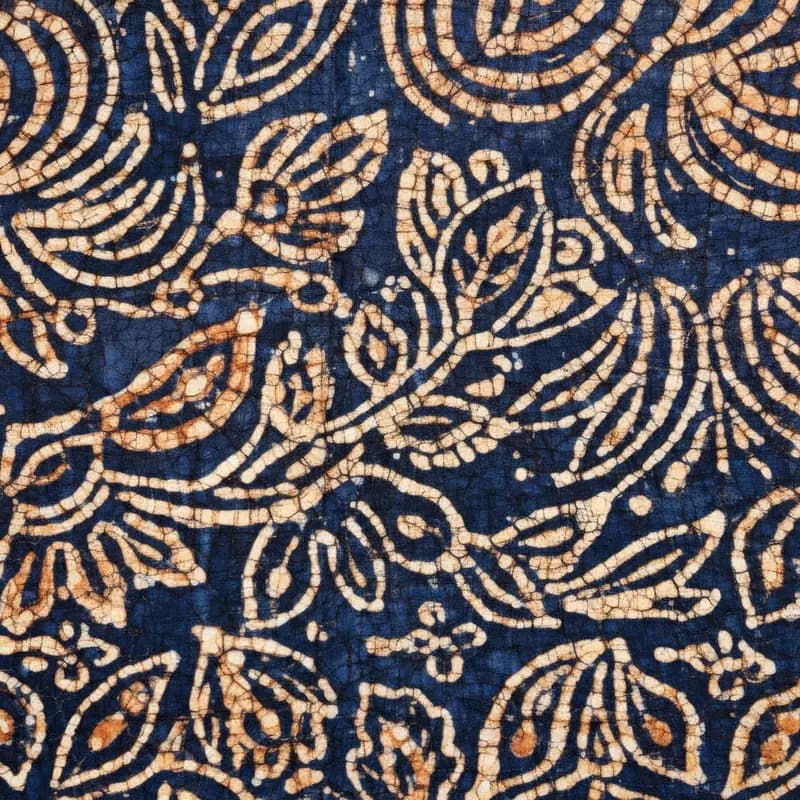
History & Origin
Batik arrived in India through centuries of maritime trade with Southeast Asia, with the most intensive transfer happening during the 19th and early 20th centuries. Indian weavers and dyers adapted the wax-resist technique to their own materials and motifs — replacing Javanese wayang figures with peacocks, lotuses, and paisley. The craft took strong root in Gujarat (Surat and Kutch), West Bengal (particularly in Shantiniketan under Tagore's encouragement), and parts of Tamil Nadu.
Today, Indian batik is a distinct art form in its own right, different from Javanese batik in its palette choices, motifs, and application techniques. Shantiniketan batik in Bengal is especially celebrated for its fluid artistry, while Kutchi batik incorporates tribal and folk motifs. The Indian government has promoted batik training through various handloom and handicraft boards, and it's a significant cottage industry in multiple states.
How to Identify Authentic Batik
- Look for the crackle effect — genuine wax-resist batik shows a fine web of dye penetrating through cracked wax, creating organic vein-like lines within the design; screen-printed 'batik' imitations show a flat, printed crackle pattern that looks artificial
- Check penetration — hold authentic batik to light; the dye penetrates fully through the fabric; printed imitations show the pattern only on the surface
- Examine edges of colour blocks — real batik has soft, slightly irregular edges where wax met fabric; print edges are crisp and uniform
- Feel for wax residue — freshly made hand batik may have slight wax residue on the surface until the final washing; there should be a subtle texture difference between dyed and resisted areas
Types / Varieties
| Type | Characteristic | Price Range | Best For |
|---|---|---|---|
| Shantiniketan Batik | Bengal-style, fluid artistic motifs, often on silk or cotton, influenced by Tagore-era aesthetics | Rs 2,500 – Rs 12,000 | Art lovers, festive occasions |
| Gujarati Batik | Tribal and folk motifs, bolder patterns, often on cotton | Rs 1,500 – Rs 6,000 | Casual, festive, kurtis |
| Tamil Nadu Batik | Temple motifs, Chola-influenced patterns, often in silk | Rs 3,000 – Rs 10,000 | Cultural events, sarees |
| Screen-Print Batik | Batik-look print on cotton or georgette, affordable | Rs 600 – Rs 2,000 | Everyday wear, budget buyers |
Best Brands
For authentic hand batik, Shantiniketan's local artisan cooperatives and the Crafts Council of India are reliable sources. NIFT-trained designers working with batik include several boutique labels in Kolkata and Chennai. For accessible everyday batik, Fabindia carries handloom-certified batik pieces sourced from verified artisan groups.
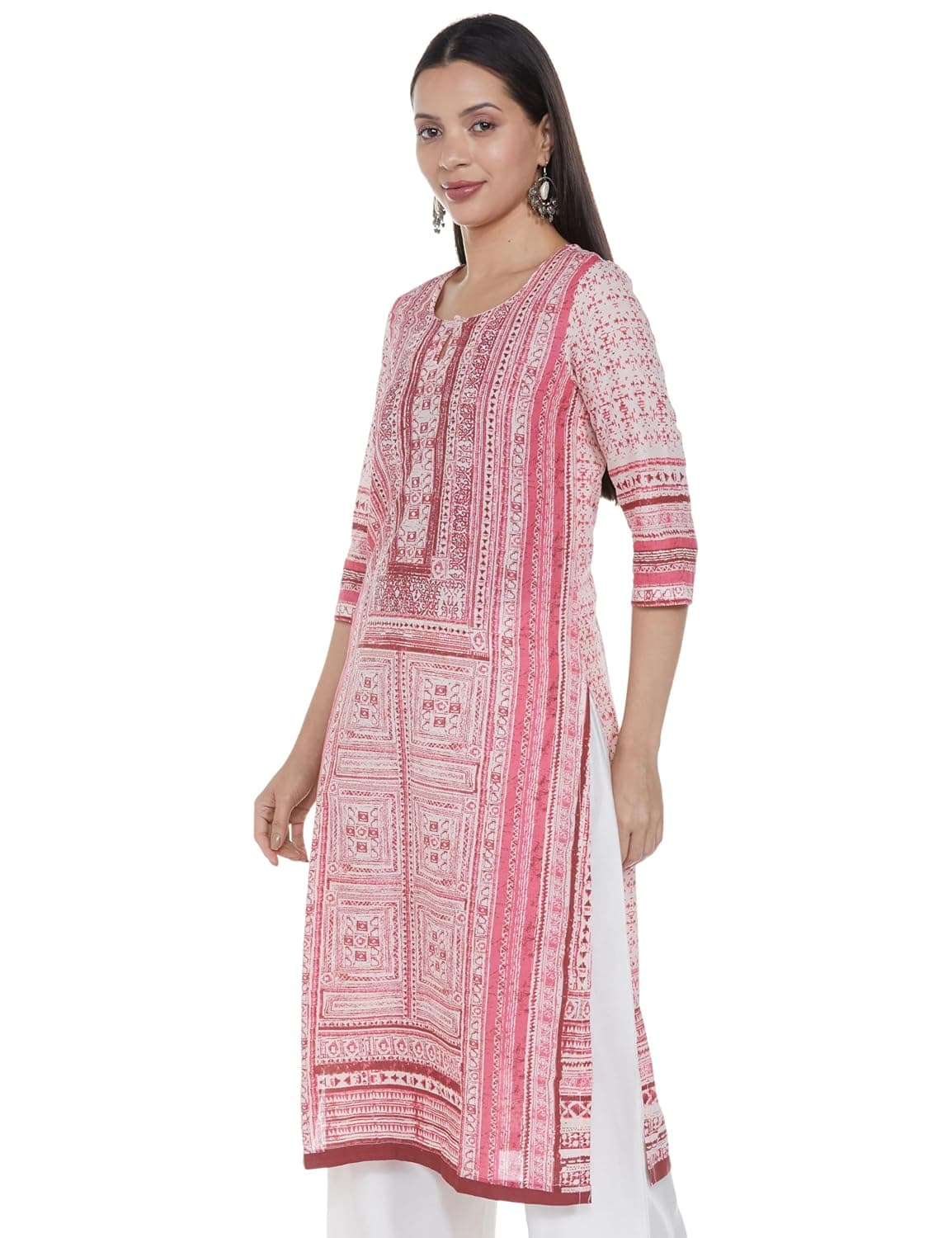 COD Available
biba
BIBA Women's Cotton Straight Printed Kurta
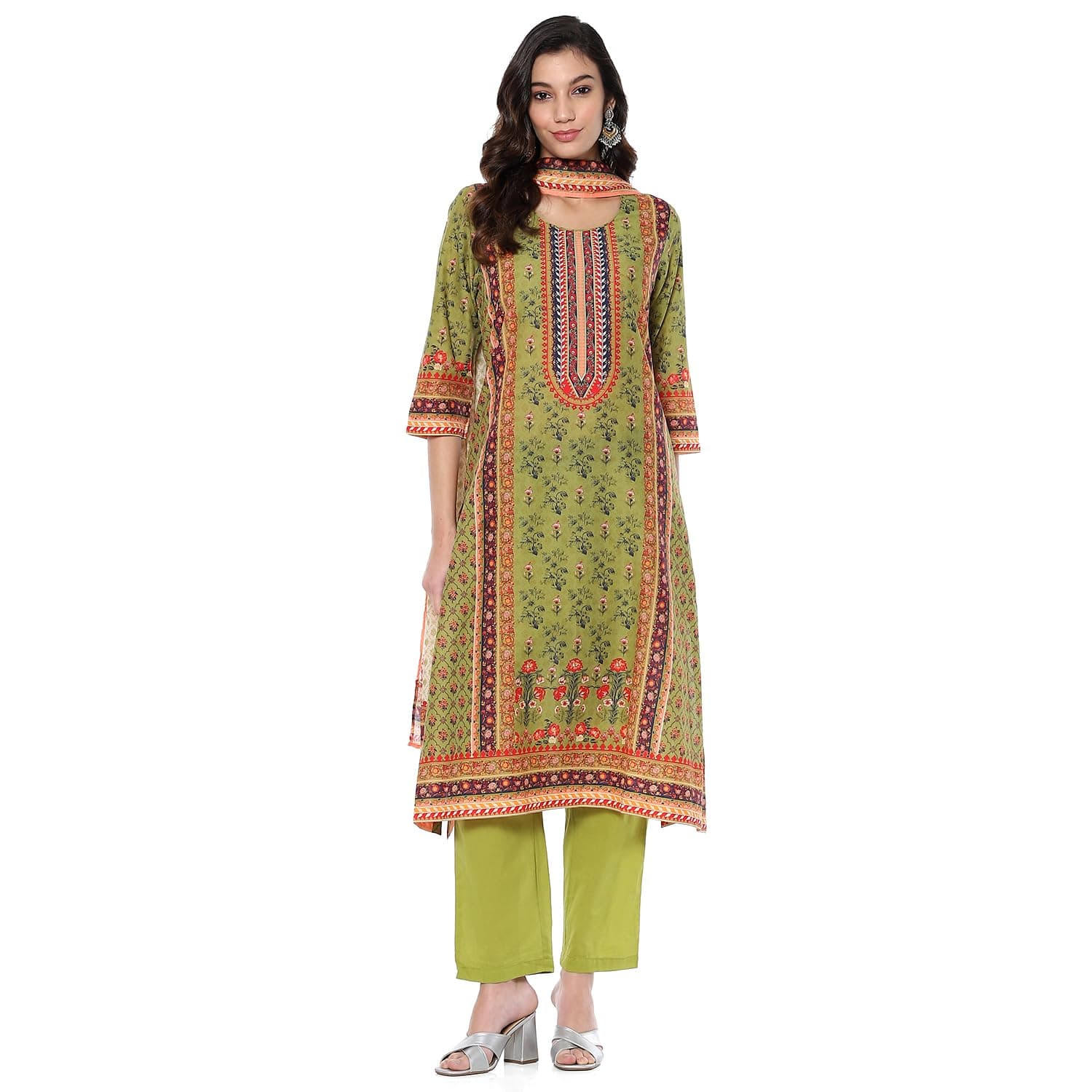 COD Available
biba
BIBA Women's Cotton Printed Kurta Set with Dupatta
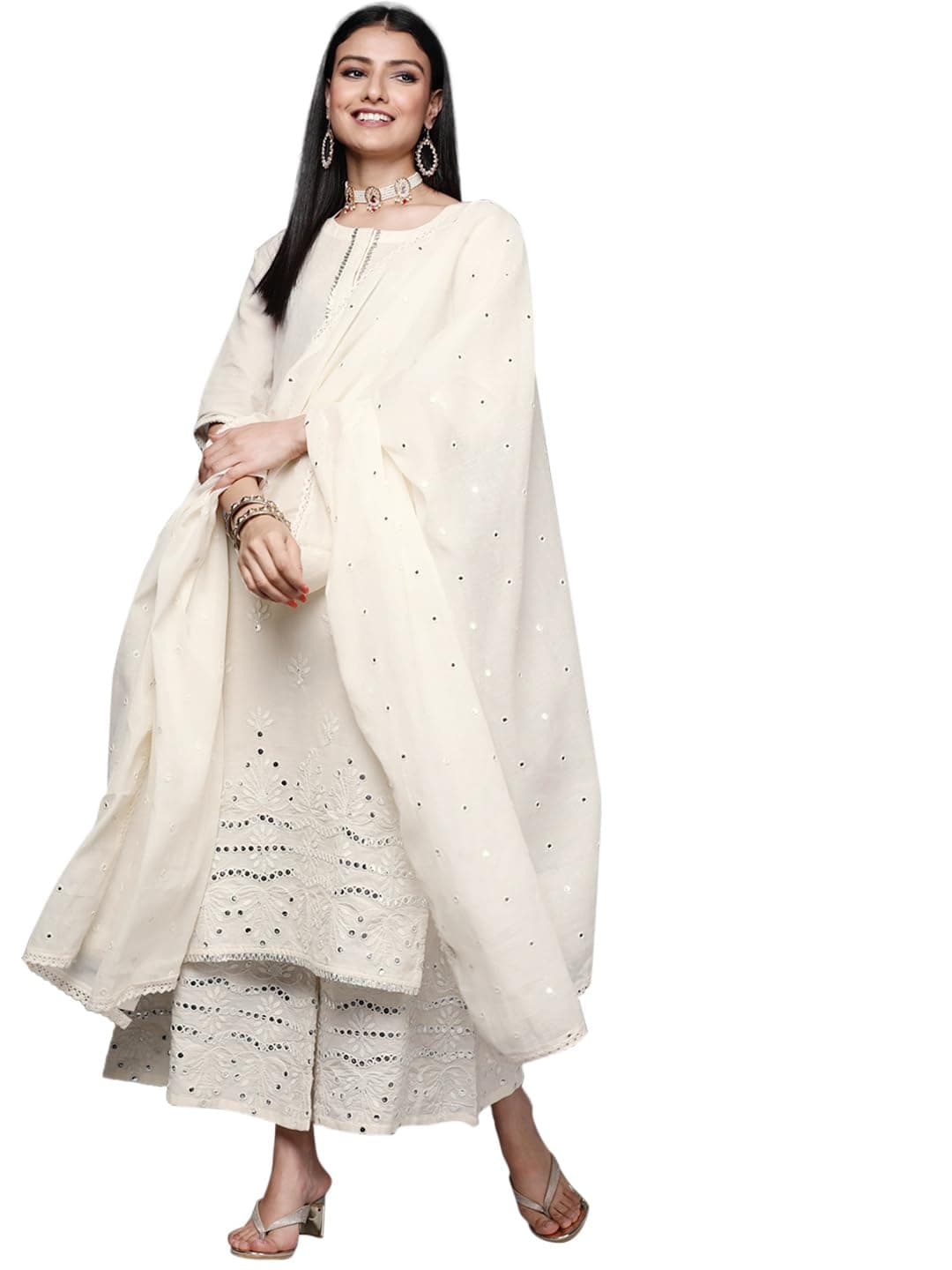 COD Available
libas
Libas Women's Embroidered Cotton Straight Kurta with Palazzos & Dupatta
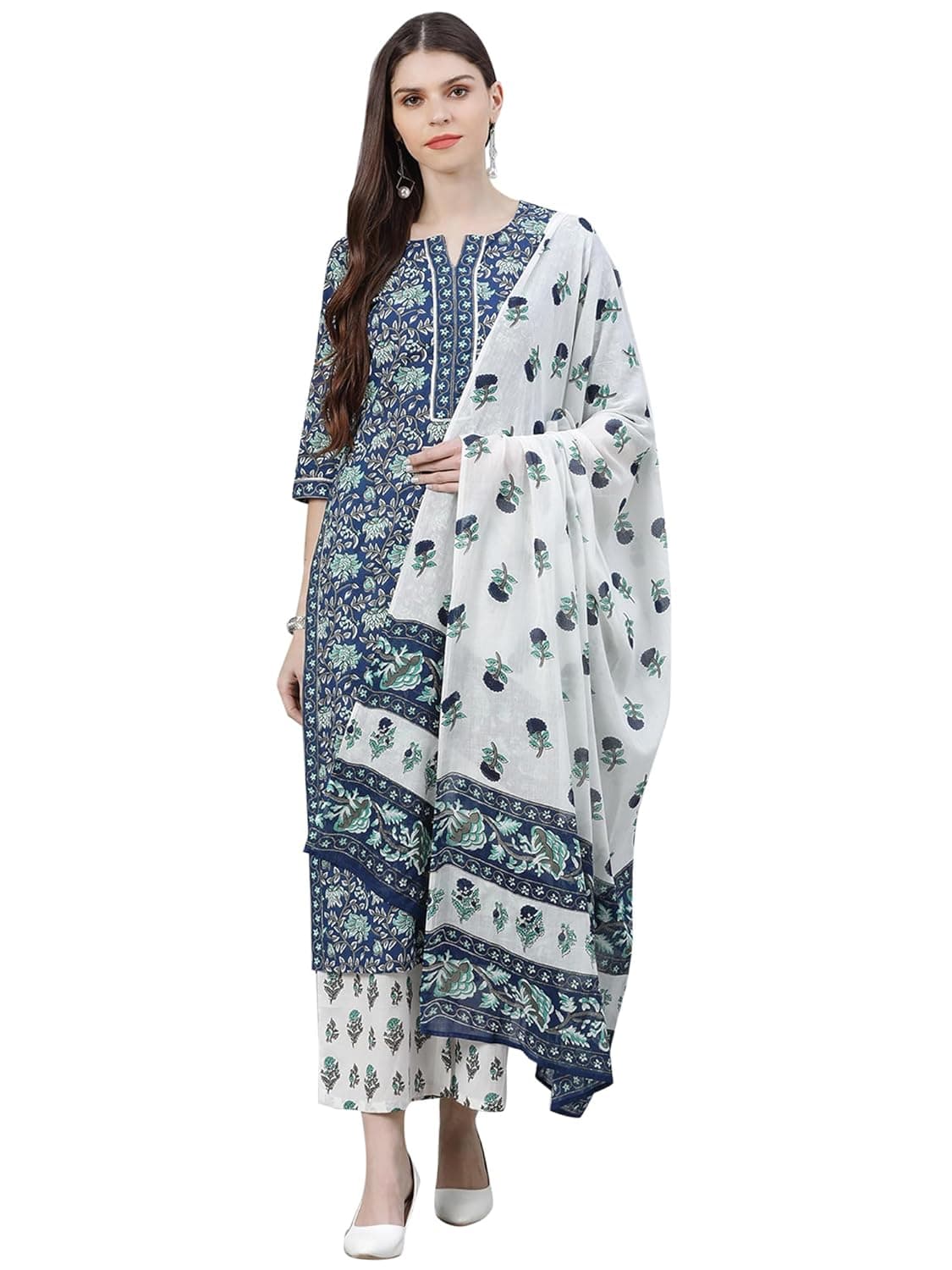 COD Available
libas
Libas Women's Cotton Printed Kurta Set Multicoloured
COD Availablelibas
Libas Printed Silk Blend Round Neck Kurta Pant Set Pink
 COD Available
m.r.p:
Women’s Kurta Set with Dupatta | 3 Piece Kurta Pant Set for Women | Ethnic Printed Kurta Suit | Cotton Blend Traditional Kurta Set | Festive, Casual
Price Guide
| Tier | Price Range | What You Get |
|---|---|---|
| Entry | Rs 600 – Rs 2,000 | Screen-printed batik-look fabric on cotton or georgette; good aesthetics, no hand craft |
| Mid | Rs 2,000 – Rs 5,000 | Hand batik on cotton with natural or reactive dyes, regional artisan production |
| Premium | Rs 5,000 – Rs 12,000+ | Shantiniketan or Gujarati hand batik on silk, complex multi-layer dye process |
Care & Maintenance
- Hand wash in cool water — hot water can soften any remaining wax residue in older pieces and cause it to re-bloom on the fabric surface
- Wash separately initially — batik dyes can bleed in the first few washes, especially darker colours
- Do not wring or twist — lay flat or hang to dry in shade; direct sunlight fades batik dyes over time
- Iron on medium heat on the reverse side; if ironing on the front, place a pressing cloth between the iron and fabric to protect the wax-resist texture
Styling Tips
Batik's organic, earthy patterns work best in relaxed, bohemian, or artisanal aesthetics. A batik cotton kurta with straight linen trousers is a perfect summer work outfit. Batik sarees in silk drape beautifully and make a distinctive statement at cultural events and art exhibitions. For casual wear, a batik dupatta over a solid ethnic set adds an artistic touch without effort. The colour palettes of Indian batik — indigo, rust, earthy greens, ochre — pair naturally with brass or terracotta jewellery.
OUR VERDICT
Indian batik sits in a fascinating space between indigenous craft tradition and global art form. Authentic hand batik is genuinely labour-intensive and worth supporting through direct artisan purchases. For everyday wear, good-quality screen-print batik is a perfectly honest choice at accessible prices. Know the difference, buy accordingly, and you'll always be happy with your batik wardrobe.