
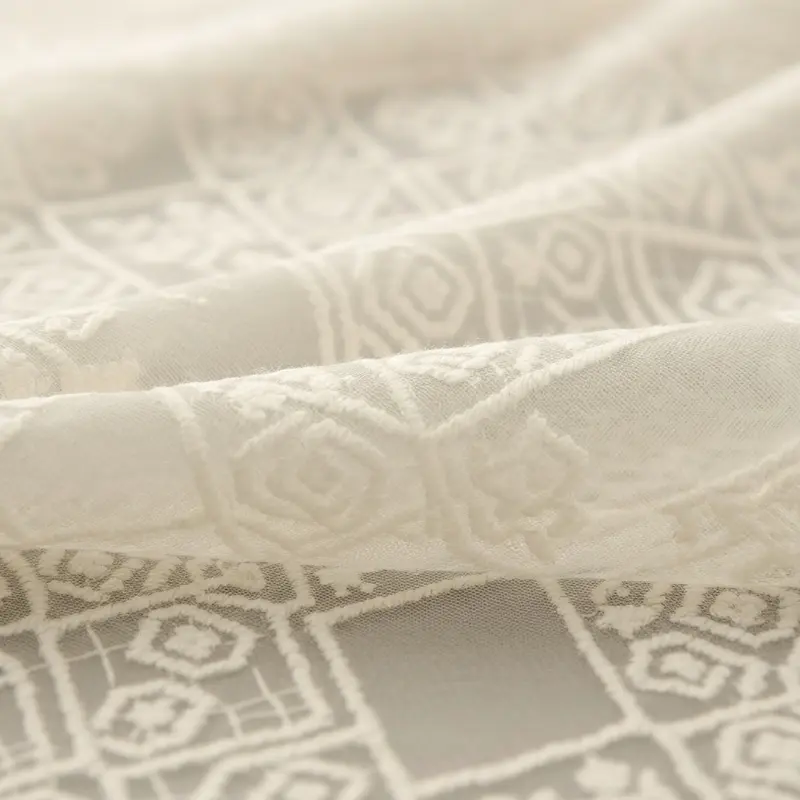
History & Origin
Jamdani's roots lie in the legendary Dhaka muslin tradition of Bengal, patronised by Mughal emperors who paid fortunes for robes lighter than air. The word 'Jamdani' is believed to derive from Persian — 'Jam' (flower) and 'Dani' (vase/container) — reflecting the floral motifs that define the tradition. During its Mughal peak, Jamdani was gifted between emperors as treasures; the finest pieces required multiple weavers working for months on a single saree.
British colonialism devastated Jamdani weaving by flooding the market with cheap mill cloth. The tradition nearly died in the early 20th century but was revived through government craft development programs. In 2013, UNESCO inscribed Jamdani weaving on its Representative List of Intangible Cultural Heritage of Humanity. Today weavers in Narayanganj (Bangladesh) and Fulia/Shantipur (West Bengal) continue the tradition, with Indian Jamdani receiving a Geographical Indication certificate.
How to Identify Authentic Jamdani
- Motif examination — Jamdani motifs are woven INTO the fabric (not printed or embroidered); look at the reverse — the pattern should be visible as floating threads
- Thread irregularity — weavers judge thread placement by eye, so authentic Jamdani has micro-variations in motif spacing that printing cannot replicate
- Transparency — the base fabric is fine muslin; when held to light, the non-motif areas should be sheer
- GI tag — Indian Jamdani carries a Geographical Indication certificate; insist on documentation for sarees above Rs 10,000
- Price reality — a genuine handwoven Jamdani saree requiring 15–30 days of weaving cannot cost less than Rs 4,000–5,000; cheaper is printed imitation
Types & Varieties
| Type | Characteristic | Price Range | Best For |
|---|---|---|---|
| Dhakai Jamdani | Finest quality, Bangladeshi origin, extreme delicacy | Rs 8,000–80,000+ | Collector pieces, heritage weddings |
| West Bengal Jamdani | GI certified, Fulia/Shantipur origin, excellent quality | Rs 3,000–25,000 | Durga Puja, weddings, formal occasions |
| Cotton Jamdani | Lightweight, traditional motifs, everyday-ish wear | Rs 3,000–12,000 | Cultural events, formal wear |
| Silk-cotton Jamdani | Silk weft on cotton base, richer sheen | Rs 6,000–30,000 | Weddings, high-end occasions |
Best Brands
Tantuja (West Bengal Handloom Corporation) is the most reliable institutional source for authentic, GI-certified Bengali Jamdani at regulated prices. For curated designer Jamdani, Sabyasachi Mukherjee's label and Anavila Misra's saree line offer exceptional pieces. Weavers' cooperatives in Fulia and Shantipur sell direct at better prices — Bengal's own handicraft board (Biswa Bangla) is also trustworthy.
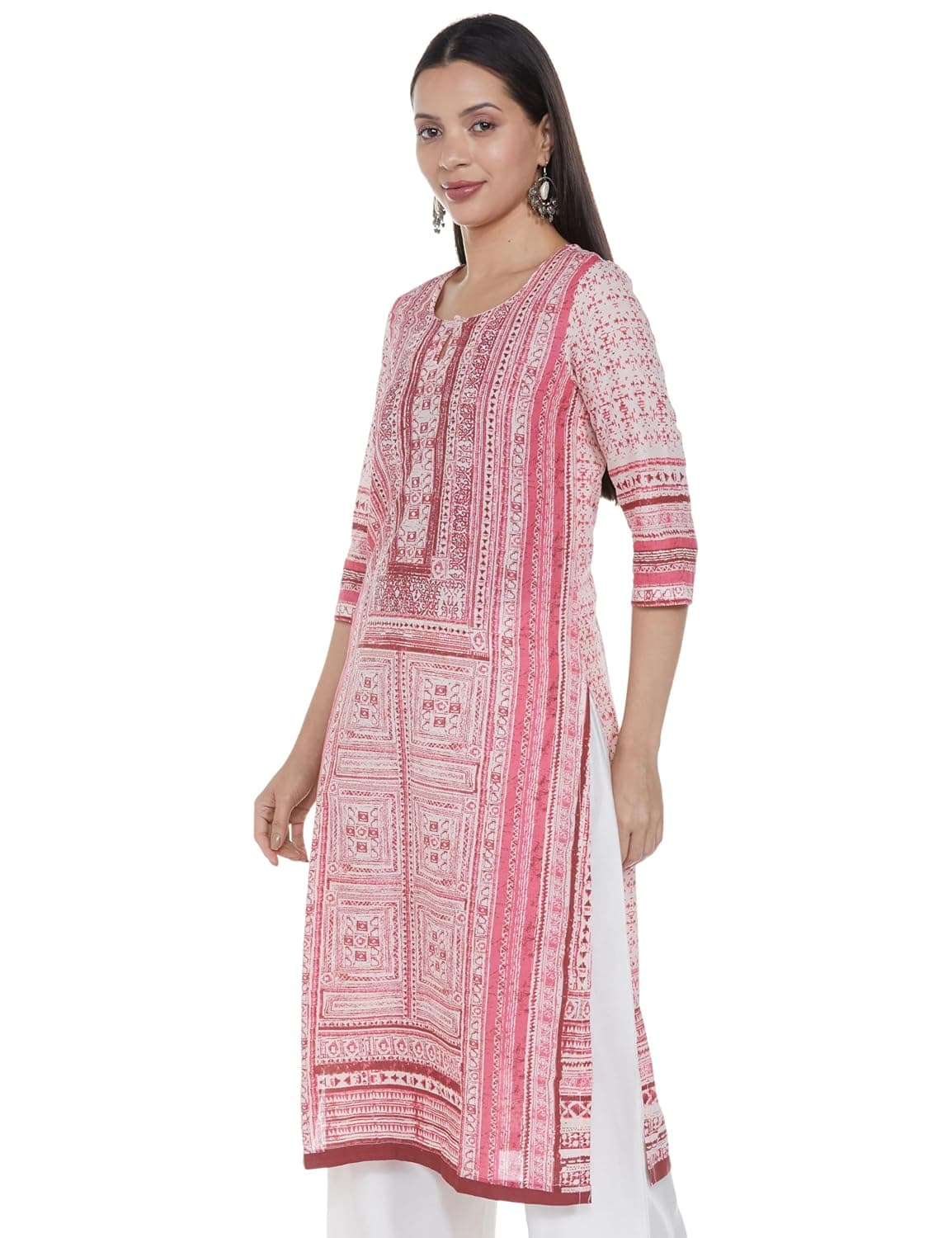 COD Available
biba
BIBA Women's Cotton Straight Printed Kurta
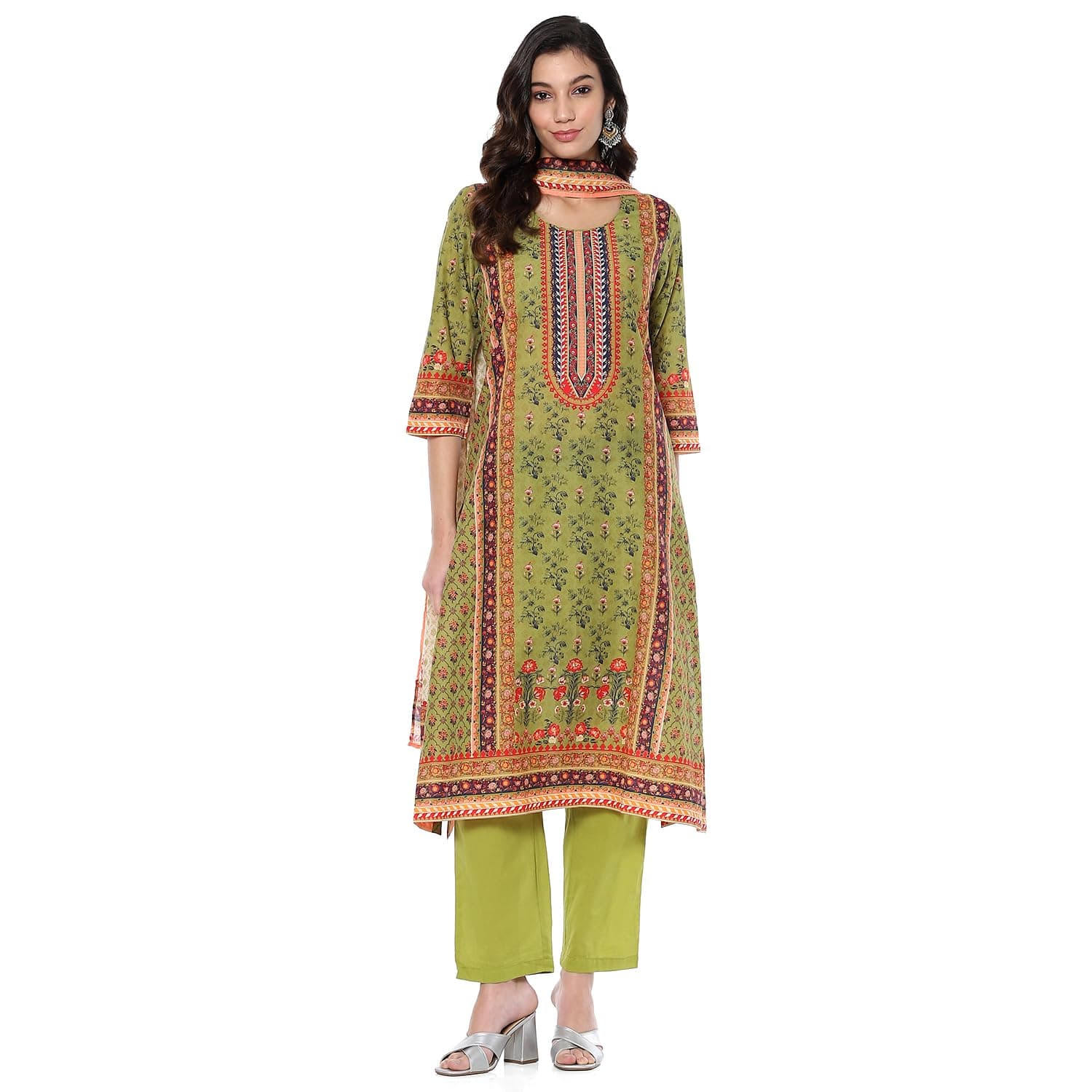 COD Available
biba
BIBA Women's Cotton Printed Kurta Set with Dupatta
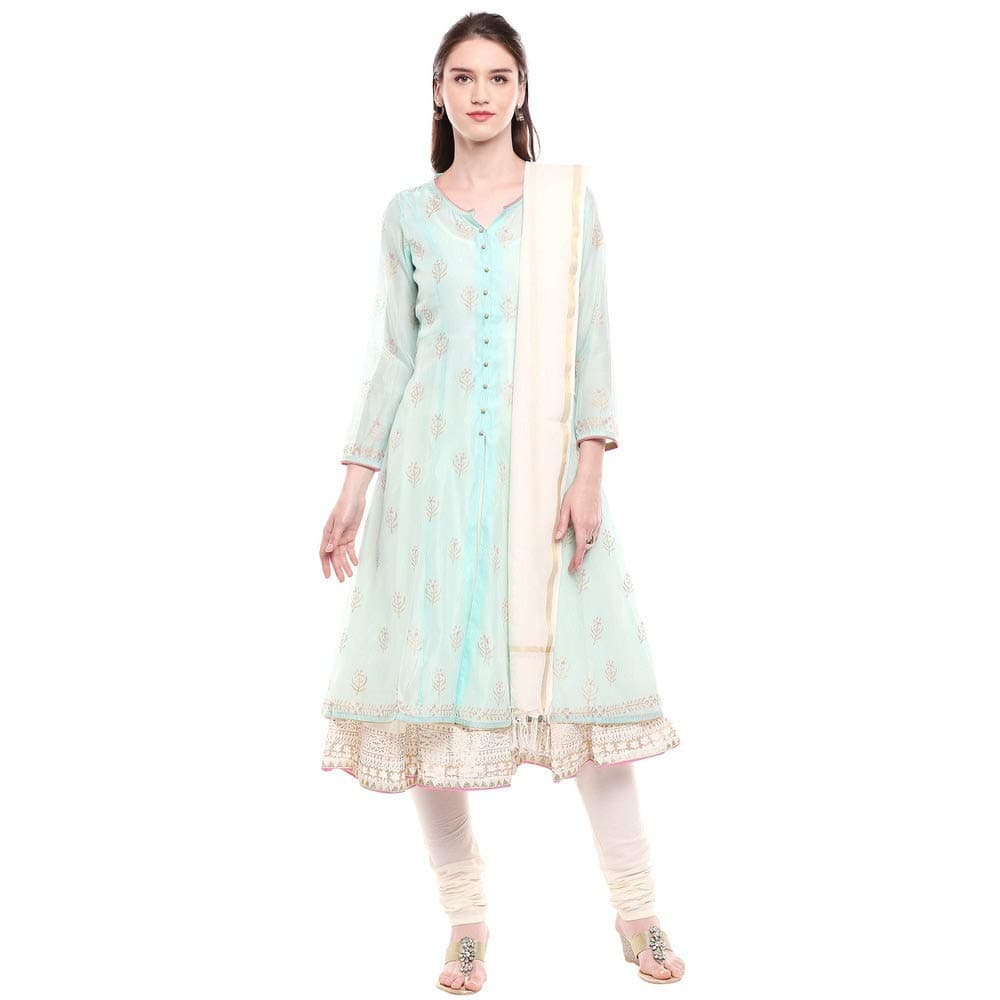 COD Available
biba
BIBA Women's Cotton A-Line Churidar Suit
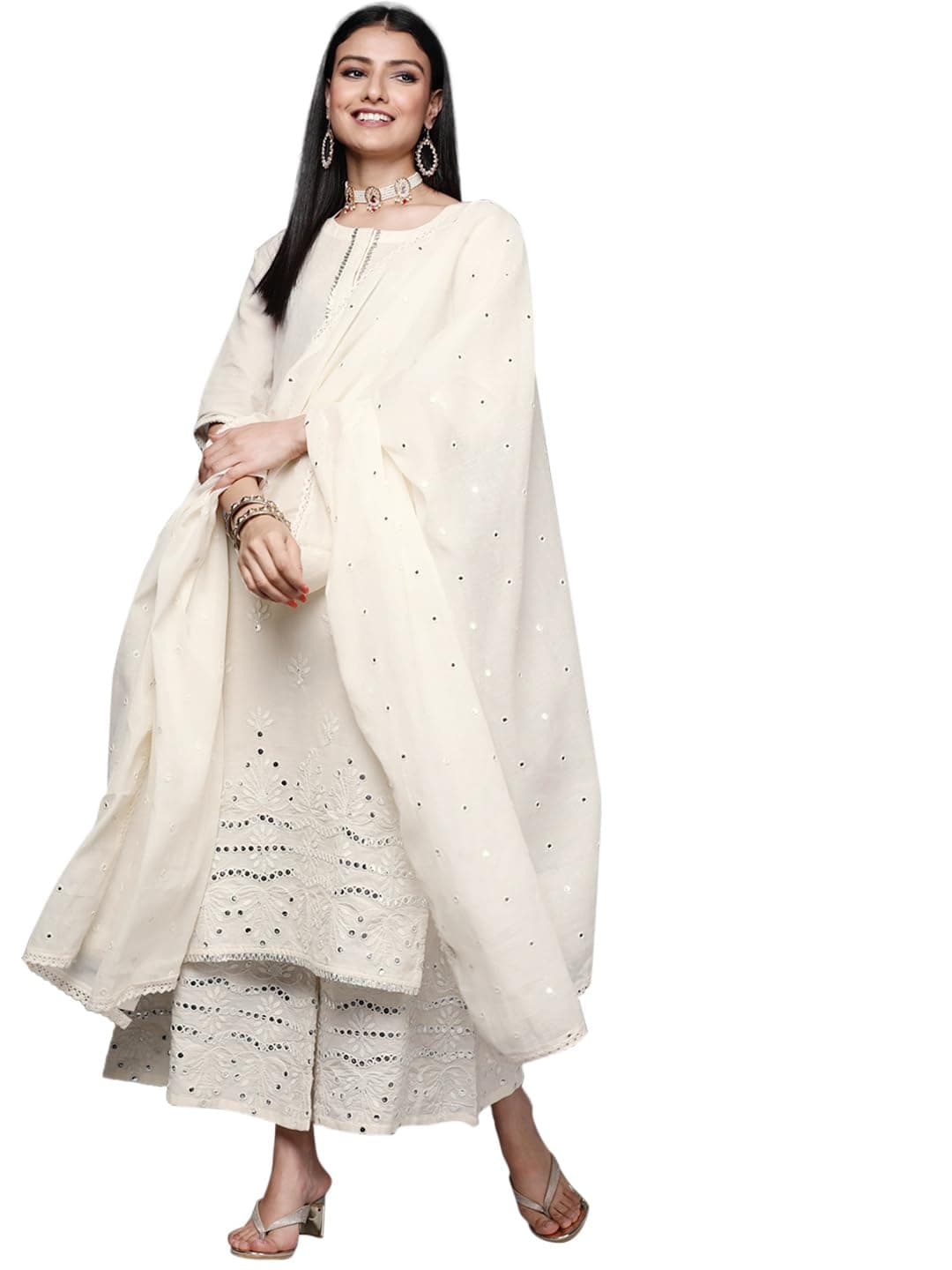 COD Available
libas
Libas Women's Embroidered Cotton Straight Kurta with Palazzos & Dupatta
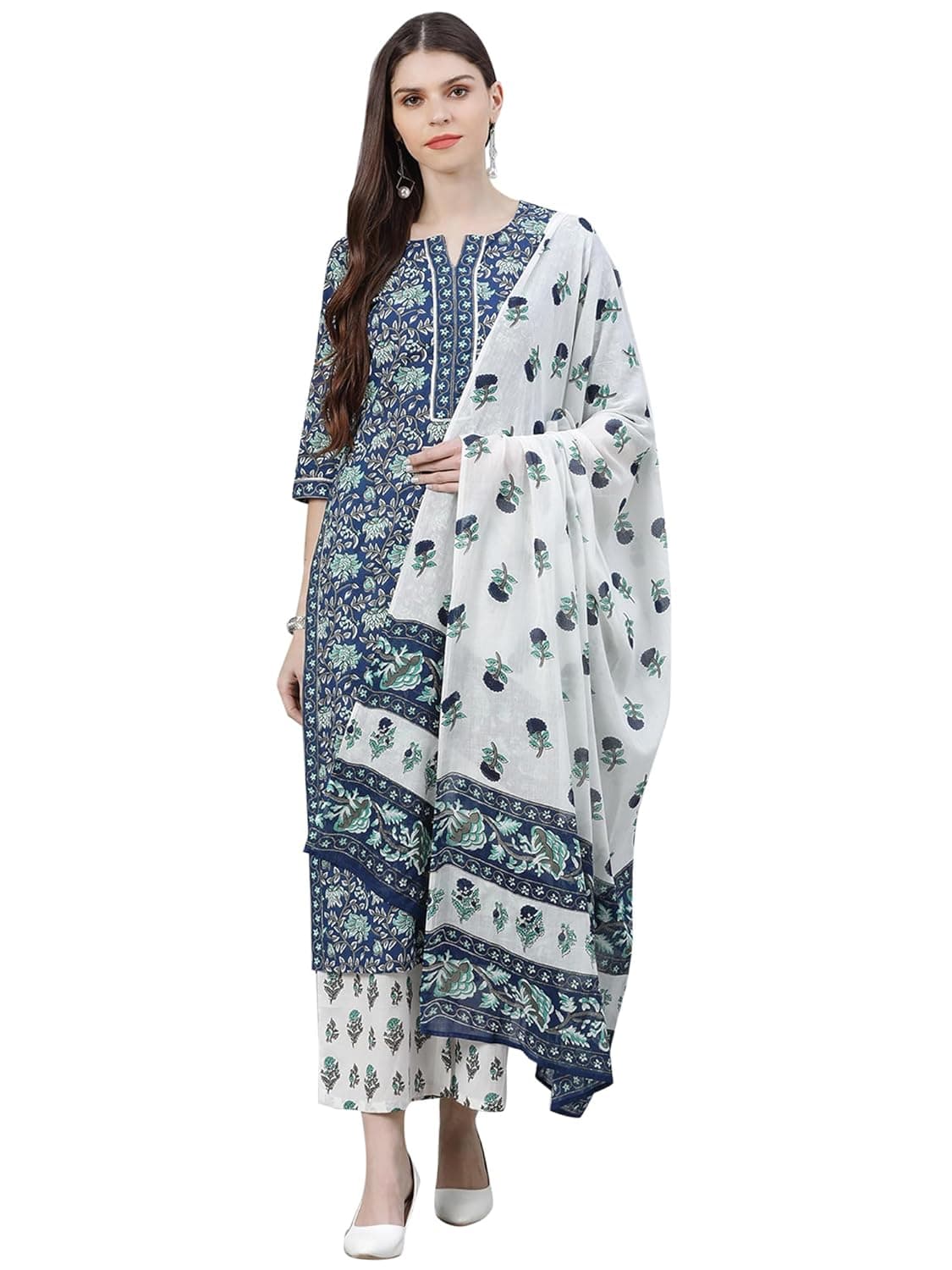 COD Available
libas
Libas Women's Cotton Printed Kurta Set Multicoloured
COD Availablelibas
Libas Printed Silk Blend Round Neck Kurta Pant Set Pink
Price Guide
| Tier | Price Range | What You Get |
|---|---|---|
| Entry | Rs 3,000–6,000 | Simple motifs, basic Jamdani saree, fewer motif repetitions |
| Mid-range | Rs 6,000–20,000 | Rich motif density, quality weave, reputable cooperative or brand |
| Heirloom | Rs 20,000–80,000+ | Master weaver pieces, all-over motifs, Dhakai origin, collector quality |
Care & Maintenance
- Dry clean only for expensive Jamdani sarees — home washing risks distorting the fine supplementary weft motifs
- If hand washing is necessary, use cold water, minimal gentle detergent, and zero agitation — just soak and rinse
- Never wring — roll in a clean white towel to absorb moisture, then dry flat on a sheet in shade
- Iron inside out at low cotton setting — use a thin pressing cloth between iron and motifs to protect floating threads
- Store wrapped in muslin or soft cotton, never plastic — the fine fabric needs to breathe; refold every few months to prevent crease setting
Styling Tips
Jamdani's delicacy means it pairs best with understated accessories — the fabric itself commands attention. Wear a Jamdani saree with minimal gold jewellery and let the woven motifs be the visual centrepiece. For non-saree styling, Jamdani fabric cut into a straight kurta with a Chanderi dupatta makes a quietly magnificent festive outfit. Avoid heavy embroidery that competes with the woven motifs — the craft is the decoration.
OUR VERDICT
Jamdani is not everyday clothing — it is wearable art that happens to take the form of a saree. Buying authentic Jamdani means paying a living-wage price for months of skilled work by a weaver keeping a UNESCO heritage alive. Even one genuine piece in a lifetime wardrobe is an act of cultural preservation and an investment that appreciates in emotional value with every wearing.