
History & Origin
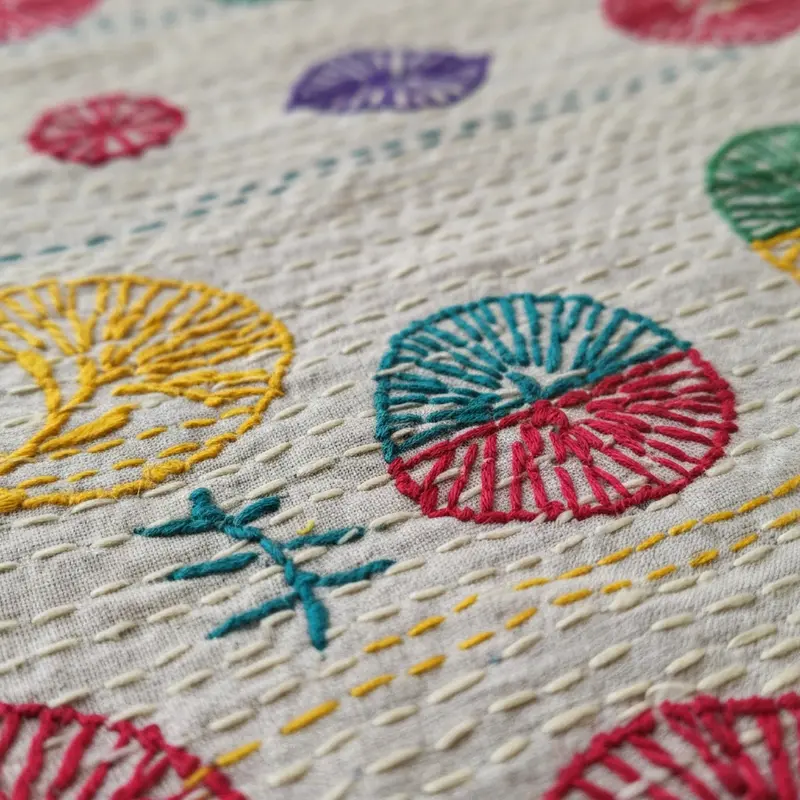
Kantha's origins are intimately domestic — the Bengali term refers to a padded cloth made from layered, worn-out saris stitched together with running stitch. Women recycled precious cotton into functional quilts (Nakshi Kantha — narrative kantha with pictorial motifs) as acts of devotion and storytelling. The oldest surviving Nakshi Kantha pieces date to the 18th century, though the tradition is certainly older. The GI tag for Kantha from West Bengal and Kantha craft from Bangladesh both recognise this deep regional heritage.
Contemporary kantha embroidery has evolved far beyond its quilt origins. Designers use the running stitch on silk, cotton, and muslin to create all-over textured fabrics or to add narrative embroidery panels to sarees and kurtis. The Craft Council of West Bengal, organisations like Tantujeevi, and numerous NGOs in Murshidabad and 24 Parganas have formalised kantha production as a livelihood for rural women while maintaining its artisanal character.
How to Identify Authentic Kantha
- Stitch uniformity — authentic kantha has running stitches of near-uniform length; look at the back — the stitch pattern on the reverse mirrors the front
- Layering effect — traditional kantha on recycled fabric has a quilted, slightly rippled texture from the layering and stitching; new-fabric kantha lacks this but should show slight fabric gather along stitch lines
- Motif character — authentic Bengali kantha motifs include lotuses, fish, elephants, village scenes; each has a narrative quality; generic repeated geometric suggests machine origin
- Thread variety — hand kantha uses coloured cotton thread; examine whether thread runs follow motif logic or appear mechanically placed
- Weight — a genuine kantha saree or stole has pleasant weight from dense hand embroidery; machine 'kantha print' is flat and light
Types & Varieties
| Type | Characteristic | Price Range | Best For |
|---|---|---|---|
| Nakshi Kantha | Narrative pictorial embroidery with folk motifs | Rs 2,000–30,000 | Collector pieces, special occasions |
| Kantha saree | Embroidered motifs on silk or cotton saree | Rs 2,500–15,000 | Durga Puja, cultural events, weddings |
| Kantha kurti | Running stitch border or panel embroidery on cotton | Rs 800–4,000 | Everyday festive, cultural events |
| Kantha stole/shawl | Silk or cotton stole with all-over kantha work | Rs 1,500–8,000 | Winter layering, gifting, travel |
Best Brands
Anavila Misra does exceptional linen and cotton kantha sarees that have redefined this craft for contemporary fashion. Fabindia stocks reliable kantha kurtis and stoles from Bengal cooperatives. Suta's kantha collection is excellent for natural-fibre devotees. Biswa Bangla (West Bengal government initiative) carries certified artisan kantha at reasonable prices. For Nakshi Kantha collector pieces, Crafts Council of West Bengal is the most reliable source.
 COD Available
biba
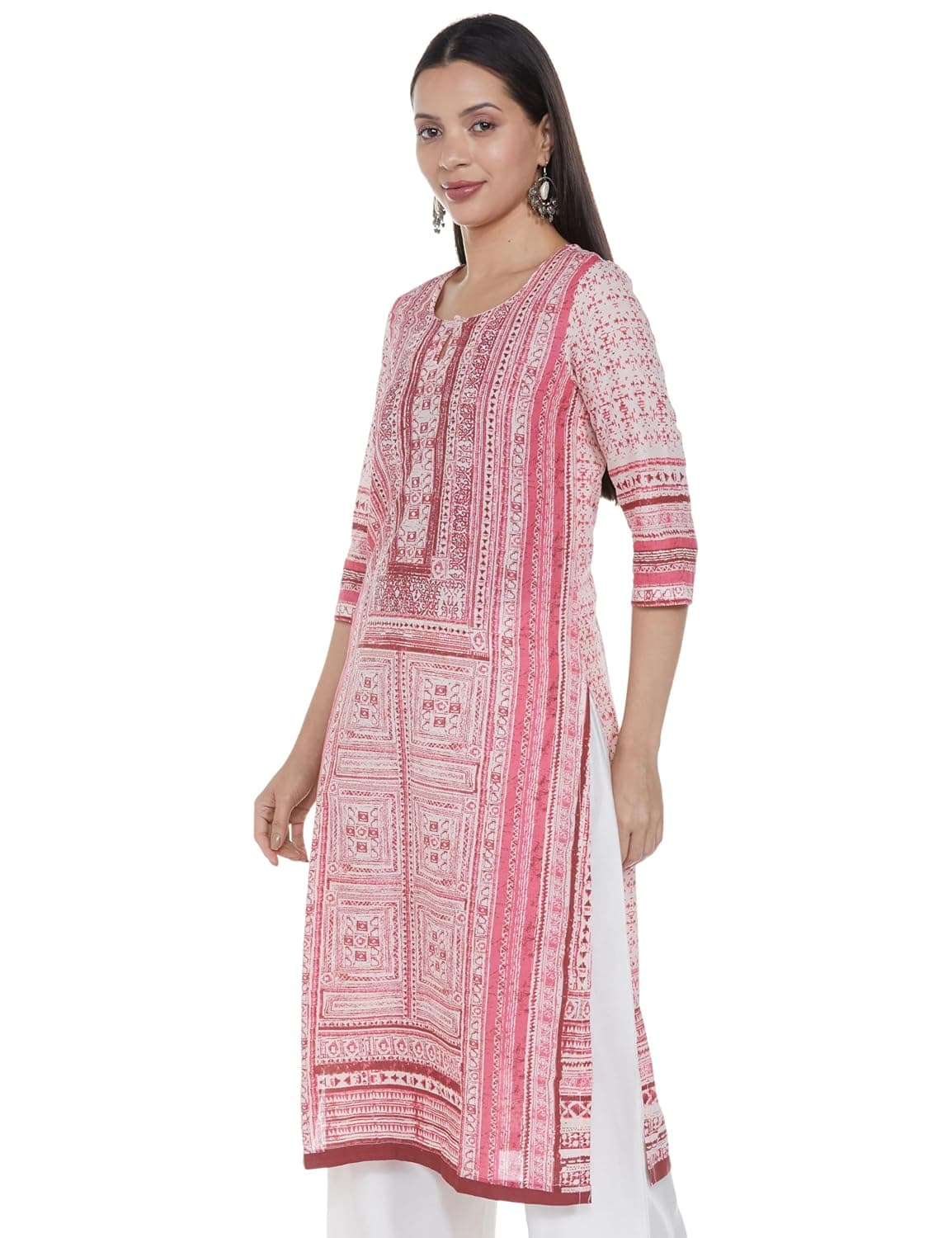
BIBA Women's Cotton Straight Printed Kurta
 COD Available
biba
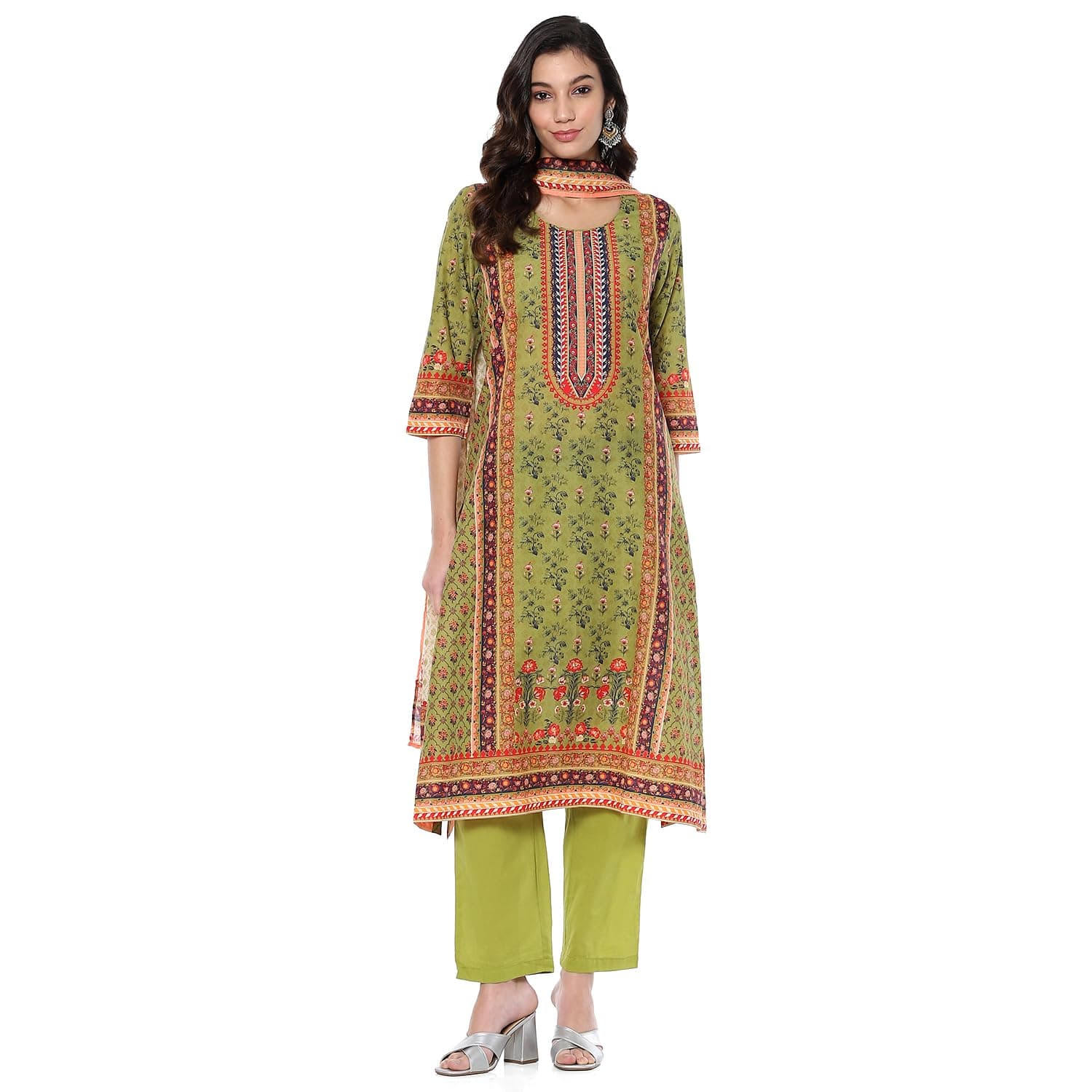
BIBA Women's Cotton Printed Kurta Set with Dupatta
 COD Available
biba
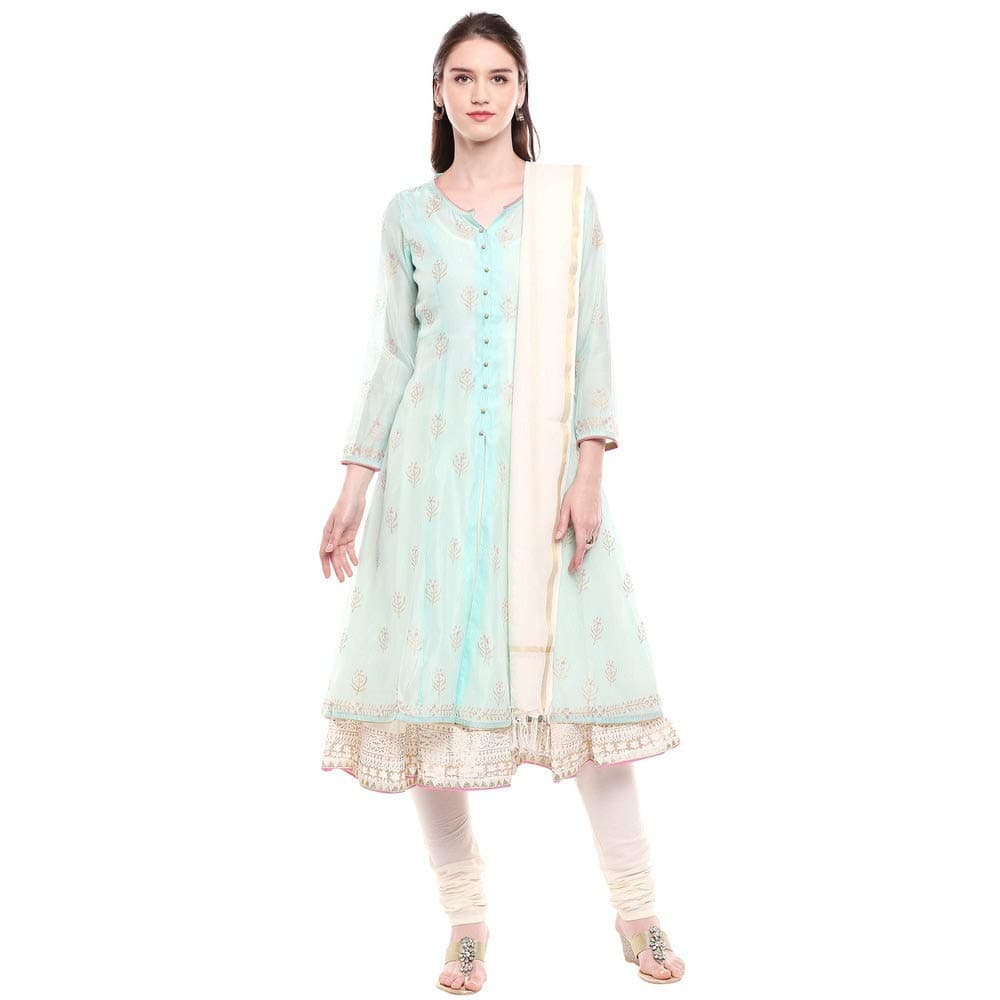
BIBA Women's Cotton A-Line Churidar Suit
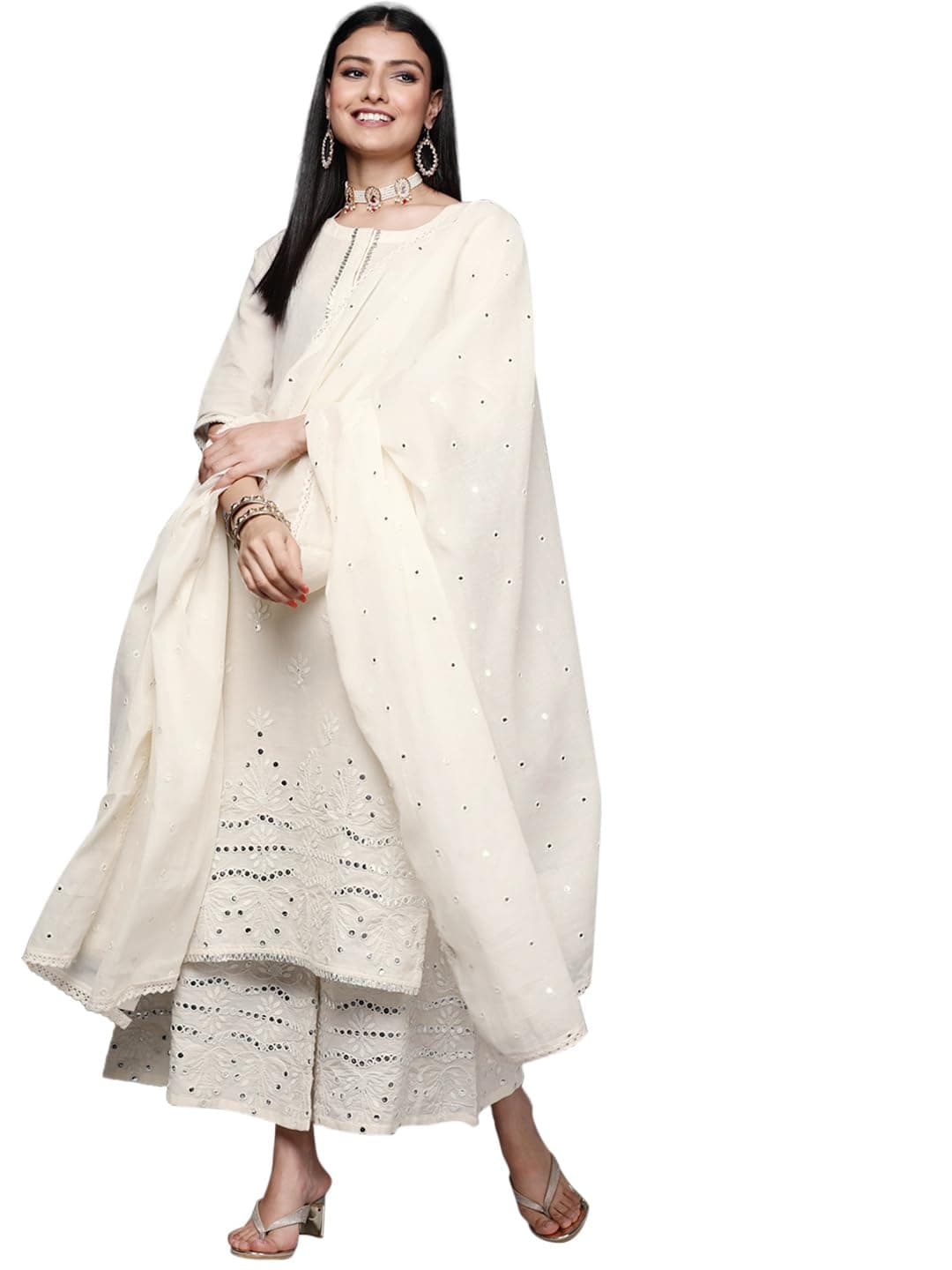 COD Available
libas
Libas Women's Embroidered Cotton Straight Kurta with Palazzos & Dupatta
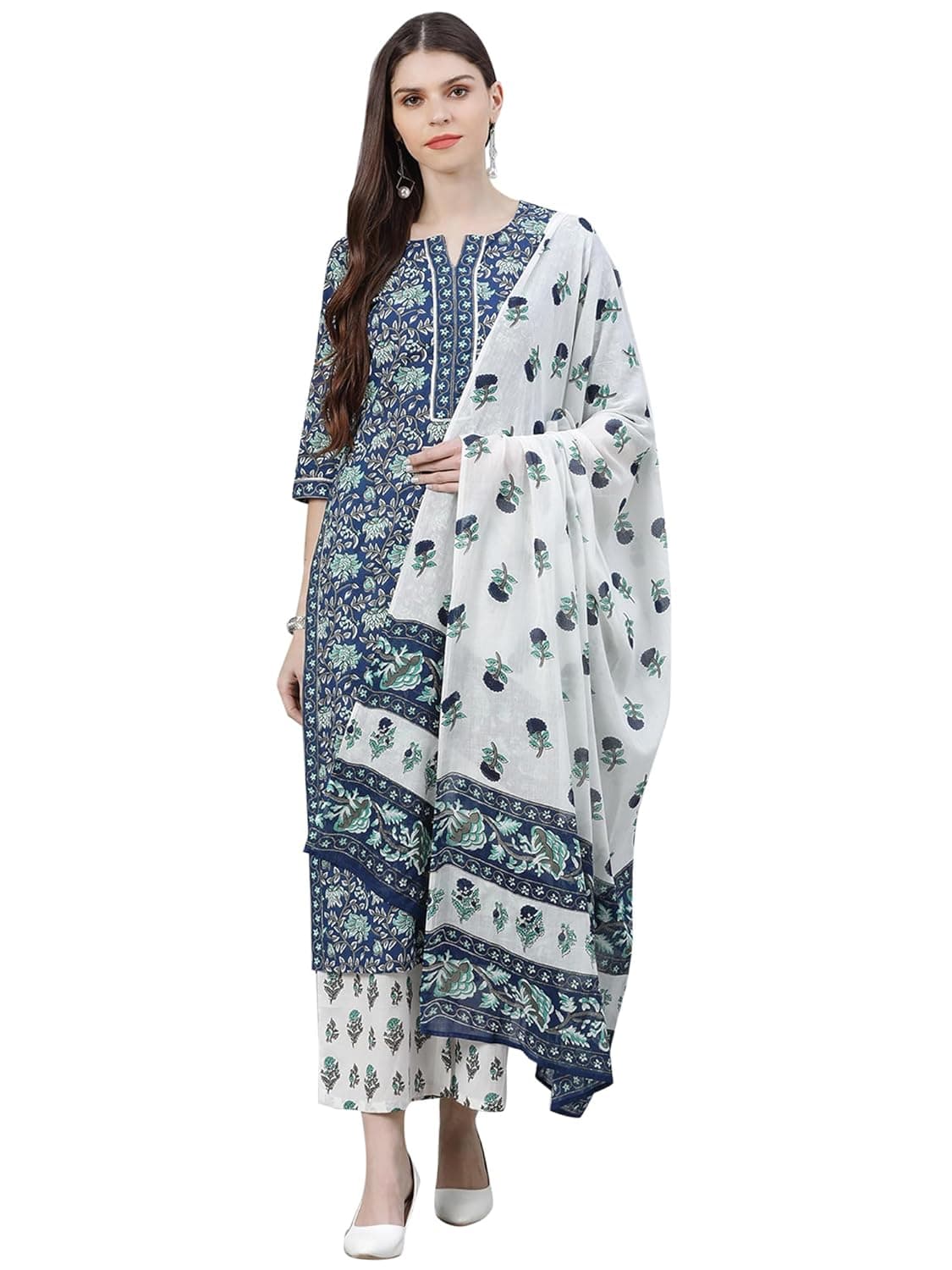 COD Available
libas
Libas Women's Cotton Printed Kurta Set Multicoloured
COD Availablelibas
Libas Printed Silk Blend Round Neck Kurta Pant Set Pink
Price Guide
| Tier | Price Range | What You Get |
|---|---|---|
| Entry | Rs 800–2,000 | Kantha border kurtis, simple running stitch panels |
| Quality handwork | Rs 2,000–8,000 | Kantha sarees, all-over embroidery, stoles, quality cooperatives |
| Collector/designer | Rs 8,000–30,000+ | Nakshi Kantha, designer pieces, master artisan work, silk base |
Care & Maintenance
- Dry clean for valuable kantha pieces — embroidery threads can loosen or bleed in home washing
- If hand washing, use cold water with minimal mild detergent and zero agitation
- Press water out gently — never wring, as dense embroidery distorts under twisting pressure
- Dry flat in shade — hanging can stretch the embroidered fabric unevenly
- Store folded in muslin or acid-free tissue — avoid plastic which traps moisture
Styling Tips
Kantha's folk-art quality makes it a natural companion to handloom and handcrafted accessories. A kantha-embroidered silk saree pairs magnificently with oxidised silver jewellery and terracotta or dhokra earrings — the artisan-meets-artisan combination is always right. For kurtis, let kantha be the star: a kantha border kurti in a muted cotton base with plain solid palazzos and juttis makes a complete and confident look without over-styling.
OUR VERDICT
Kantha is one of those embroideries where every piece is a unique artwork — the motifs, spacing, and colour combinations are the individual expression of the artisan who made it. Buying authentic kantha is directly supporting the rural women of West Bengal who practice this 400-year-old skill. Even a simple kantha border kurti at Rs 1,200 is a more meaningful purchase than a designer replica at ten times the price.