
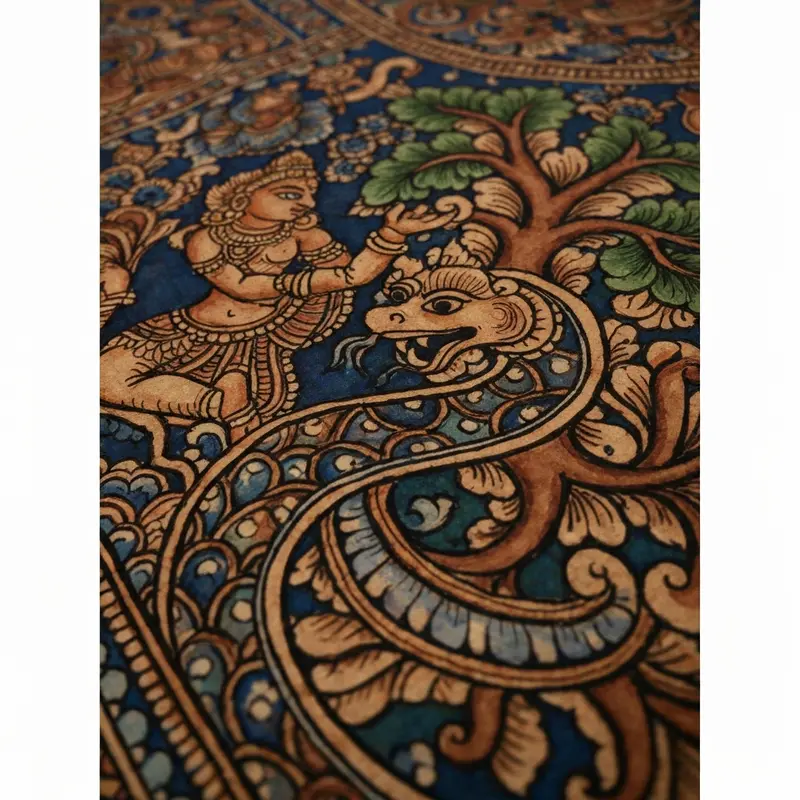
History & Origin
Kalamkari has been produced in Andhra Pradesh for over 3,000 years, with origins in the itinerant storytellers called 'chitrakattis' who used painted fabric scrolls to narrate tales from the Ramayana and Mahabharata to village audiences. Under the patronage of the Golconda Sultanate and later the Mughals, kalamkari evolved into a sophisticated court art, producing large panels depicting hunting scenes and floral arabesques for export to Persia and Europe via the Coromandel Coast.
The British East India Company was a major purchaser of kalamkari, exporting it widely — which is why 'Coromandel work' became a synonym for Indian hand-painted textiles in European markets. After a colonial-era decline, the craft was revived in the 20th century through government handcraft initiatives. Both Srikalahasti and Machilipatnam now hold GI status, protecting their distinct regional identities.
How to Identify Authentic Kalamkari
- Srikalahasti kalamkari shows hand-drawn lines with characteristic slight tremor and variation — no two pieces are identical; machine prints have perfectly uniform lines
- Look for the natural dye palette: authentic kalamkari uses indigo, pomegranate rind, myrobalan, and iron-rich water producing muted navy, rust, black, and ochre tones, not neon colours
- Check the back of the fabric — natural dyes penetrate through the weave, so the pattern is visible (though lighter) on the reverse; digital prints stay only on the surface
- Authentic pieces are typically on pre-treated cotton — the fabric is boiled in cow dung and bleached in river water before dyeing, giving it a distinct texture and handle different from untreated cotton
Types / Varieties
| Type | Characteristic | Price Range | Best For |
|---|---|---|---|
| Srikalahasti (Hand-Drawn) | Mythological scenes, completely hand-drawn with bamboo pen, natural dyes | Rs 5,000 – Rs 35,000 | Collectors, art lovers, special occasions |
| Machilipatnam (Block-Printed) | Floral and geometric patterns using carved teak wood blocks | Rs 1,500 – Rs 8,000 | Everyday ethnic wear, gifting |
| Modern Kalamkari Prints | Digital or screen prints inspired by kalamkari motifs | Rs 500 – Rs 2,500 | Budget everyday wear |
| Kalamkari on Silk | Traditional hand-drawn or block-printed on Tussar or Mulberry silk | Rs 8,000 – Rs 35,000+ | Weddings, festive occasions |
Best Brands
APCO (Andhra Pradesh Craft Organisation) and Lepakshi emporia are reliable sources for government-verified authentic kalamkari. For curated contemporary kalamkari, brands like Suta, Biba, and Jaypore source from verified artisans. For collector-grade Srikalahasti pieces, direct purchases from artisan cooperatives in Andhra Pradesh through craft exhibitions (like Dastkar) are ideal.
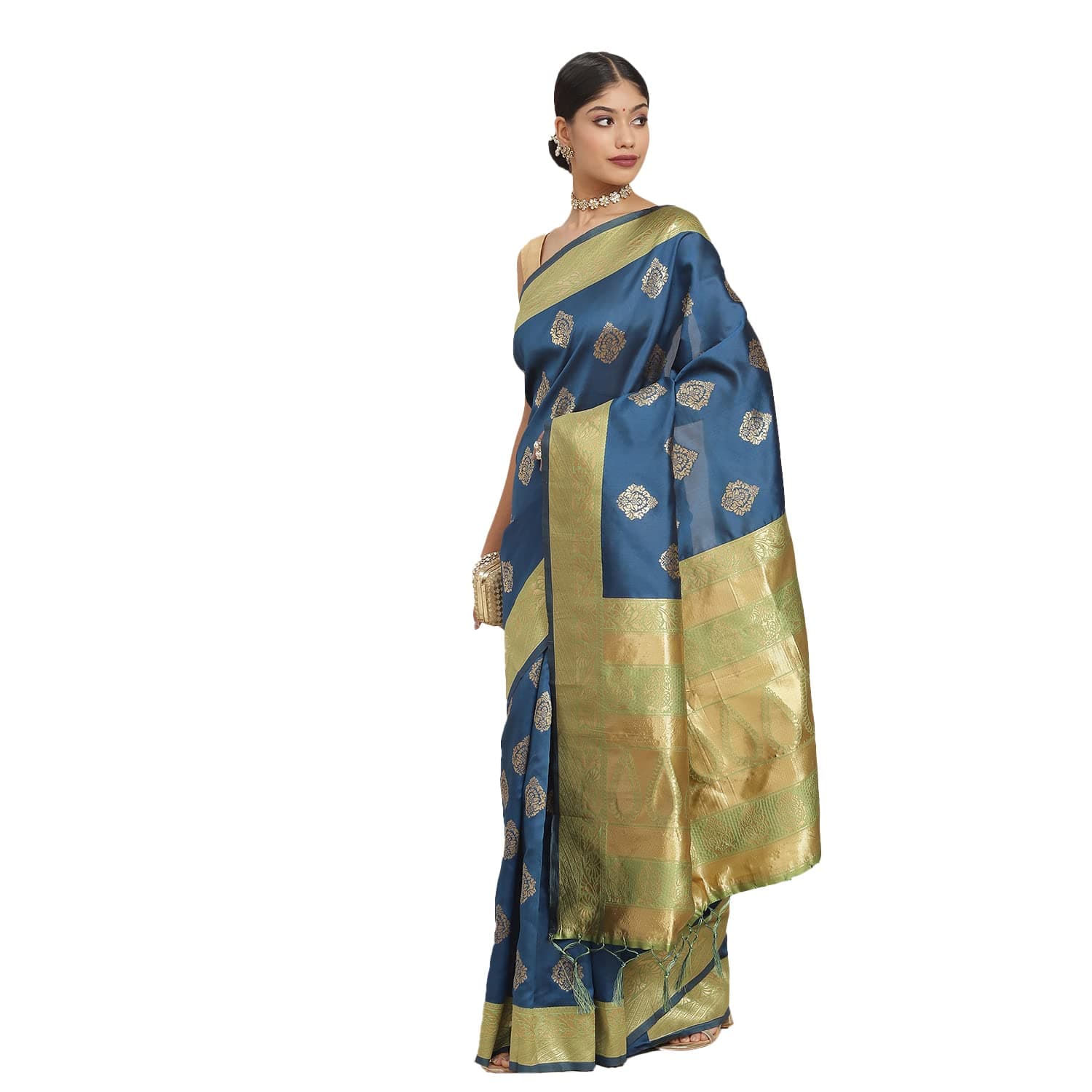 COD Available
ishin
Ishin Women's Silk Blend Teal & Green Woven Design Saree with Blouse
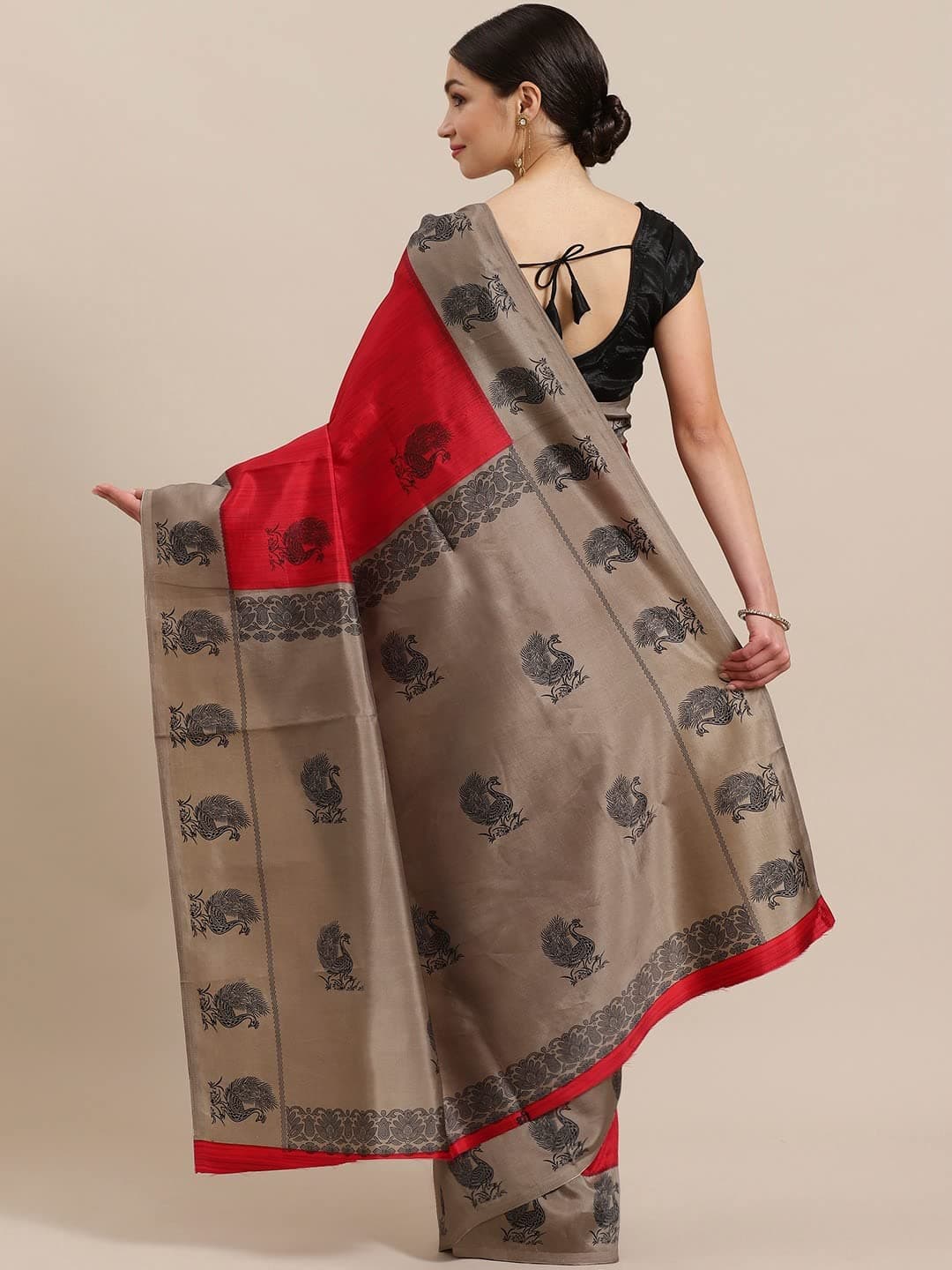 COD Available
ishin
Ishin Women's Art Silk Maroon & Taupe Printed Saree
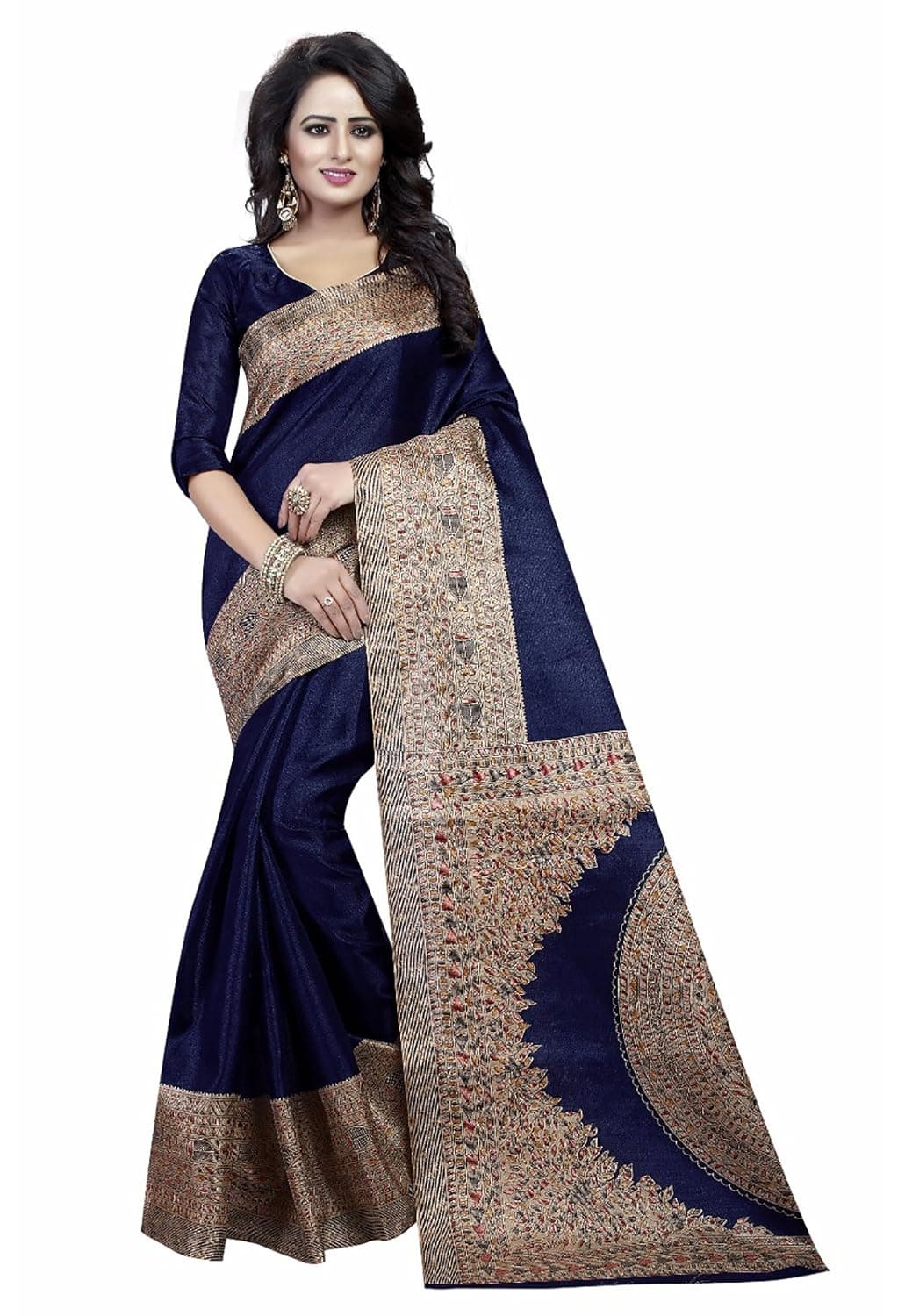 COD Available
ishin
Ishin Women's Art Silk Navy Blue Saree with Blouse Piece
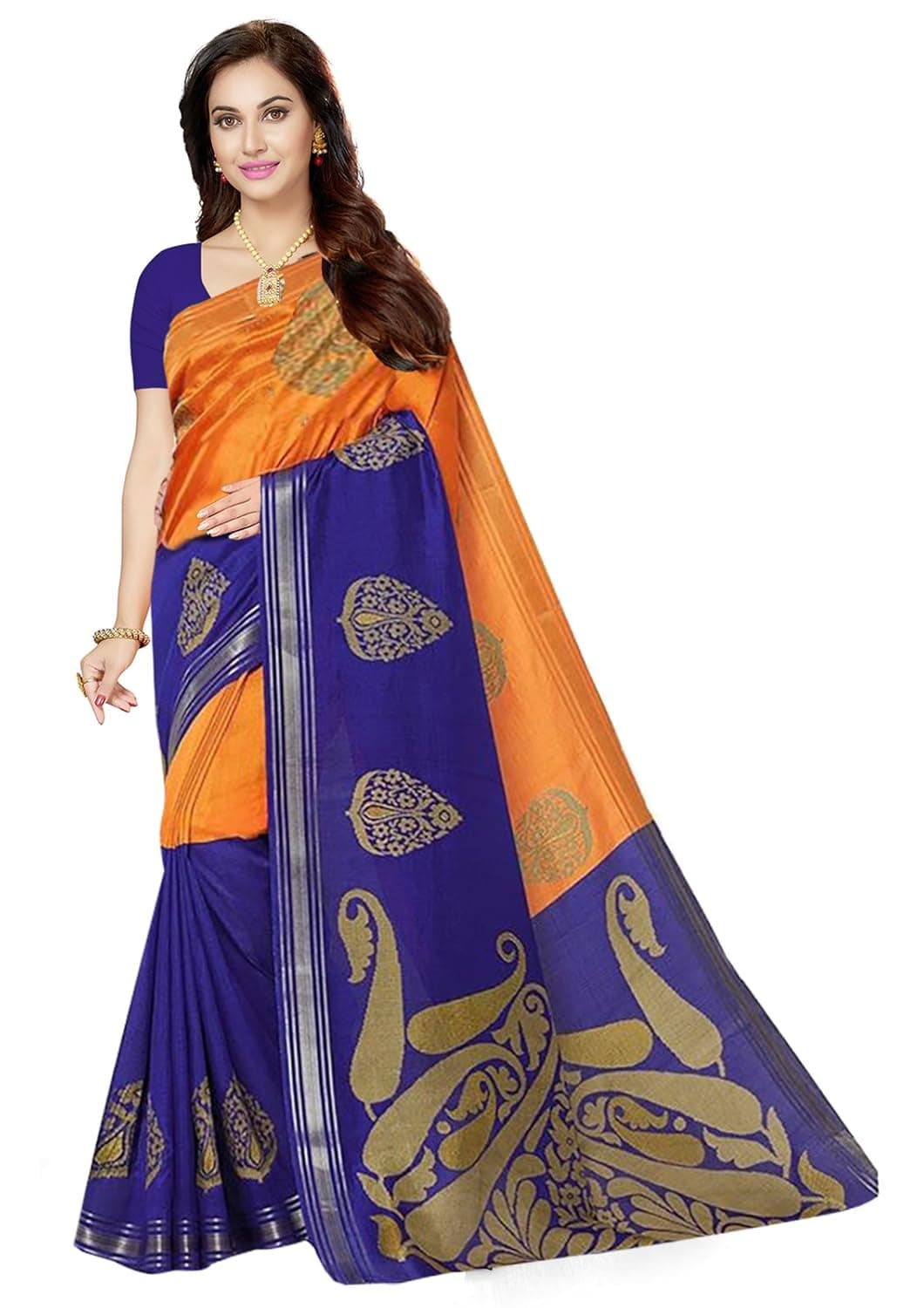 COD Available
ishin
Ishin Women's Art Silk Dark Blue & Orange Saree with Blouse
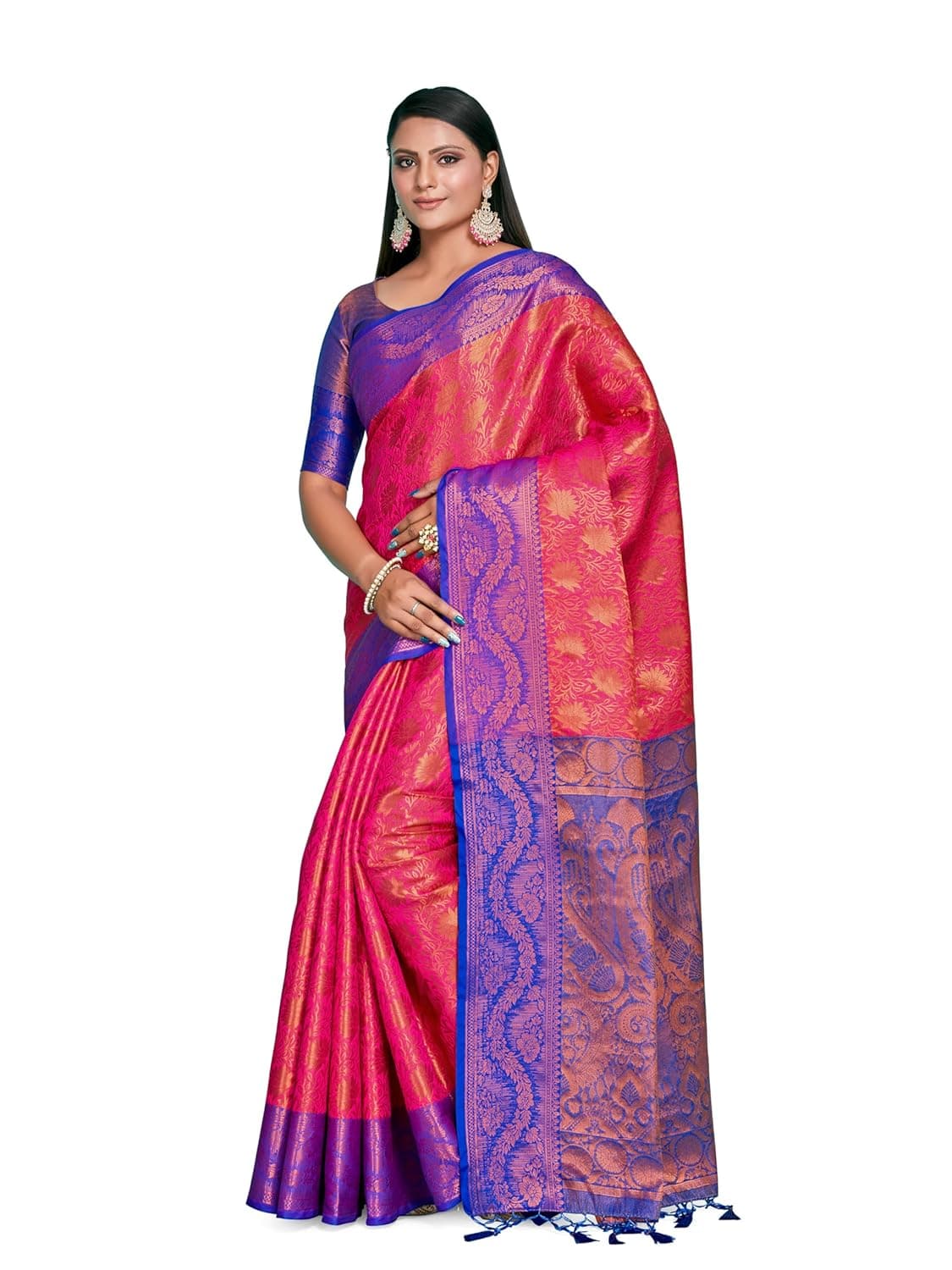 COD Available
mimosa
MIMOSA Women's Woven Design Kanjivaram Art Silk Saree Rani
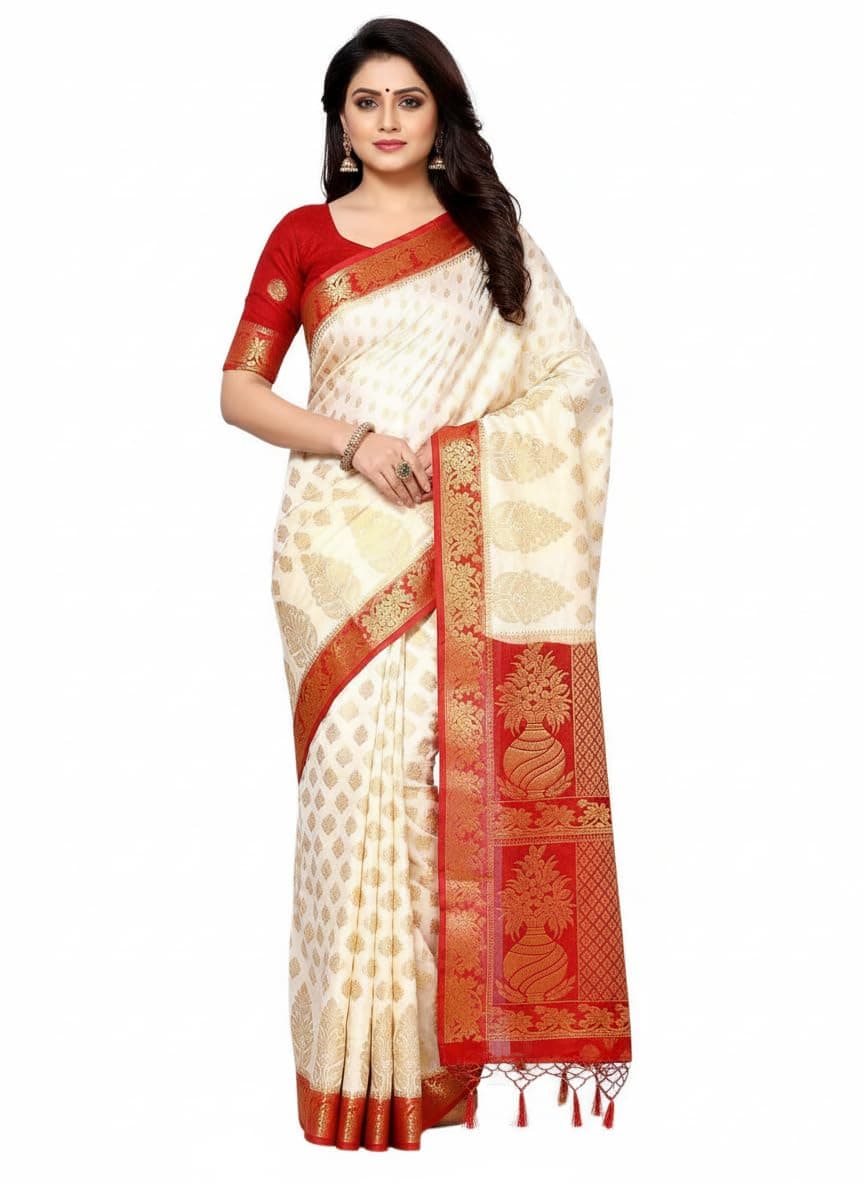 COD Available
mimosa
MIMOSA Women's Art Silk Saree Kanjivaram Style Beige
Price Guide
| Tier | Price Range | What You Get |
|---|---|---|
| Entry | Rs 500 – Rs 2,500 | Screen or digital prints inspired by kalamkari motifs on cotton or georgette |
| Mid | Rs 2,500 – Rs 8,000 | Authentic Machilipatnam block-printed kalamkari on cotton with natural or semi-natural dyes |
| Premium | Rs 8,000 – Rs 35,000+ | Hand-drawn Srikalahasti kalamkari on cotton or silk, natural dyes, GI certified |
Care & Maintenance
- Hand wash only in cold water — machine washing can damage the natural dye layers and cause the painted details to fade or crack
- Use a very mild pH-neutral soap or baby shampoo — standard detergents are too alkaline for natural dyes
- Do not soak for longer than 10 minutes — prolonged soaking causes natural dyes to bleed and cotton fibres to swell unevenly
- Iron on reverse side only while still slightly damp — ironing directly on kalamkari motifs can crack or smear the natural pigments
Styling Tips
Kalamkari's earthy, narrative quality suits a thoughtful, artisanal aesthetic. A Srikalahasti kalamkari saree paired with terracotta or oxidised silver jewellery is a statement at any cultural event or gallery opening. Machilipatnam block-printed kalamkari kurtis work beautifully for office wear — professional but rich with heritage. For a contemporary fusion look, a kalamkari dupatta over a linen co-ord is effortlessly stylish. Keep colours in the warm earth-tone spectrum — burnt orange, ivory, terracotta — and avoid clashing bright accessories.
OUR VERDICT
Kalamkari rewards those who take the time to understand it. Genuine Srikalahasti kalamkari is arguably the most intellectually rich textile in India — every inch tells a story. Machilipatnam kalamkari is more accessible and wearable daily without being less beautiful. Either way, you're wearing 3,000 years of craft history, and that's worth every rupee of the premium over mass-produced prints.