
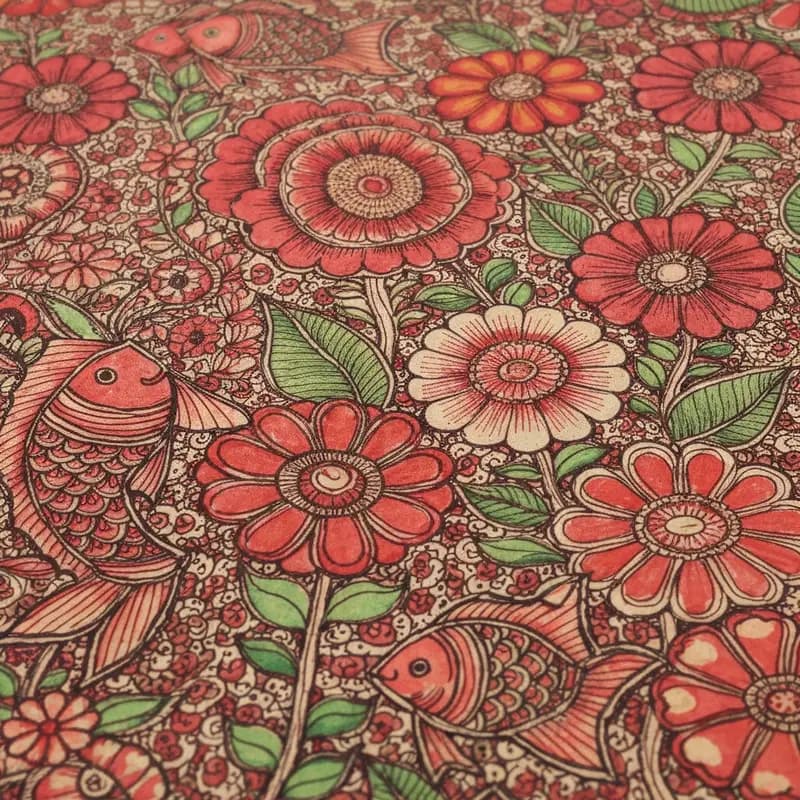
History & Origin
Madhubani painting has been practiced in the Mithila region for at least 2,500 years, with connections to the Ramayana — the tradition holds that Janak, father of Sita, commissioned paintings for her wedding to Ram. For millennia it was a domestic art, practiced only by women on walls during ceremonies like births, weddings, and festivals. The imagery encoded social customs, prayers, and community history.
The transition to paper and fabric began in 1966 during a severe drought in Bihar, when All India Handicrafts Board officer Pupul Jayakar encouraged village women to paint on paper for sale. This move saved a dying tradition and created a new livelihood. The GI registration for Madhubani painting protects the art form, though the style is widely replicated on fabric through screen printing across India.
How to Identify Authentic Madhubani Print
- Look for hand-done imperfections — authentic hand-painted Madhubani on fabric shows slight line variation, colour fills that occasionally go outside the outline, and overall organic quality; screen-printed Madhubani is perfectly uniform
- Examine the density of fill patterns — genuine Madhubani covers virtually every inch of background space with geometric hatching, dots, fish scales, or paisley fills; imitations often leave backgrounds empty for cost efficiency
- Check the outline quality — traditional Madhubani uses double outlines (an inner and outer black line) as a signature feature; simplified printed versions often use single outlines
- Note the motif vocabulary — authentic Madhubani uses specific iconographic elements: fish (symbol of fertility), sun and moon (cosmological symbols), lotus, peacocks, and scenes from the Ramayana; generic 'Madhubani-inspired' prints often use simplified or inaccurate motifs
Types / Varieties
| Type | Characteristic | Price Range | Best For |
|---|---|---|---|
| Hand-Painted Madhubani | Directly painted on fabric by Mithila artisans using natural/synthetic colours | Rs 3,500 – Rs 20,000 | Collectors, art lovers, gifting |
| Block-Printed Madhubani | Madhubani motifs translated to carved wood blocks | Rs 1,500 – Rs 6,000 | Accessible wearable art |
| Screen-Printed Madhubani | Digital or screen print of Madhubani patterns on various base fabrics | Rs 800 – Rs 3,000 | Everyday wear, budget |
| Embroidered Madhubani | Madhubani motifs rendered in embroidery thread on fabric | Rs 2,500 – Rs 12,000 | Premium fashion, occasions |
Best Brands
Bihar State Handicrafts Corporation and Mithila Art Institute certified pieces are the most reliable for authentic hand-painted Madhubani. In the fashion market, Anita Dongre, Ritu Kumar, and Satya Paul have all worked with Madhubani artisans for special collections. For everyday Madhubani prints, numerous indie ethnic wear brands and platforms like Jaypore, Gaatha, and Artisans carry verified artisan pieces.
 COD Available
ishin
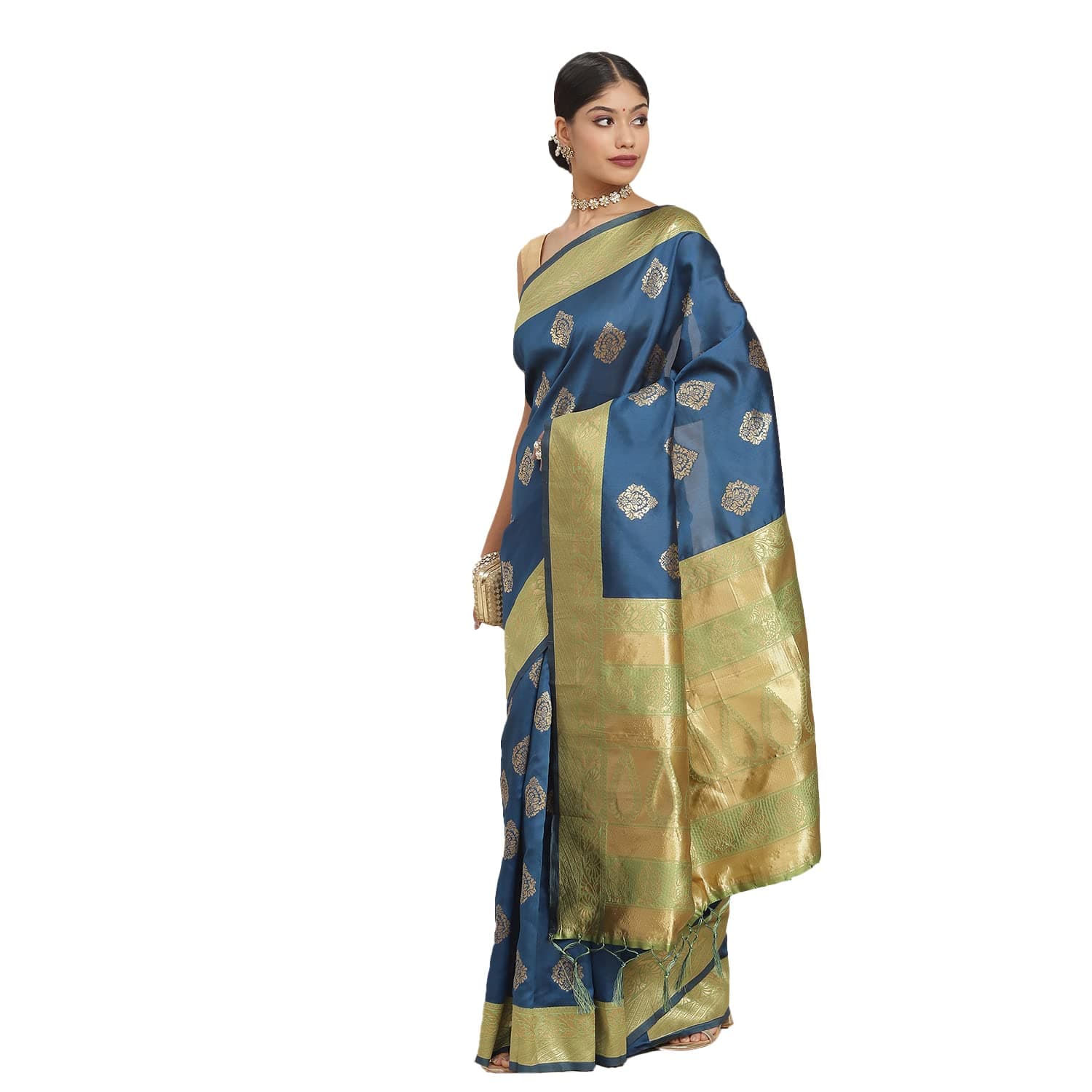
Ishin Women's Silk Blend Teal & Green Woven Design Saree with Blouse
 COD Available
ishin
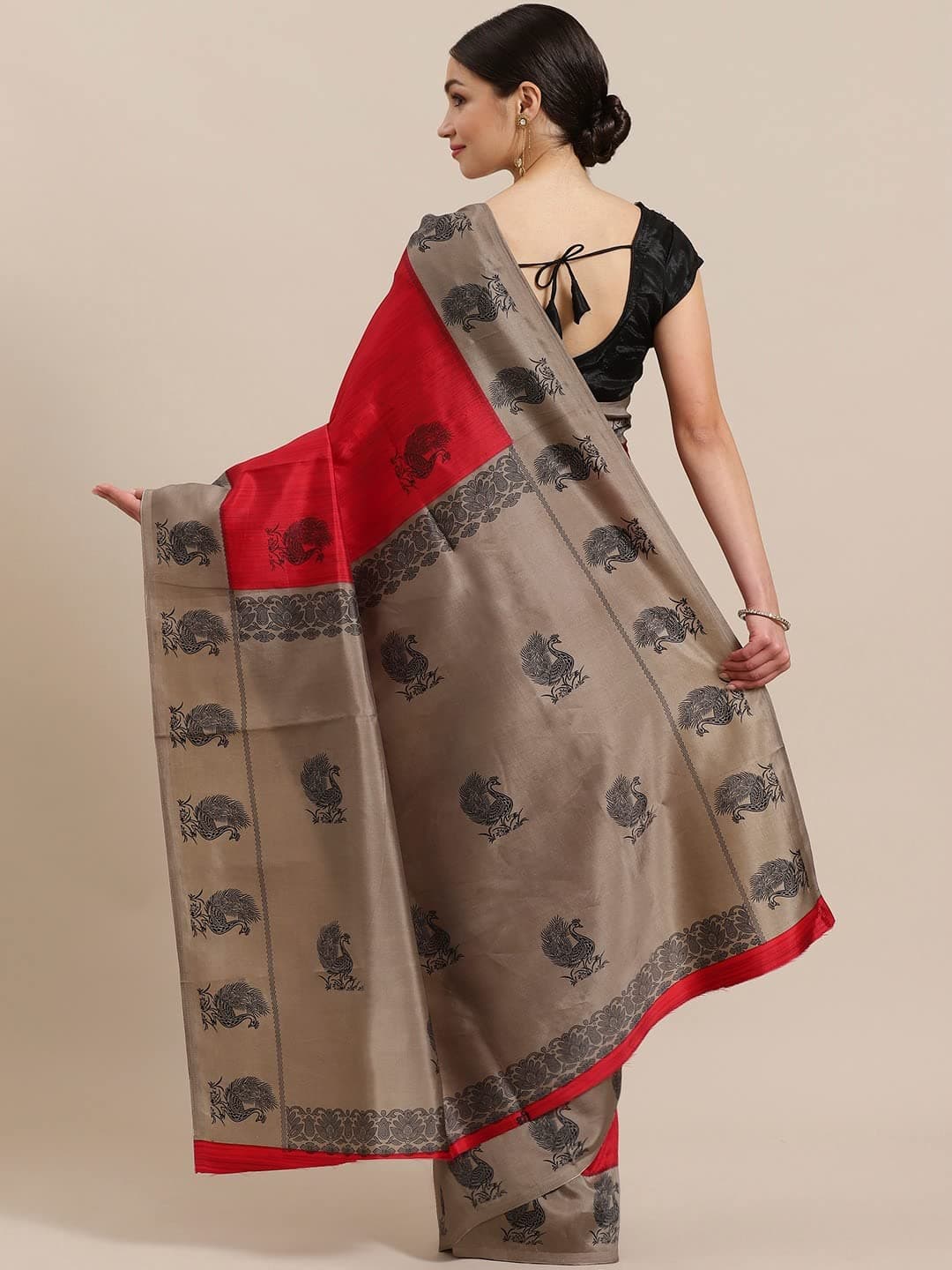
Ishin Women's Art Silk Maroon & Taupe Printed Saree
 COD Available
ishin
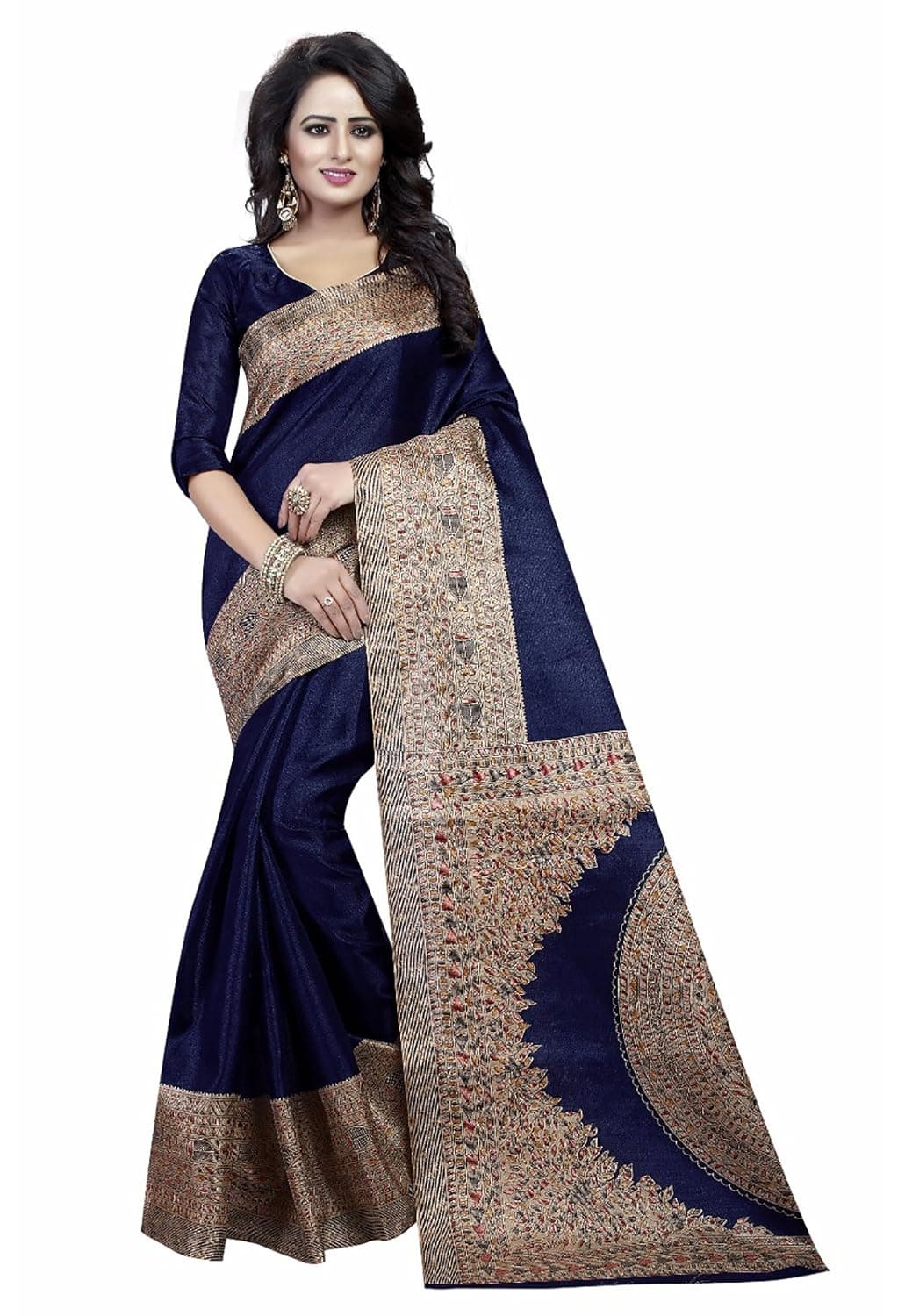
Ishin Women's Art Silk Navy Blue Saree with Blouse Piece
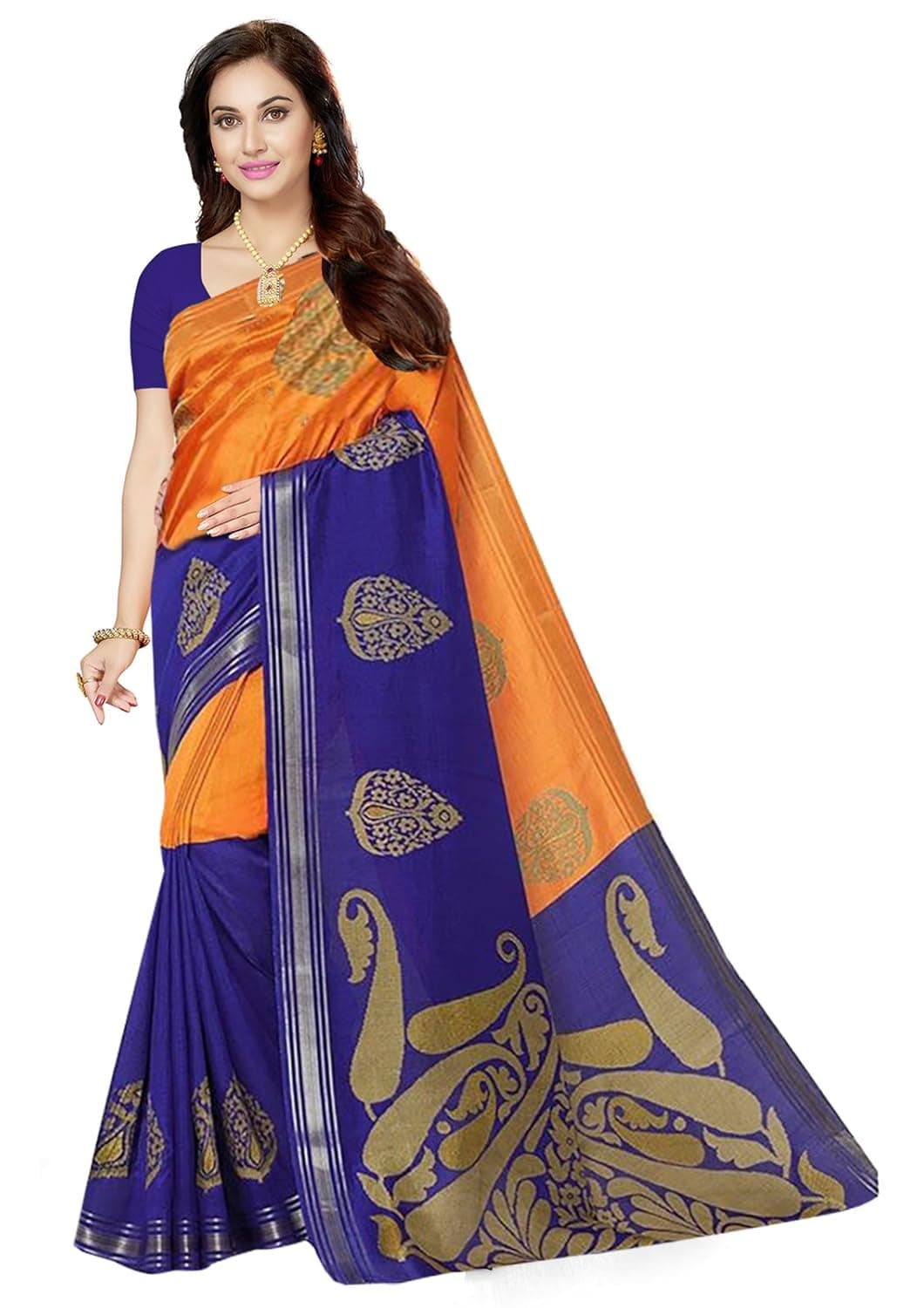 COD Available
ishin
Ishin Women's Art Silk Dark Blue & Orange Saree with Blouse
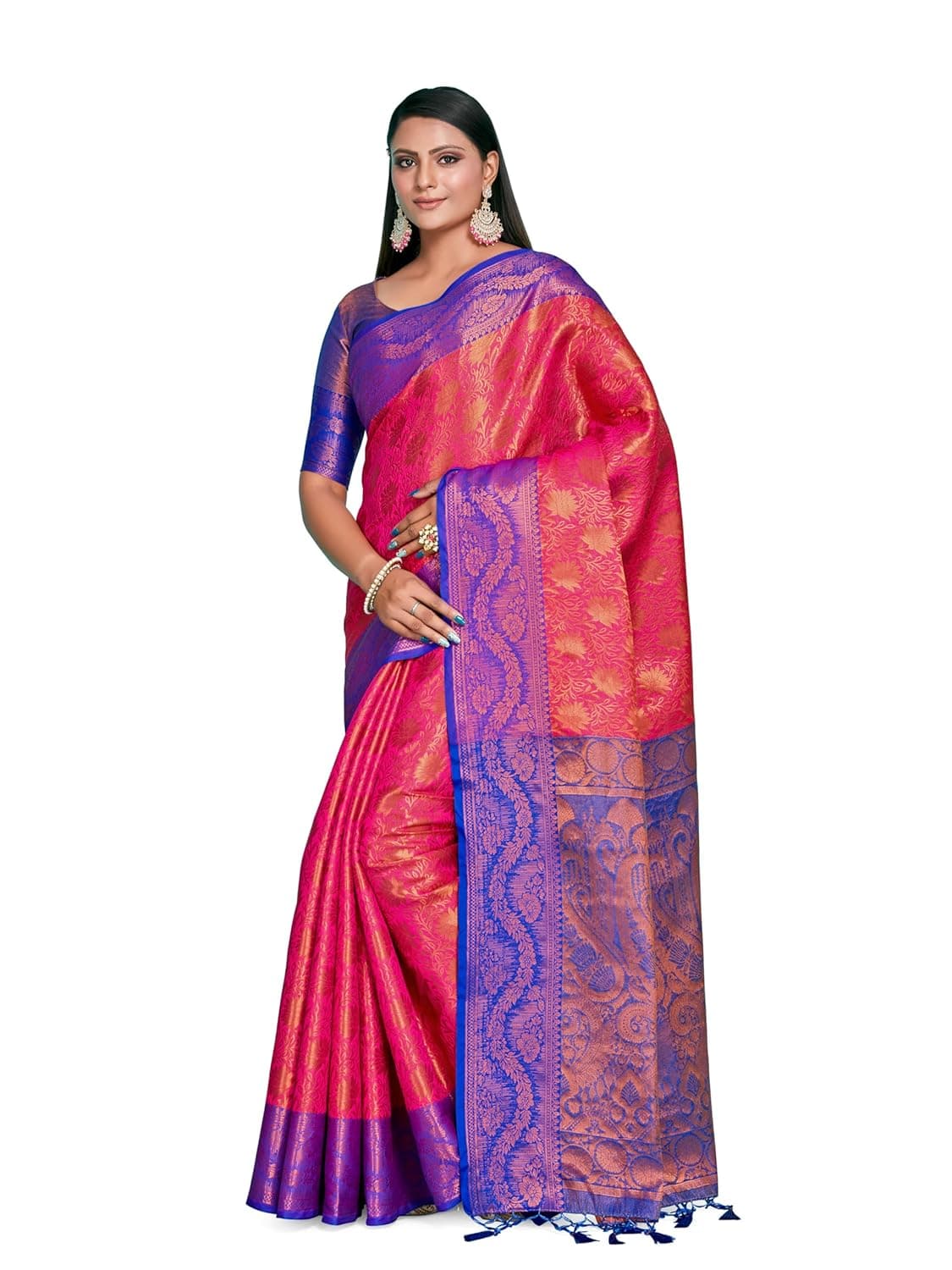 COD Available
mimosa
MIMOSA Women's Woven Design Kanjivaram Art Silk Saree Rani
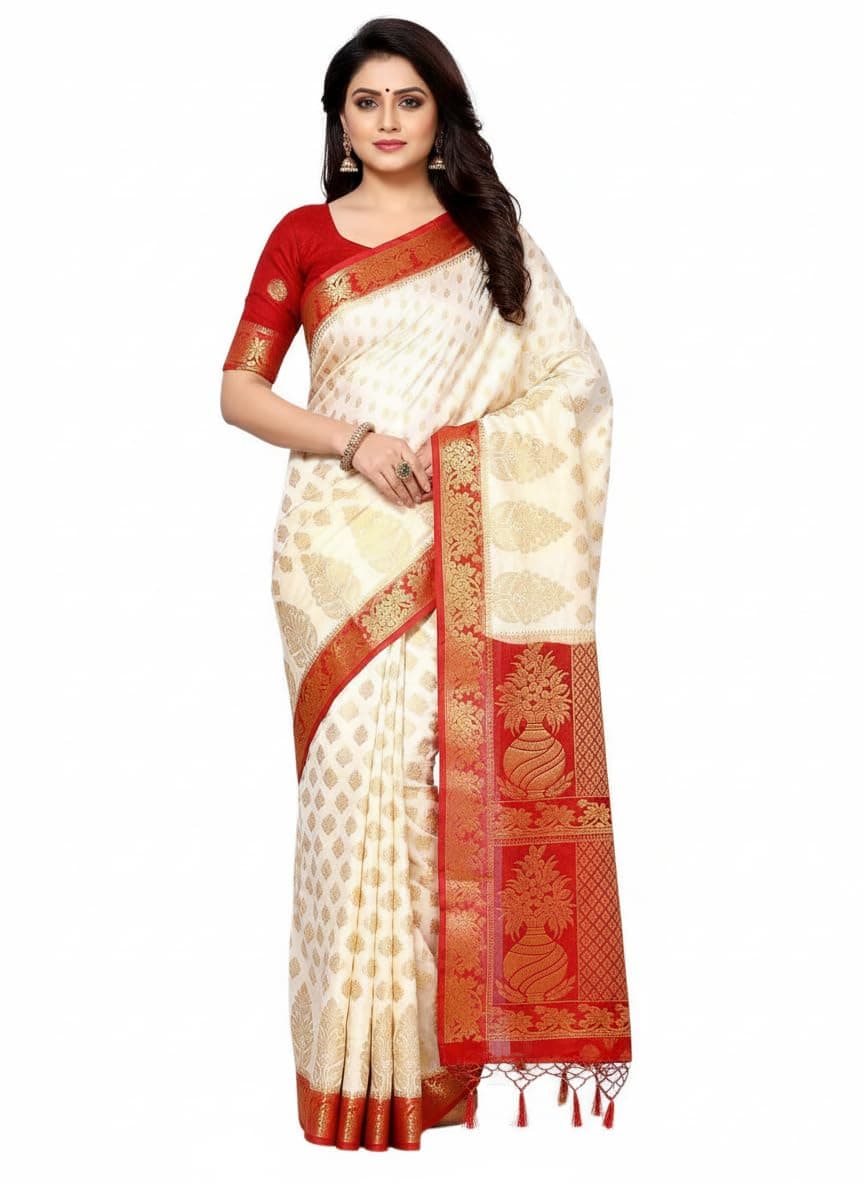 COD Available
mimosa
MIMOSA Women's Art Silk Saree Kanjivaram Style Beige
Price Guide
| Tier | Price Range | What You Get |
|---|---|---|
| Entry | Rs 800 – Rs 2,500 | Screen-printed Madhubani-inspired pattern on cotton or georgette; good everyday wear |
| Mid | Rs 2,500 – Rs 6,000 | Block-printed or semi-handcrafted Madhubani on cotton, decent motif fidelity |
| Premium | Rs 6,000 – Rs 20,000+ | Directly hand-painted by Mithila artists on silk or cotton, unique artisan piece |
Care & Maintenance
- Hand wash only in cold water — machine washing can smear hand-painted details and cause colours to bleed into each other
- Use a very gentle soap or soap-free detergent — the natural pigments used in hand-painted pieces are particularly sensitive to alkaline detergents
- Do not scrub — if there's a stain, gently blot and rinse; scrubbing can remove paint layers
- Iron inside out on low heat — avoid ironing directly over hand-painted areas; the heat can crack or lift the paint medium
Styling Tips
Madhubani fabric makes a strong visual statement — it's art you wear. A hand-painted Madhubani saree or kurta needs very little jewellery; the fabric itself is the jewellery. Pair with simple terracotta or brass accessories, or go bare to let the painting speak. For contemporary wear, a Madhubani block-print kurta with plain wide-leg trousers is a sophisticated artisanal look. Madhubani dupattas are a relatively accessible way to incorporate the art without committing to a full painted piece. Avoid pairing Madhubani with other heavily patterned textiles.
OUR VERDICT
Madhubani on fabric is the most direct way to wear living heritage art. When you buy a hand-painted Madhubani piece from a Mithila artisan, you're not just buying clothing — you're acquiring a piece of human cultural memory that is at least 2,500 years old. Even screen-printed Madhubani carries the visual tradition into everyday wardrobes. At any price point, it's among the most meaningful choices in Indian ethnic wear.