
History & Origin
The Warli tribe (Varli) inhabit the mountain ranges and forests of Palghar and Thane districts of Maharashtra, near the Sahyadri ranges. Their wall painting tradition is estimated to be at least 2,500 years old, with rock art in the region dating back even further. Unlike Madhubani, which was historically a women's art, Warli painting was traditionally done only by men, specifically in connection with agricultural and seasonal rituals.
The transition of Warli to commercial art forms — paper, fabric, and canvas — happened gradually from the 1970s onwards, with artist Jivya Soma Mashe being the central figure in bringing it to national and international attention. While this commercialisation has created economic opportunities for Warli artists, it has also led to widespread imitation — many 'Warli prints' on fabric today are screen or digital prints made far from any Warli community. Authentic pieces from Warli artisans are significantly rarer.
How to Identify Authentic Warli Print
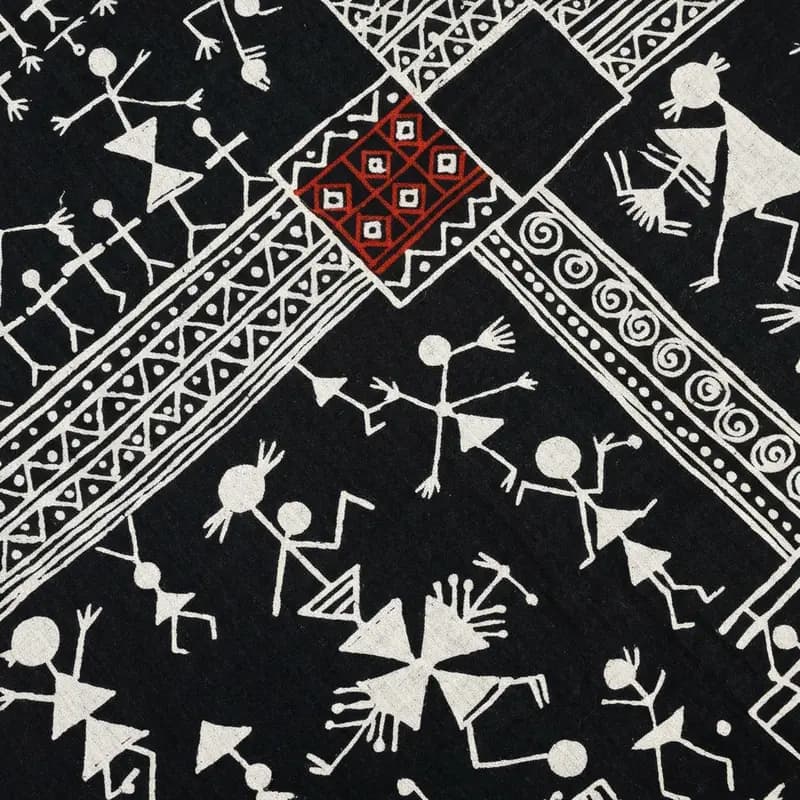
- Check the motif accuracy — authentic Warli uses very specific geometric shapes: the human figure made of two triangles (torso and lower body) connected at the apex, circles for faces and the sun, and triangles for birds; generic 'tribal' prints often distort or oversimplify these forms
- Look for narrative composition — genuine Warli art depicts scenes with narrative intent: harvest rituals, wedding processions, hunting, the tarpa dance; random scattered motifs without compositional logic are likely imitations
- Check the background — traditional Warli is white or cream on a dark background (traditionally ochre mud, now often black or dark brown on fabric); reversed colour schemes (dark on light) may indicate a contemporary artistic choice but not traditional Warli
- Ask for artisan credentials — authentic Warli fabric from Warli artists will come with provenance; sellers who can name the village or artist are more credible
Types / Varieties
| Type | Characteristic | Price Range | Best For |
|---|---|---|---|
| Hand-Painted Warli | Directly painted by Warli artisans on cotton or silk fabric | Rs 3,500 – Rs 15,000 | Collectors, gifting, statement pieces |
| Block-Printed Warli | Warli motifs on carved blocks, printed on cotton | Rs 1,500 – Rs 5,000 | Accessible everyday ethnic wear |
| Screen-Printed Warli | Mass-produced Warli pattern on various fabrics | Rs 700 – Rs 2,500 | Budget casual, kurtis, home decor |
| Embroidered Warli | Warli figures rendered in embroidery thread | Rs 2,000 – Rs 10,000 | Premium garments, occasions |
Best Brands
Maharashtra government craft organisations and the tribal cooperative Adivasi Arts Trust are the most reliable sources for authentic Warli-made fabric. In the fashion market, collaborations between Warli artists and fashion labels have produced some beautiful collections — Anita Dongre has worked with Warli artisans for special pieces. For everyday Warli prints, numerous indie brands and the Maharashtra government's Tribes India retail chain carry accessible pieces.
 COD Available
biba
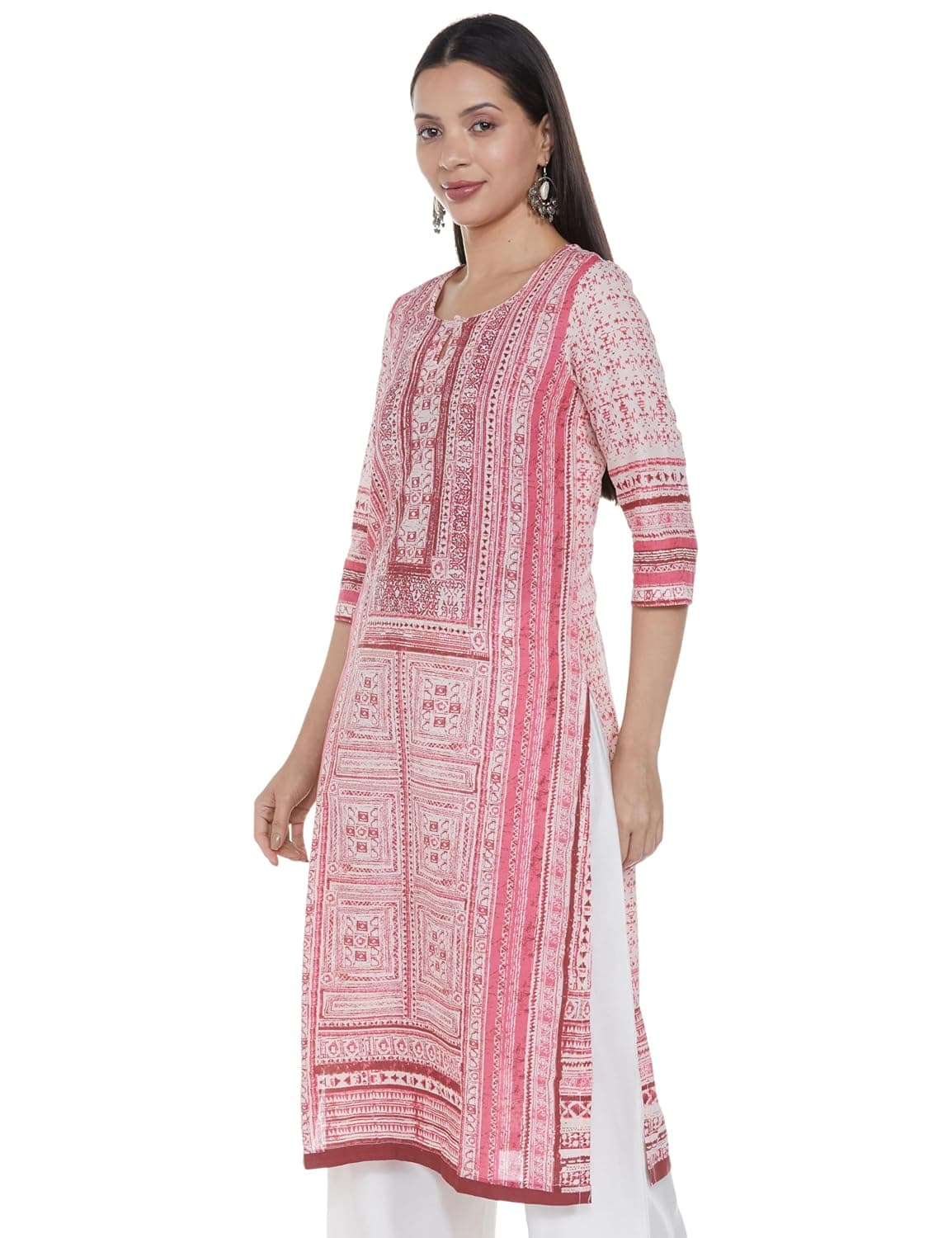
BIBA Women's Cotton Straight Printed Kurta
 COD Available
biba
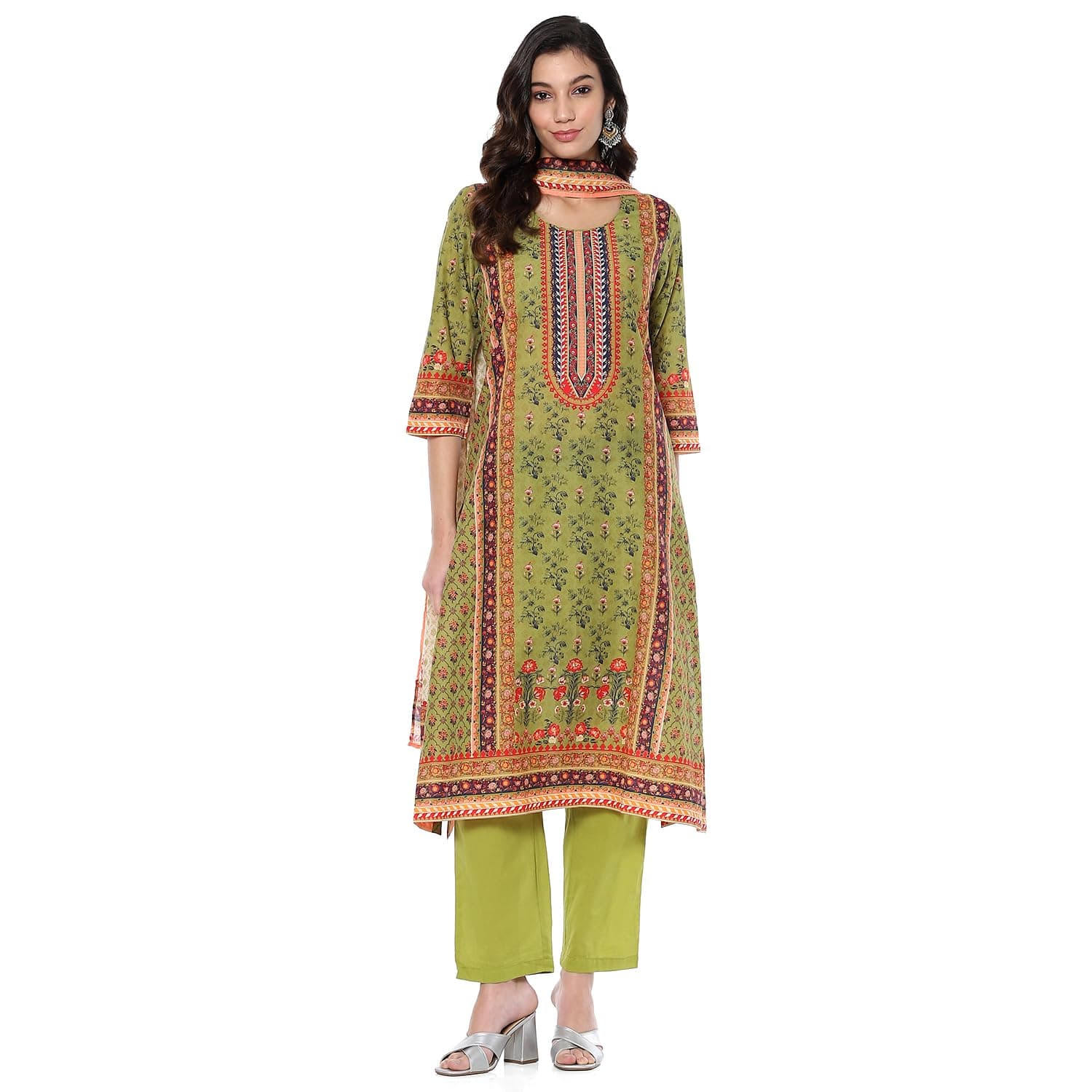
BIBA Women's Cotton Printed Kurta Set with Dupatta
 COD Available
libas
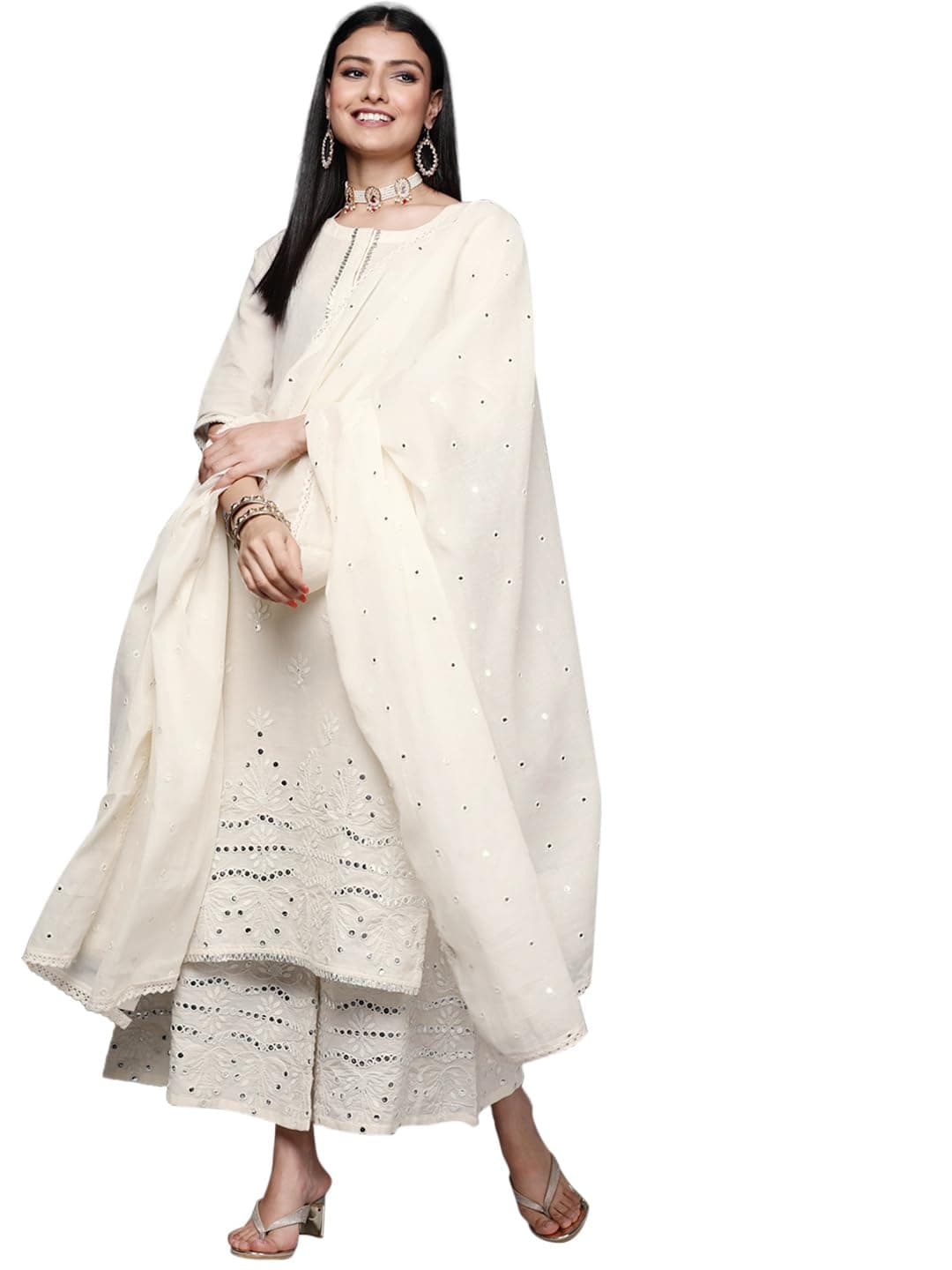
Libas Women's Embroidered Cotton Straight Kurta with Palazzos & Dupatta
 COD Available
libas
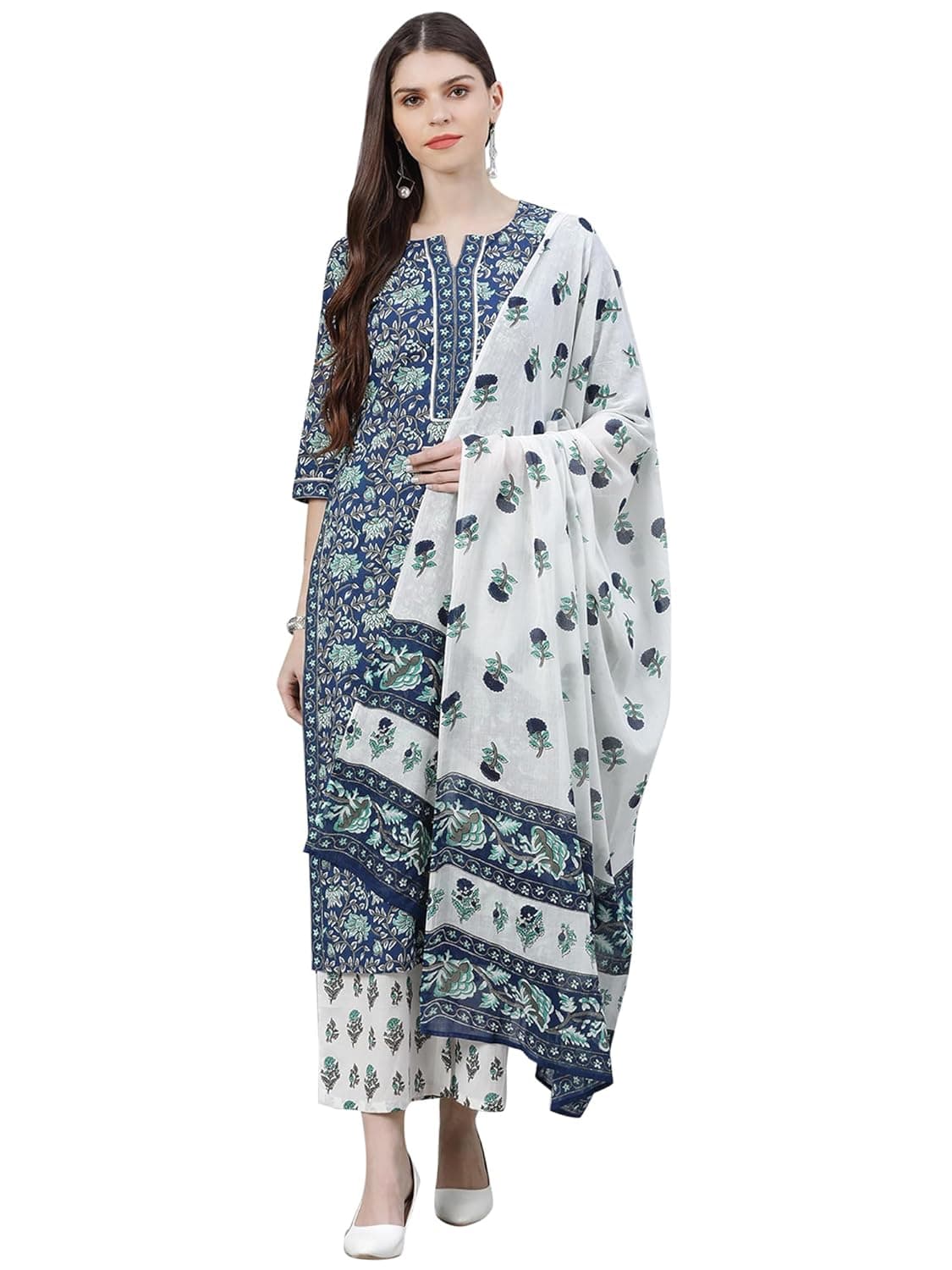
Libas Women's Cotton Printed Kurta Set Multicoloured
COD Availablelibas
Libas Printed Silk Blend Round Neck Kurta Pant Set Pink
 COD Available
m.r.p:
Women’s Kurta Set with Dupatta | 3 Piece Kurta Pant Set for Women | Ethnic Printed Kurta Suit | Cotton Blend Traditional Kurta Set | Festive, Casual
Price Guide
| Tier | Price Range | What You Get |
|---|---|---|
| Entry | Rs 700 – Rs 2,000 | Screen-printed Warli-inspired pattern on cotton or georgette; good for everyday casual |
| Mid | Rs 2,000 – Rs 5,000 | Block-printed or semi-handcrafted Warli on cotton, reasonable motif fidelity |
| Premium | Rs 5,000 – Rs 15,000+ | Hand-painted by Warli artisans on cotton or silk, genuine tribal community art |
Care & Maintenance
- Hand wash in cold water — machine washing can abrade hand-painted Warli details and smear the white rice-paste pigment used by traditional artists
- Wash dark-background Warli fabric separately — the dark base colour (often black, navy, or dark brown) can bleed, especially in the first wash
- Dry flat in shade — heat and direct sunlight affect both the base dye and the white pigment used for Warli motifs
- Iron carefully on reverse side — do not iron directly on hand-painted sections; use a pressing cloth if ironing on the front
Styling Tips
Warli's signature white-on-dark palette is inherently striking and graphic — it suits a bold, confident aesthetic. A black-and-white Warli cotton kurta with wide-leg trousers is a sophisticated monochrome ethnic look that works beautifully for creative workplaces and cultural events. For a festive spin, a Warli-print saree in natural dark tones with silver jewellery is stunning. The graphic quality of Warli also pairs unexpectedly well with structured Western-style separates — a Warli print blouse with tailored trousers is a strong Indo-Western fusion. Avoid pairing with other busy prints; Warli needs breathing space.
OUR VERDICT
Warli print on fabric carries extraordinary cultural weight — you're wearing an art tradition that predates India's written history and continues to be practiced by the Warli community as a living cultural expression. When you choose authentic Warli fabric from a tribal artisan source, you're directly supporting one of India's indigenous communities and their cultural heritage. The graphic power of Warli makes it one of the most visually distinctive choices in Indian ethnic wear at any price point.