
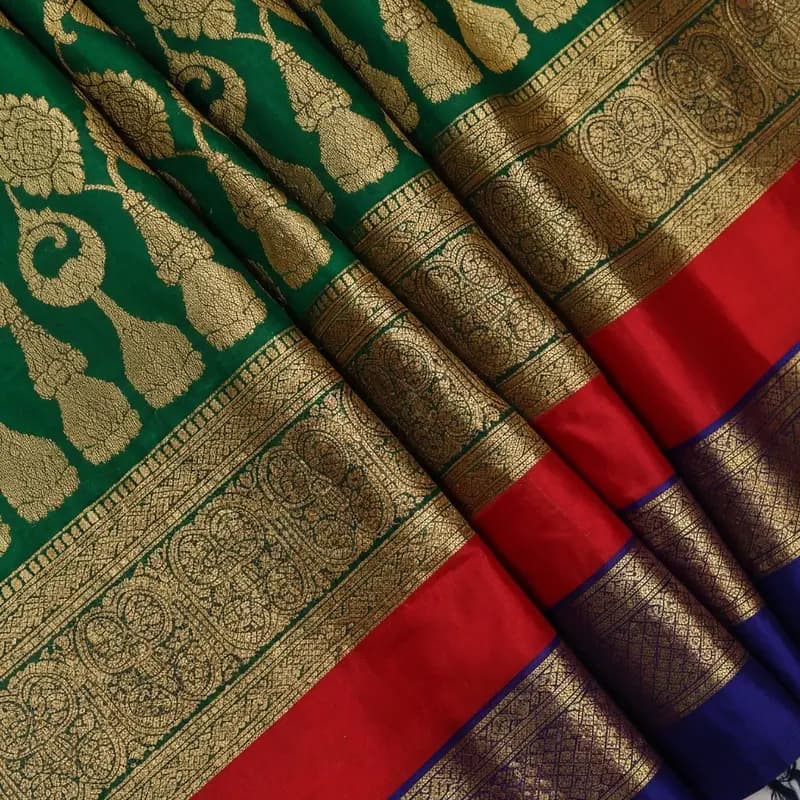
History & Origin
Kanchipuram silk weaving has roots going back over 400 years, with the town historically called the 'City of a Thousand Temples.' Weavers from the Saliyar community, who trace their lineage to sage Markanda, settled here and perfected the art of weaving with pure mulberry silk and real zari. The fabric became inseparable from Tamil Brahmin wedding customs and Carnatic culture.
What makes Kanchipuram unique is its construction: the body (korvai) and the border are woven separately on different shuttles and interlinked at the selvedge — this is why the border of a genuine Kanchipuram saree can be folded at right angles without puckering. This technique is unique to Kanchipuram and is one of the easiest authenticity tests.
How to Identify Authentic Kanchipuram Silk
- The border test — fold the saree at the junction of body and border at a 90-degree angle. In a genuine Kanchipuram, the border folds cleanly; in a fake, it will pucker or show a seam.
- Weight check — Kanchipuram is heavy, one of the heaviest sarees you will hold. Lightweight 'Kanjeevaram' is almost always not genuine.
- Look for the GI hologram tag issued by the Weavers Service Centre; genuine Kanchipuram sarees should carry this.
- Check the zari — real Kanchipuram uses silver wire coated with gold and wrapped around a silk thread. It has a warm, slightly matte gold look — never blindingly shiny.
- The burn test on a loose thread — real silk burns slowly with a smell like burning hair and produces a crushable ash; synthetic melts and beads.
Types of Kanchipuram Silk
| Type | Weight | Price Range | Best For |
|---|---|---|---|
| Pure Kanchipuram (Real Zari) | Very Heavy | Rs 15,000 – Rs 3,00,000 | Weddings, heirloom |
| Kanchipuram with Tested Zari | Heavy | Rs 5,000 – Rs 15,000 | Festive, puja, temple |
| Tissue Kanchipuram | Medium | Rs 8,000 – Rs 40,000 | Summer weddings, receptions |
| Soft Silk Kanchipuram | Medium-Heavy | Rs 6,000 – Rs 30,000 | Daily wear, office events |
Best Brands for Kanchipuram Silk
On Amazon, look for Pothys, Rmkv Fabrics, and SilkFabrique for authentic Kanchipuram options. Satrani and Mimosa offer affordable silk sarees in the Kanchipuram style at accessible price points — honest about being 'Kanchipuram style' rather than certified originals.
 COD Available
ishin
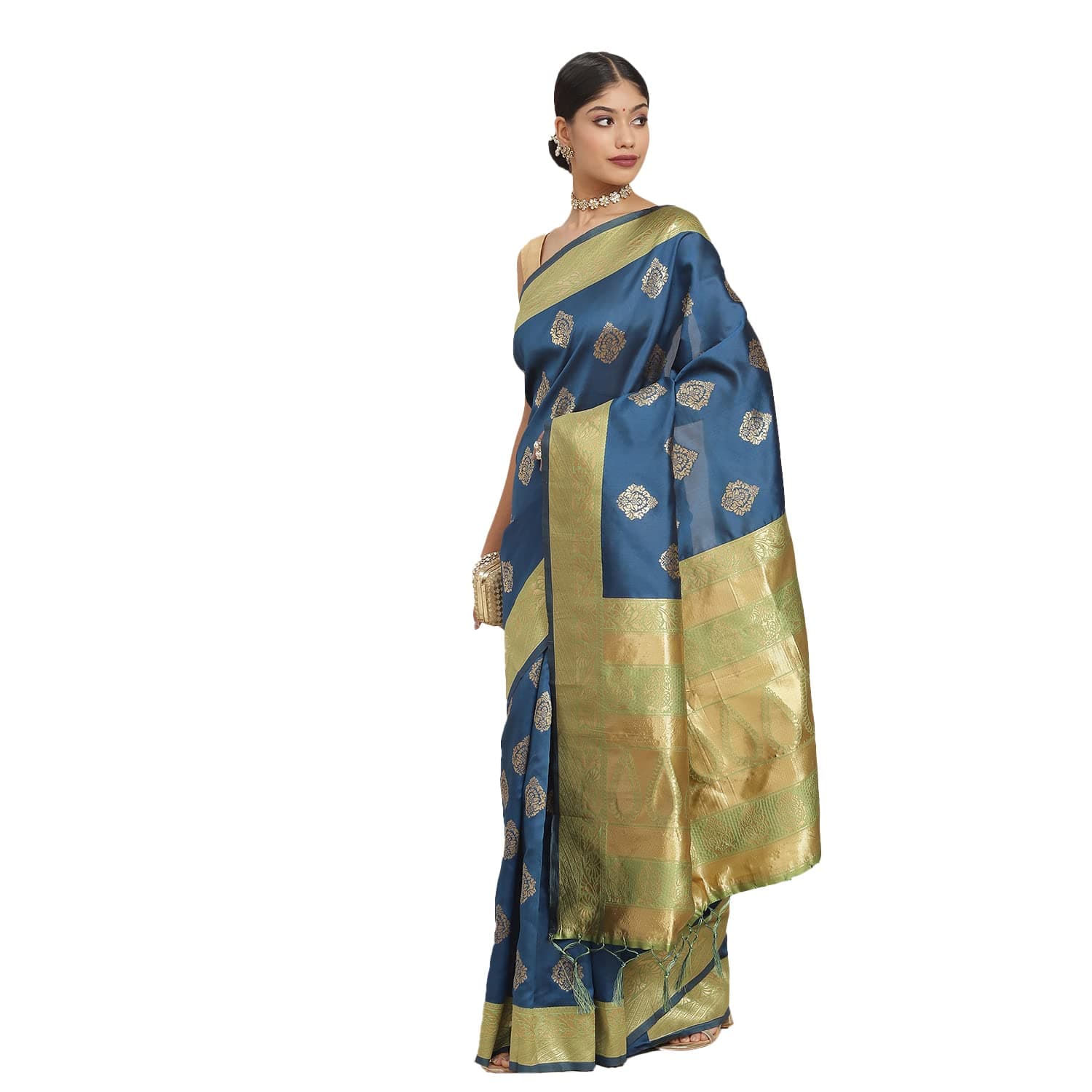
Ishin Women's Silk Blend Teal & Green Woven Design Saree with Blouse
 COD Available
ishin
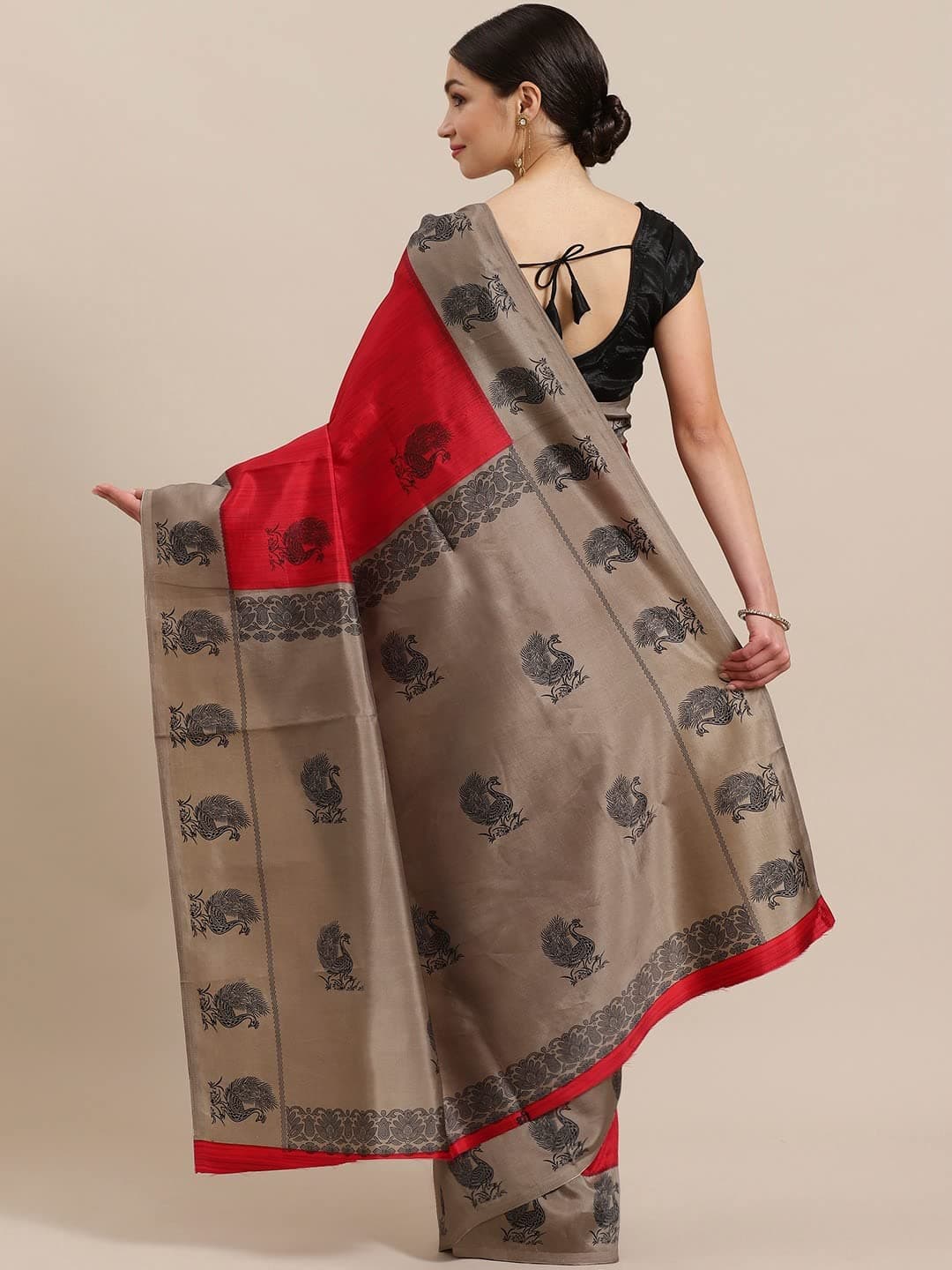
Ishin Women's Art Silk Maroon & Taupe Printed Saree
 COD Available
ishin
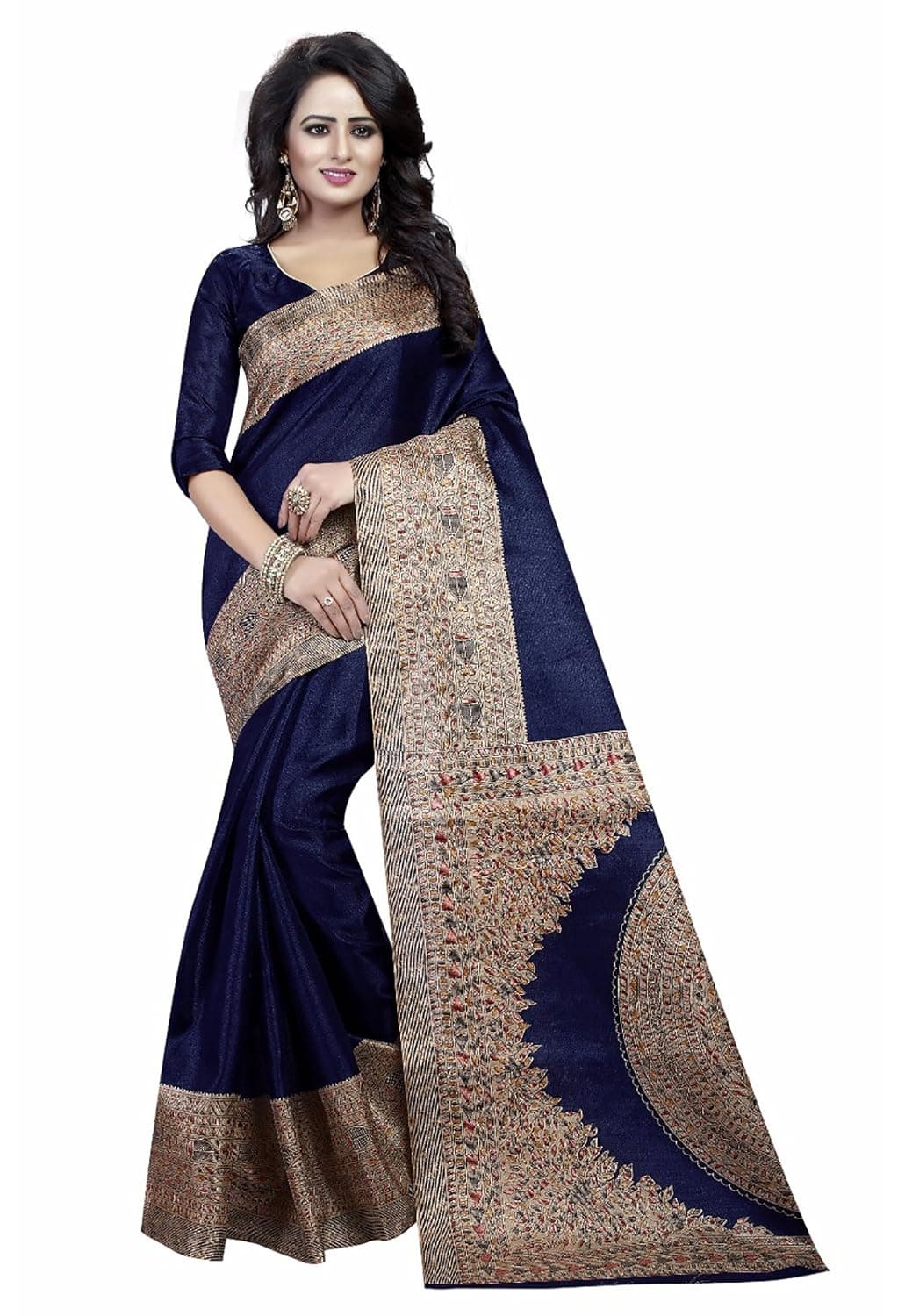
Ishin Women's Art Silk Navy Blue Saree with Blouse Piece
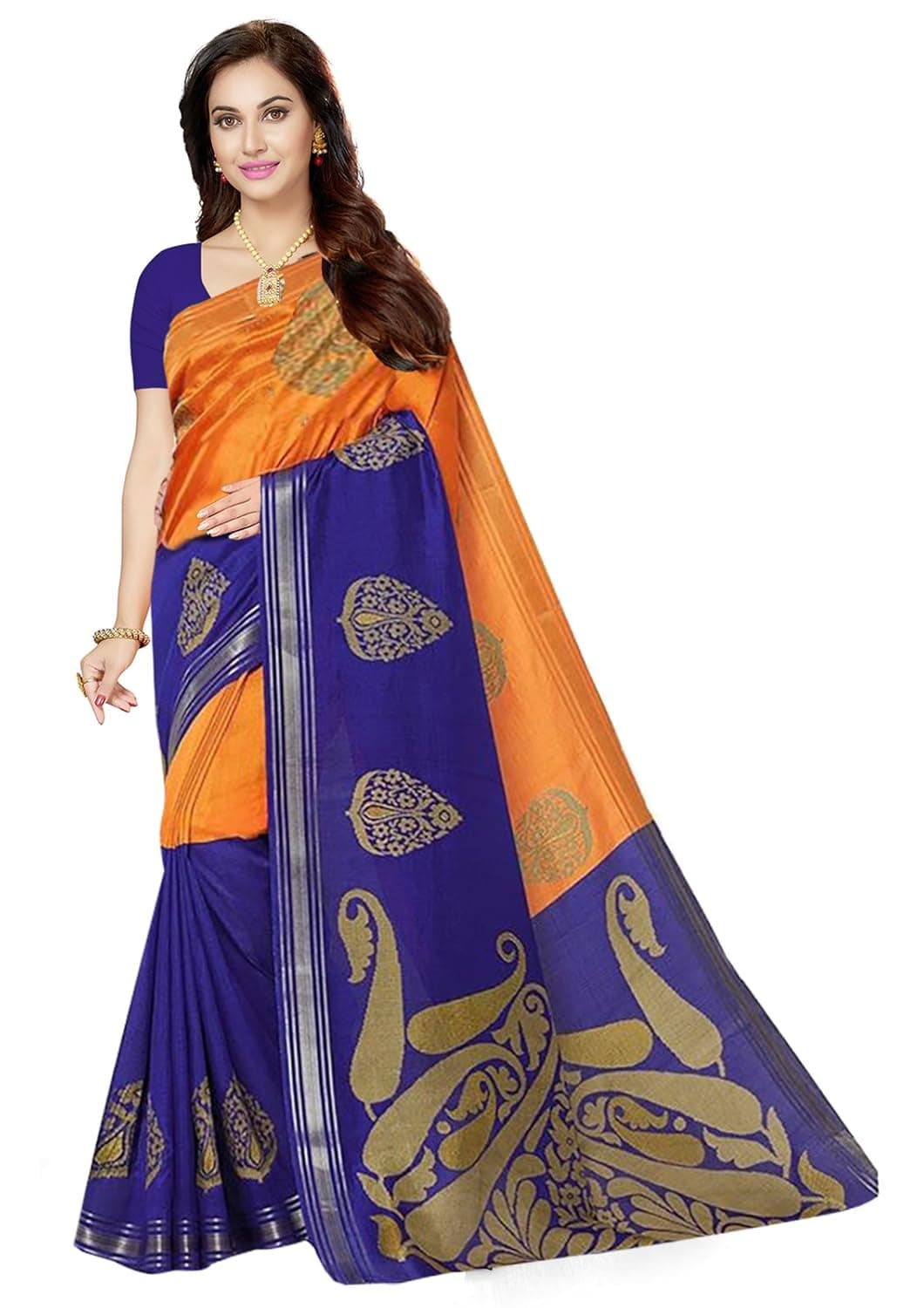 COD Available
ishin
Ishin Women's Art Silk Dark Blue & Orange Saree with Blouse
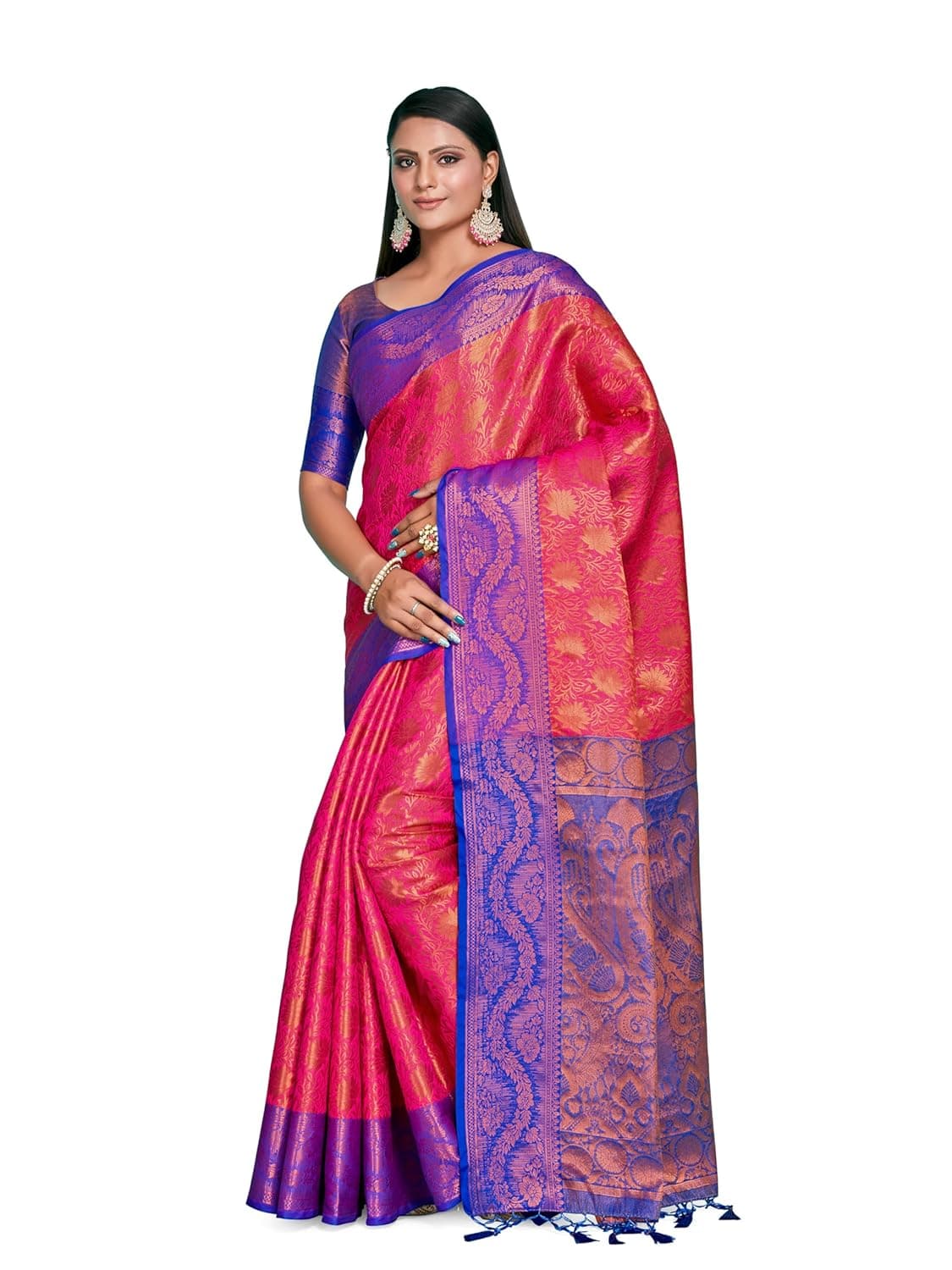 COD Available
mimosa
MIMOSA Women's Woven Design Kanjivaram Art Silk Saree Rani
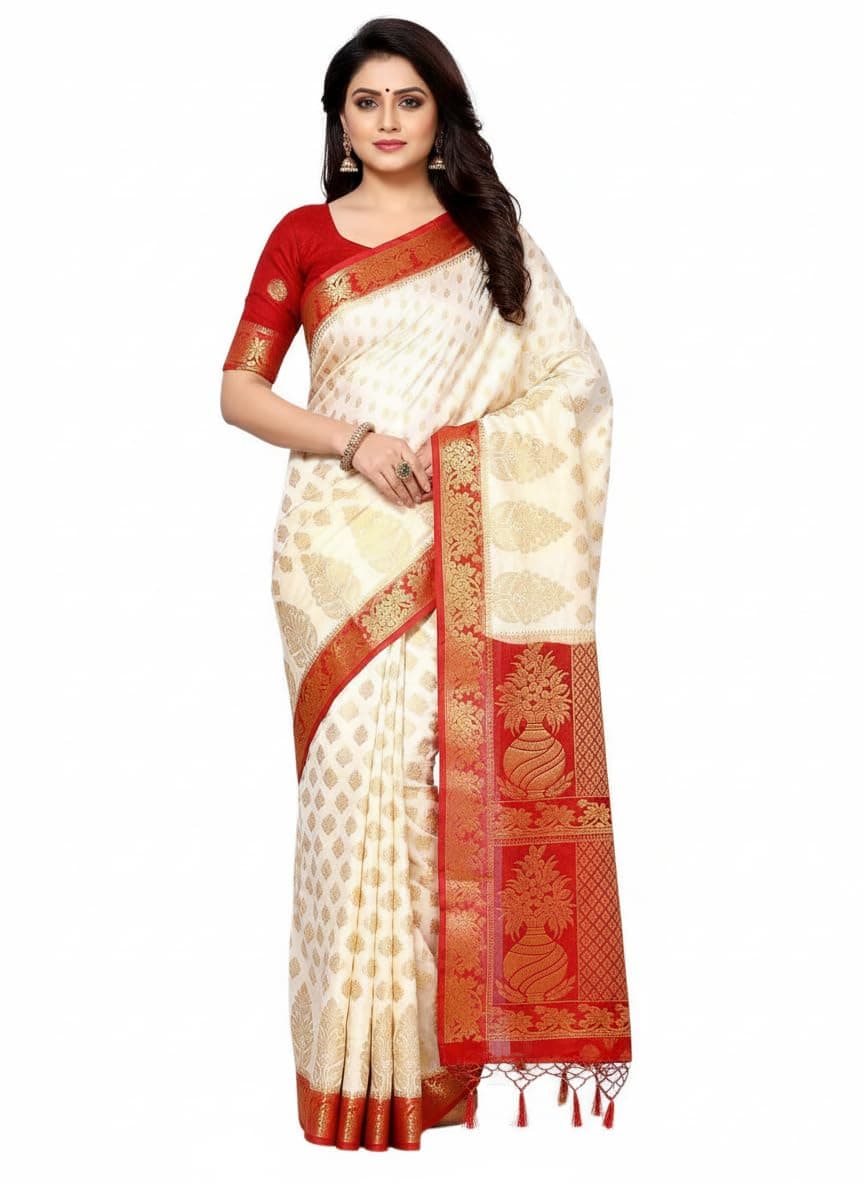 COD Available
mimosa
MIMOSA Women's Art Silk Saree Kanjivaram Style Beige
Price Guide
| Tier | Price Range | What You Get |
|---|---|---|
| Budget | Rs 5,000 – Rs 12,000 | Kanchipuram-style silk with tested zari; good temple and festive wear |
| Mid-Range | Rs 12,000 – Rs 50,000 | Certified handloom Kanchipuram with real zari; suitable for family weddings |
| Premium | Rs 50,000 – Rs 3,00,000+ | Pure silk with genuine gold/silver zari, master weaver pieces; bridal heirlooms |
Care & Maintenance
- Dry-clean only — Kanchipuram silk should never be washed at home due to the risk of zari tarnishing and silk distortion.
- Store folded in pure cotton muslin, avoiding plastic bags which trap moisture and accelerate zari tarnish.
- Refold along different lines every 6 months to prevent zari breakage along permanent fold lines.
- Use neem leaves or camphor balls in storage — never mothballs (naphthalene) which can damage the silk fibre.
- Air in the shade for a few hours every few months; direct sunlight will fade the rich colours permanently.
Styling Tips
The classic Kanchipuram look calls for heavy temple jewellery — Kasu mala, Jimikki earrings, and Vanki arm bands in gold. Due to the saree's weight, draping it in the Madisar or Nivi style works best. For a modern wedding guest look, pair a pastel Kanchipuram with minimal contemporary gold jewellery and a contrast-coloured blouse. Avoid synthetic dupattas or accessories that will look cheap next to the rich silk.
OUR VERDICT
Kanchipuram silk is an investment that justifies its price completely. For South Indian occasions it is irreplaceable, and North Indian brides increasingly choose it for their trousseau. Buy one certified piece from a trusted source — it will serve every major occasion in your life for decades.