
History & Origin
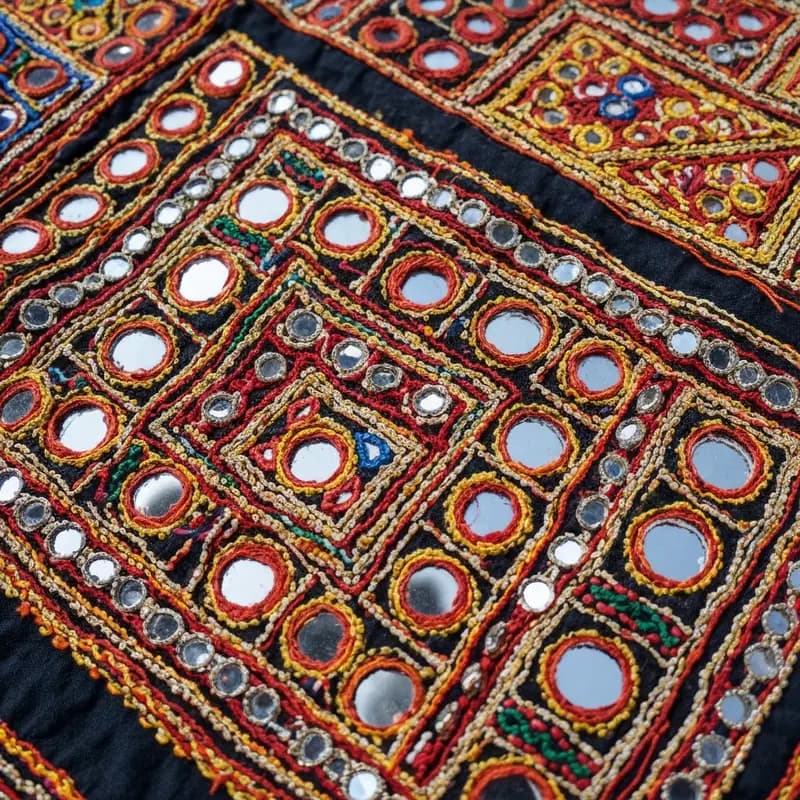
Kutch's embroidery diversity is a product of its extraordinary social history — a semi-arid region that served as a crossroads for pastoral migrations, trade routes between India and Arabia, and the settlement of communities fleeing persecution elsewhere (Sindhi Muslim and Hindu communities settled in Kutch after the Partition). Each group brought its own textile tradition, and in the relative isolation of Kutch's small settlements, each tradition developed its own distinct identity over centuries.
The 2001 Bhuj earthquake caused catastrophic loss of life in Kutch's embroidery communities. The post-earthquake reconstruction became an unlikely catalyst for craft revival — NGOs like Shrujan and Khamir, and cooperatives like Qasab (a women's producer company), received significant support and brought Kutch embroidery to international attention. Today Kutch artisans work with fashion brands worldwide, and the craft has both preserved its regional integrity and adapted successfully to contemporary fashion markets.
How to Identify Authentic Kutch Embroidery
- Regional style recognition — each Kutch community style is distinctive; Rabari uses hook-stitch on thick cotton with large geometric motifs; Mutwa uses fine white thread on dark cotton; learning even one community style helps authentication
- Thread quality — authentic Kutch embroidery uses high-quality silk or cotton thread; commercial imitations use acrylic that shines differently and has a plastic texture
- Mirror attachment — most Kutch styles include shisha (mirror work); verify mirrors are hand-stitched with visible embroidery frameworks, not glued
- Stitch density and regularity — hand embroidery shows slight irregularity that is characteristic of the maker's hand; machine embroidery is mechanically uniform
- NGO or cooperative documentation — Shrujan, Khamir, and Qasab maintain artisan records and sell certified authentic pieces
Types & Varieties
| Type | Characteristic | Price Range | Best For |
|---|---|---|---|
| Rabari embroidery | Heavy hook stitch on cotton, geometric boldness, shisha mirrors | Rs 2,500–15,000 | Statement jackets, festive occasions |
| Mutwa/Mochi embroidery | Fine dense stitch, intricate floral, limited colours | Rs 3,000–20,000 | Occasion wear, collector pieces |
| Ahir embroidery | Chain stitch with bold chain fills, vivid palette | Rs 1,500–8,000 | Navratri, festive, casual ethnic |
| Commercial Kutch-inspired | Mass-produced mirror work and 'tribal' motifs, synthetic thread | Rs 1,200–4,000 | Casual festive, accessible ethnic fashion |
Best Brands
Shrujan (Bhuj) is the most authentic and artisan-fair source for genuine Kutch embroidery. Khamir and Qasab cooperatives also sell certified authentic pieces. For fashion that uses Kutch embroidery, Abraham & Thakore and Anita Dongre's Grassroot label have done exceptional collaborative work with Kutch communities. Fabindia's Gujarat handicraft range often includes Kutch-inspired pieces. Craftsvilla and Jaypore offer both authentic and commercial Kutch embroidery.
 COD Available
biba
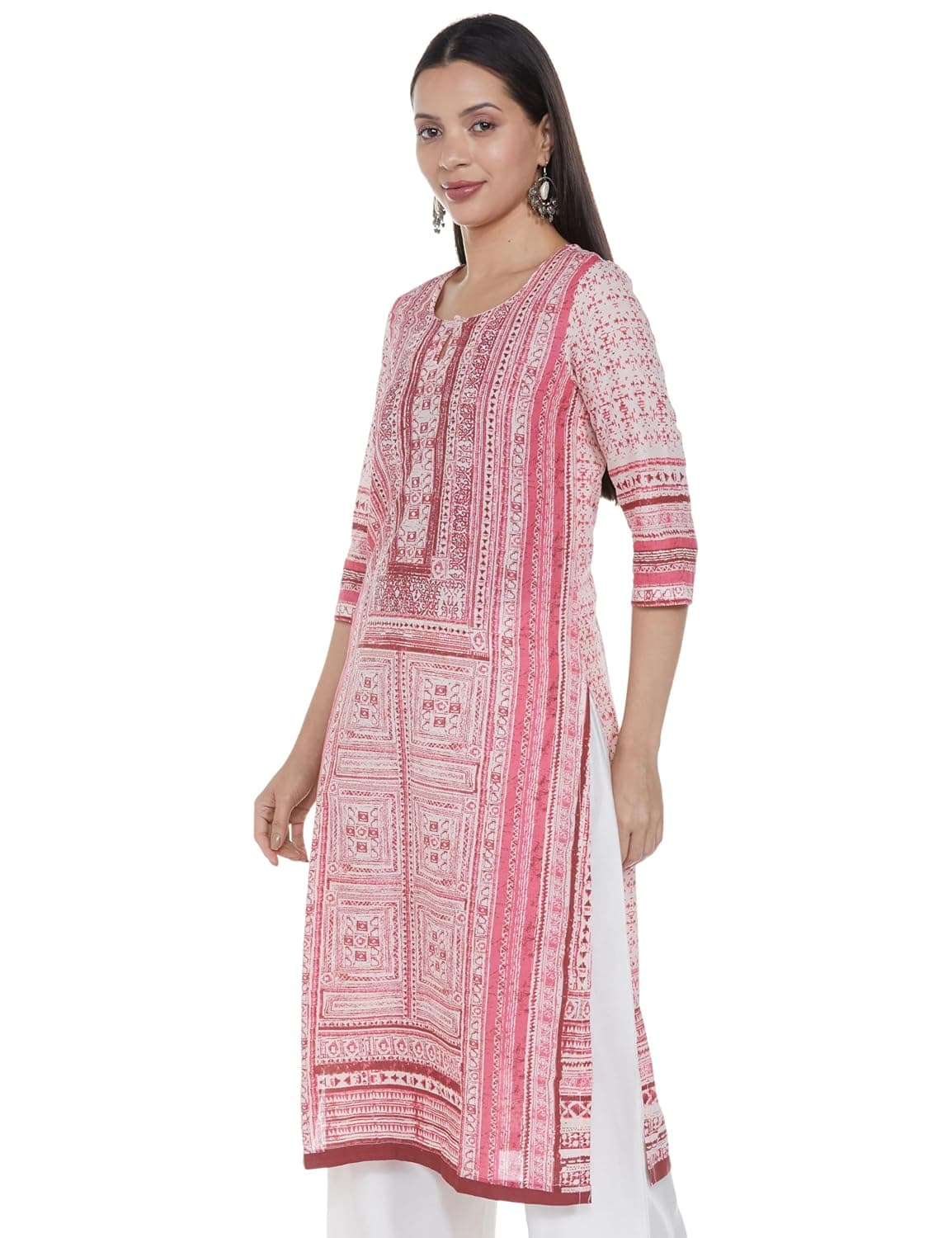
BIBA Women's Cotton Straight Printed Kurta
 COD Available
biba
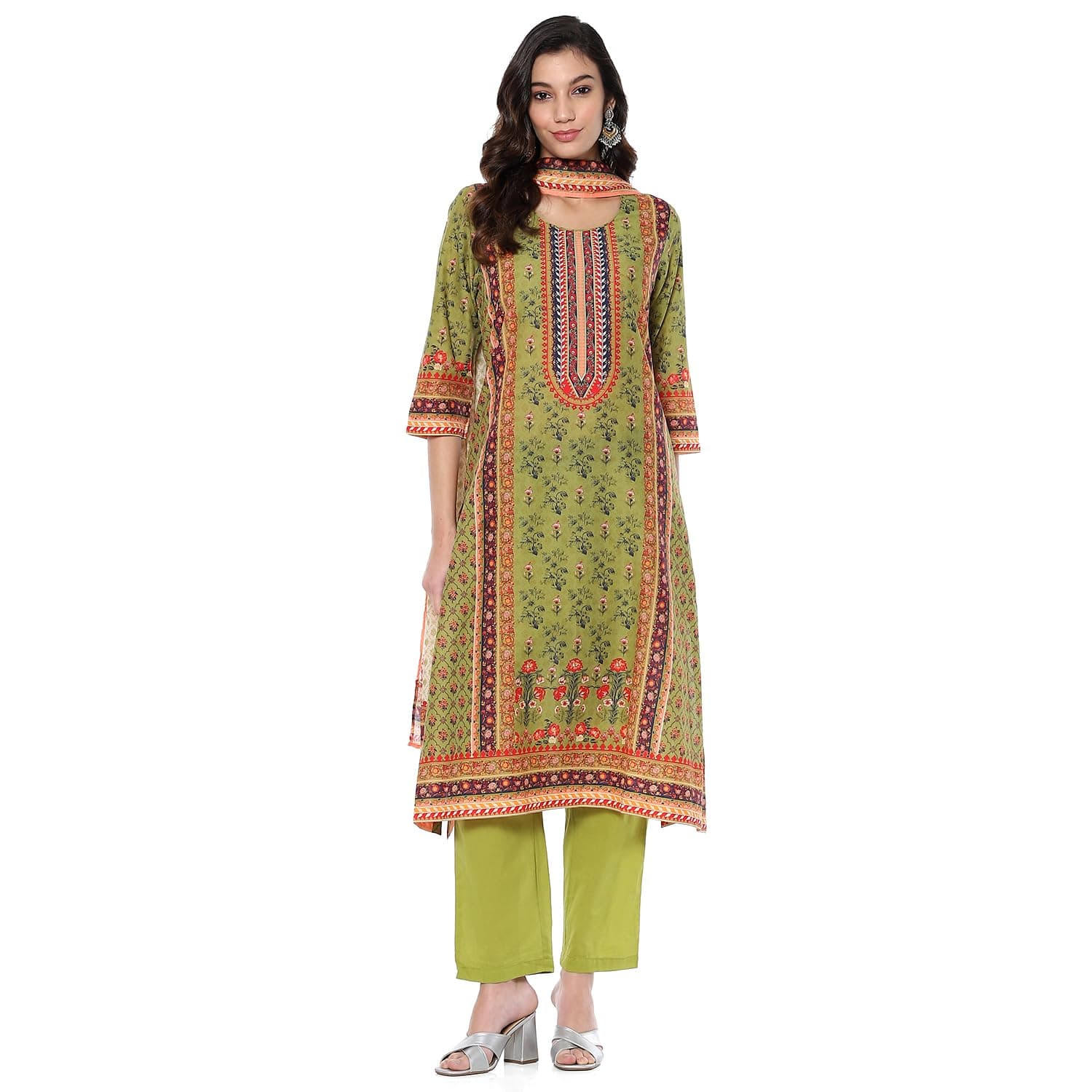
BIBA Women's Cotton Printed Kurta Set with Dupatta
 COD Available
libas
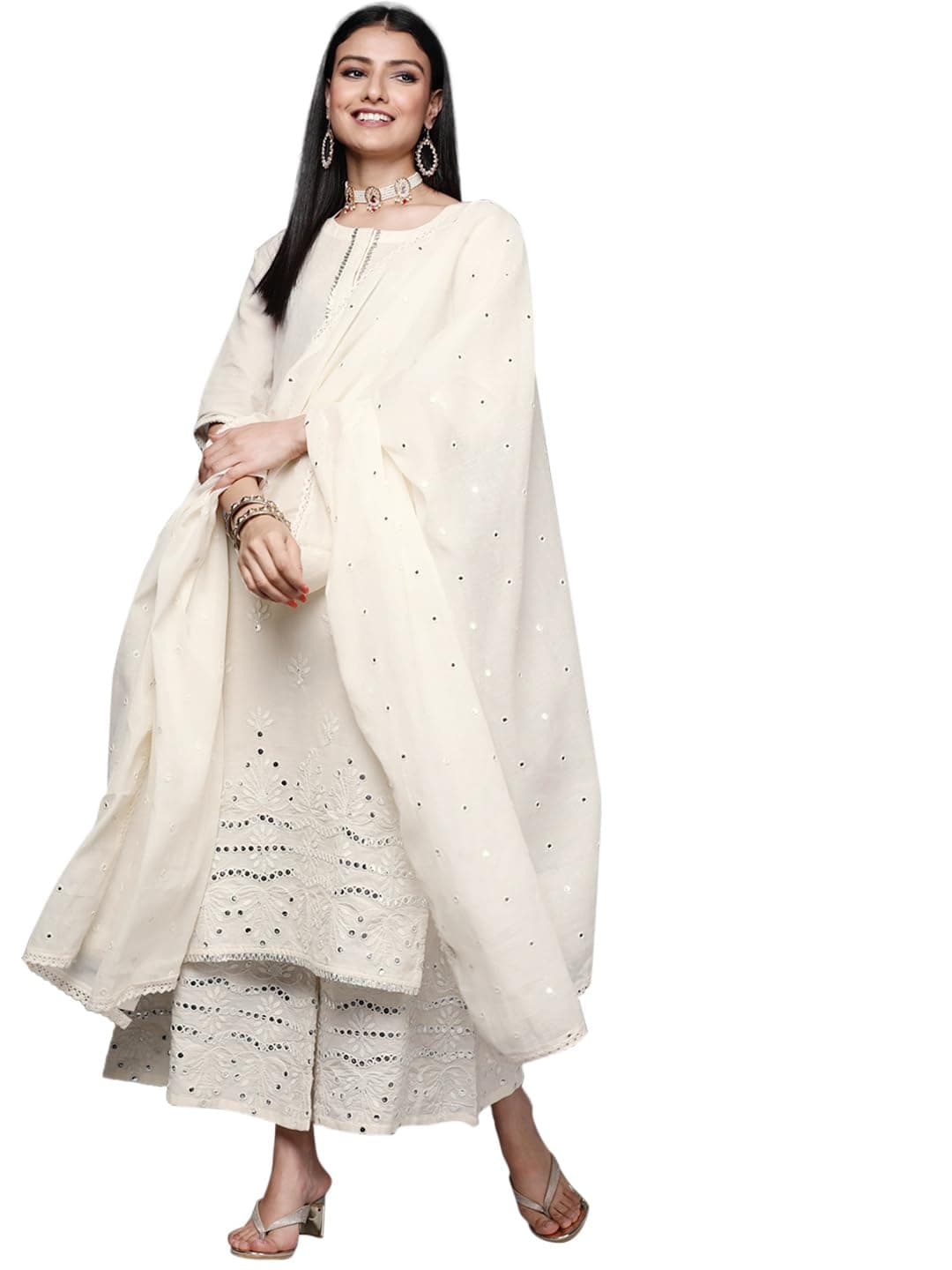
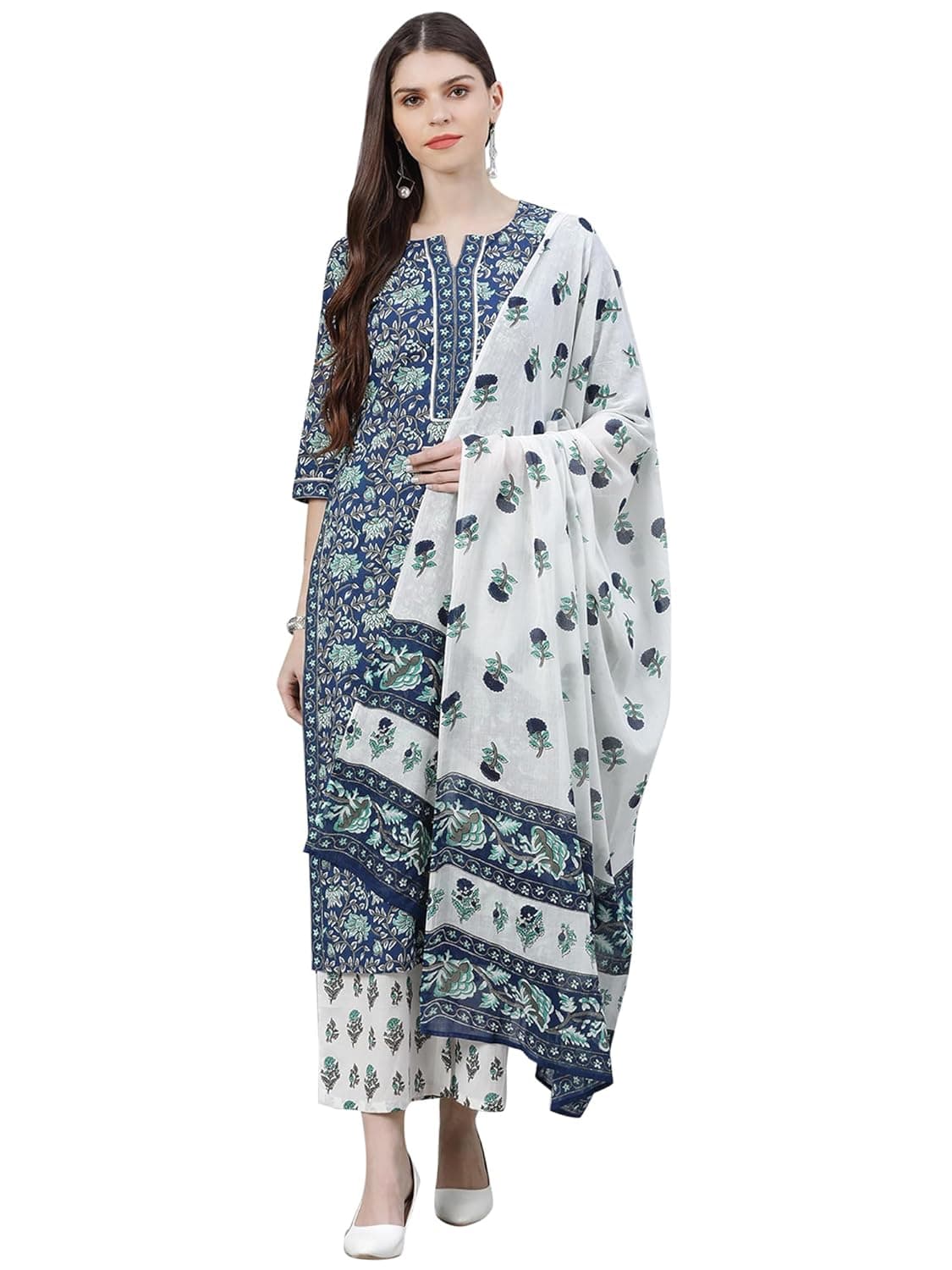
Libas Women's Embroidered Cotton Straight Kurta with Palazzos & Dupatta
 COD Available
libas
Libas Women's Cotton Printed Kurta Set Multicoloured
COD Availablelibas
Libas Printed Silk Blend Round Neck Kurta Pant Set Pink
 COD Available
m.r.p:
Women’s Kurta Set with Dupatta | 3 Piece Kurta Pant Set for Women | Ethnic Printed Kurta Suit | Cotton Blend Traditional Kurta Set | Festive, Casual
Price Guide
| Tier | Price Range | What You Get |
|---|---|---|
| Commercial inspired | Rs 1,200–3,500 | Mass-market Kutch-style mirrors and motifs, synthetic thread |
| Quality handwork | Rs 3,500–12,000 | Genuine community embroidery, cooperative-sourced |
| Authentic collector | Rs 12,000–35,000+ | Certified Shrujan or equivalent, master artisan, named piece |
Care & Maintenance
- Hand wash gently in cold water — heavy embroidery can distort in machine washing
- Do not wring — press between clean towels to remove moisture
- Air dry flat in shade — mirrors can crack in direct sun heat
- Iron around embroidery areas only — never press directly on mirror or dense embroidery areas
- Store folded in cotton — protect mirror areas from compression and scratching
Styling Tips
Authentic Kutch embroidery is bold and graphic — it makes statements, not suggestions. Let the embroidery dominate by keeping the rest of the outfit simple. A Rabari-embroidered jacket over a plain cotton kurta and churidars is a complete, confident look. For Navratri, Kutch-style chaniya cholis in mirror work and coloured thread are the most photogenic choice. Mix Kutch craft with other Indian handlooms (a Kutch jacket over a Mangalagiri cotton kurta) for an intelligently layered artisan aesthetic.
OUR VERDICT
Kutch embroidery represents Indian craft biodiversity at its most extraordinary — multiple distinct traditions, each with centuries of community development, all within one district. Buying authentic Kutch embroidery is one of the most direct ways to support artisan communities that genuinely need market-based sustainability. Even a single authentic piece changes how you think about mass-produced 'ethnic' fashion — the difference is that profound.