
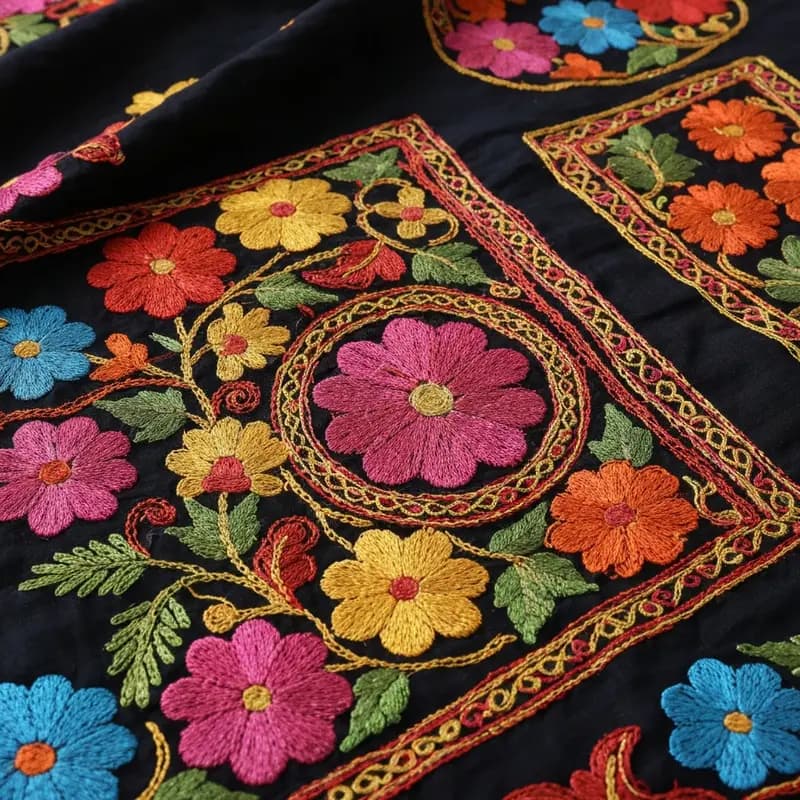
History & Origin
Phulkari's origins in Punjab date to at least the 15th century, with references in the poetry of Baba Farid. The craft was traditionally not commercial — it was made by women of the household for the bride's trousseau, worked over months or years as a collective labour of love by mothers, sisters, and aunts. Each piece told stories of the family's prosperity through colour choices and motif density.
A key distinction in traditional phulkari is between 'phulkari' (where the base fabric remains visible between embroidered flowers) and 'bagh' (where the entire surface is covered with embroidery in a garden of colour). Bagh pieces were more prestigious, requiring months of work and significant quantities of expensive silk thread. The craft received GI certification in 2010, and Punjab government programs actively support phulkari artisans through the Punjab Phulkari and Handloom Development Corporation.
How to Identify Authentic Phulkari
- Reverse examination — authentic phulkari shows clean, regular darning stitches on the reverse; machine embroidery shows chaotic threads
- Thread quality — genuine phulkari uses silk floss (pat) with a natural sheen; synthetic lookalikes use acrylic thread that shines differently
- Geometric precision — traditional phulkari motifs follow a geometric logic from the weave count; look for angular, counted stitches rather than curved machine-traced outlines
- Cotton base — traditional phulkari is worked on coarse cotton or khaddar ground; contemporary pieces use different bases, but traditional technique distinguishes them
- Weight — phulkari dupattas and odhnis are notably heavier than plain fabric due to dense silk thread coverage
Types & Varieties
| Type | Characteristic | Price Range | Best For |
|---|---|---|---|
| Traditional phulkari | Scattered flowers on visible base fabric, darning stitch | Rs 700–4,000 | Daily festive, casual occasions |
| Bagh | All-over silk coverage, no visible base, heirloom quality | Rs 4,000–20,000+ | Weddings, bridal trousseau, collector pieces |
| Chope | Geometric border phulkari with sparse motifs on red/yellow | Rs 1,500–6,000 | Weddings, Baisakhi, traditional occasions |
| Contemporary phulkari | Phulkari motifs on new silhouettes (jackets, kurtis) | Rs 800–5,000 | Fusion wear, modern ethnic |
Best Brands
Punjab Phulkari and Handloom Development Corporation stores are the most authentic and price-regulated source for phulkari. For designer phulkari with contemporary cuts, Ritu Kumar's label has done exceptional work bringing phulkari into modern silhouettes. Craftsvilla and Jaypore carry curated artisan phulkari pieces. In Amritsar and Patiala, local market clusters sell directly from artisan groups at better pricing than retail stores.
 COD Available
biba
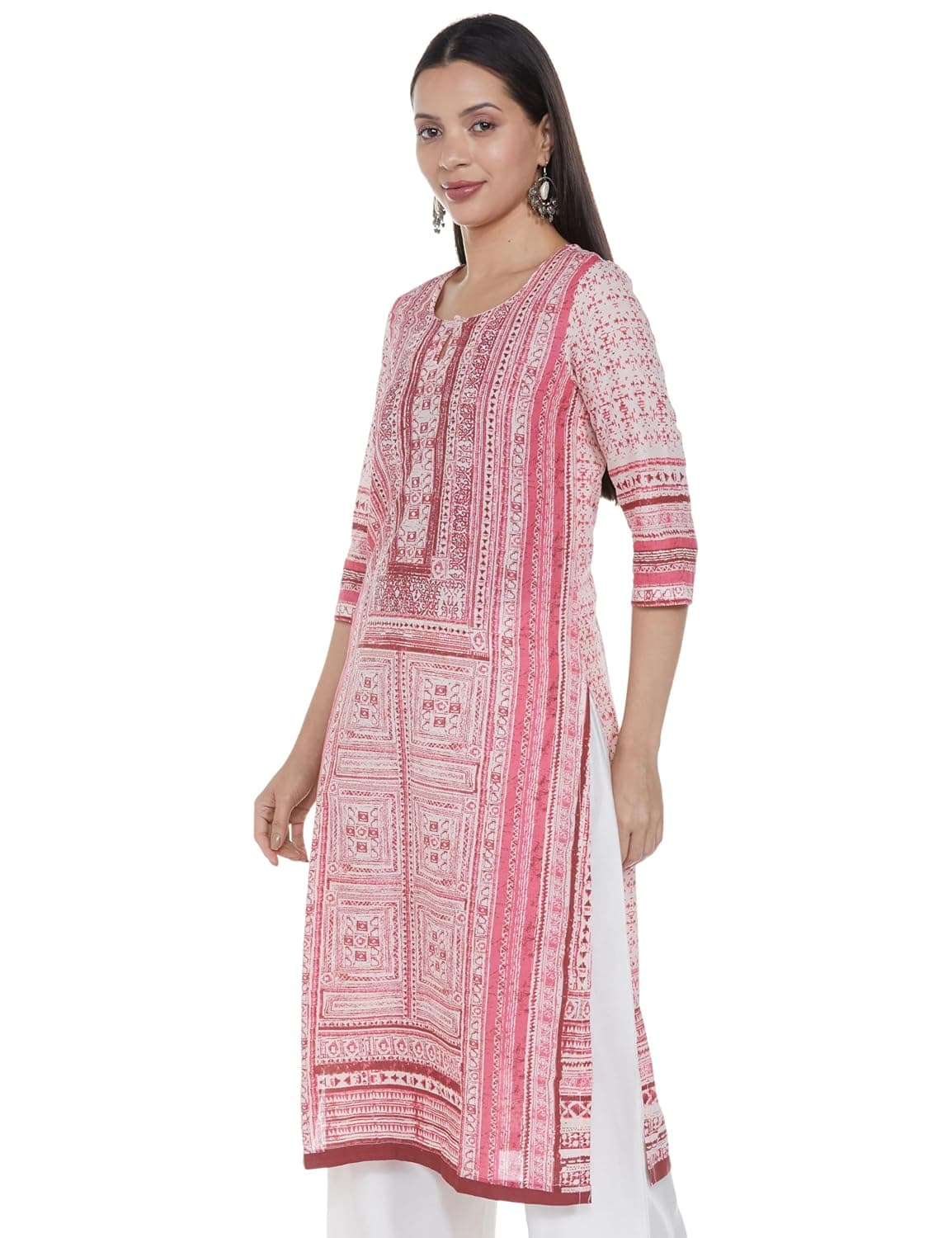
BIBA Women's Cotton Straight Printed Kurta
 COD Available
biba
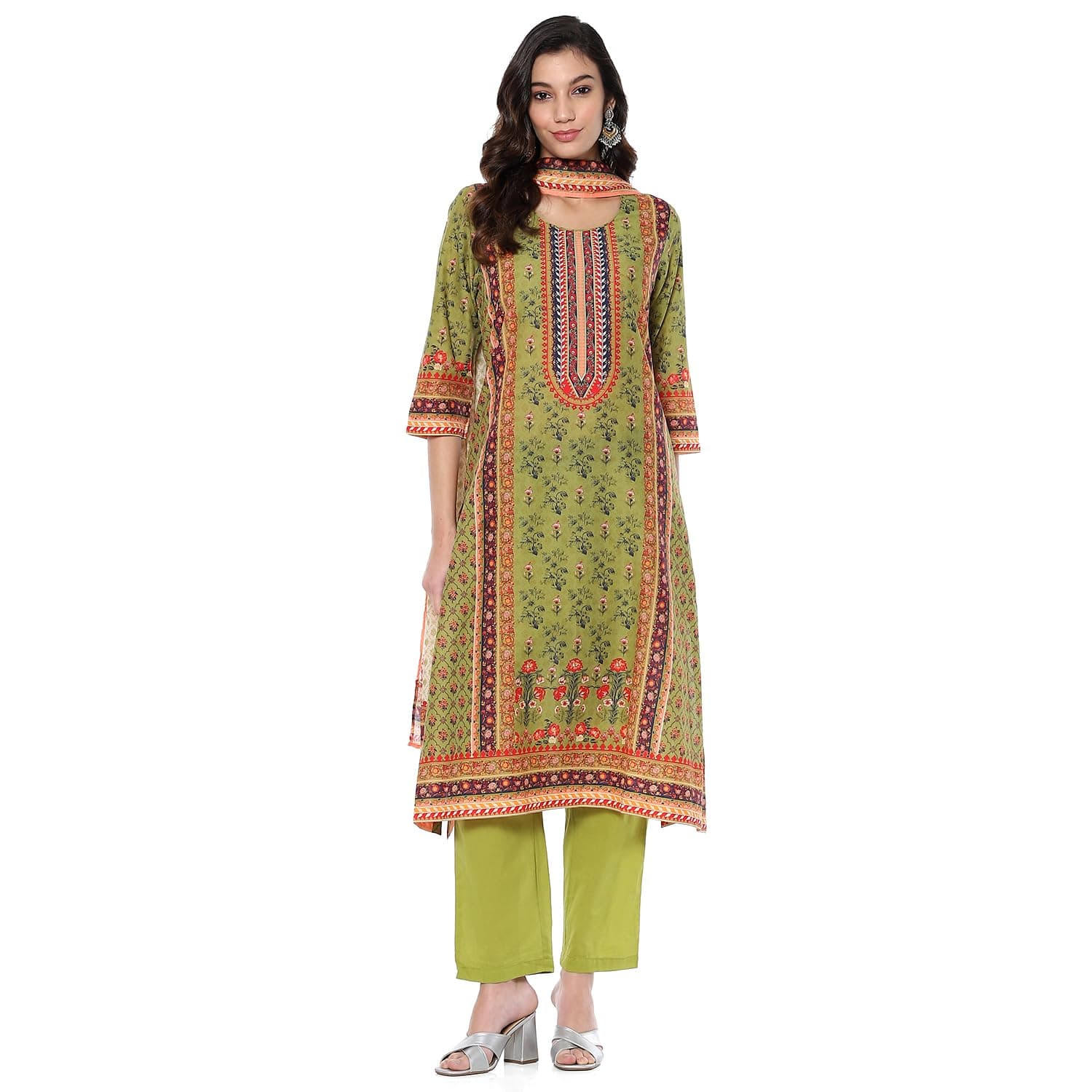
BIBA Women's Cotton Printed Kurta Set with Dupatta
 COD Available
biba
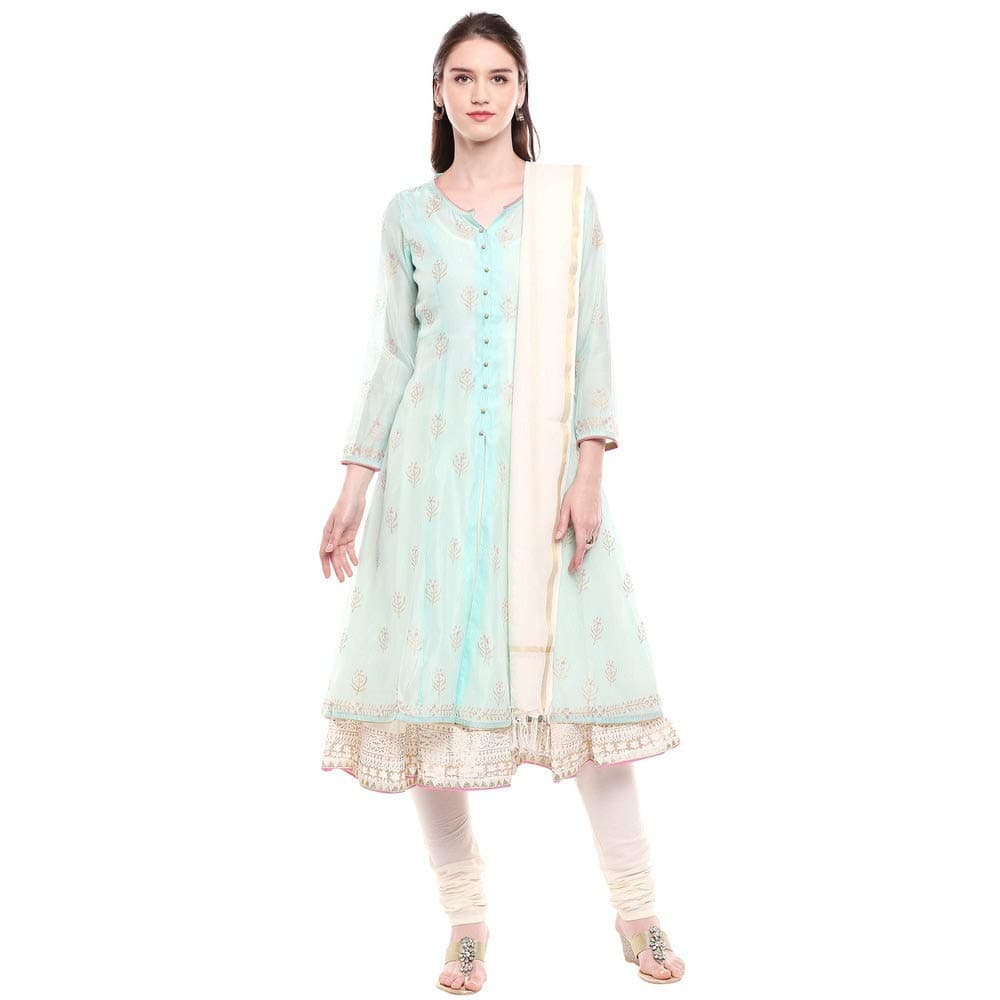
BIBA Women's Cotton A-Line Churidar Suit
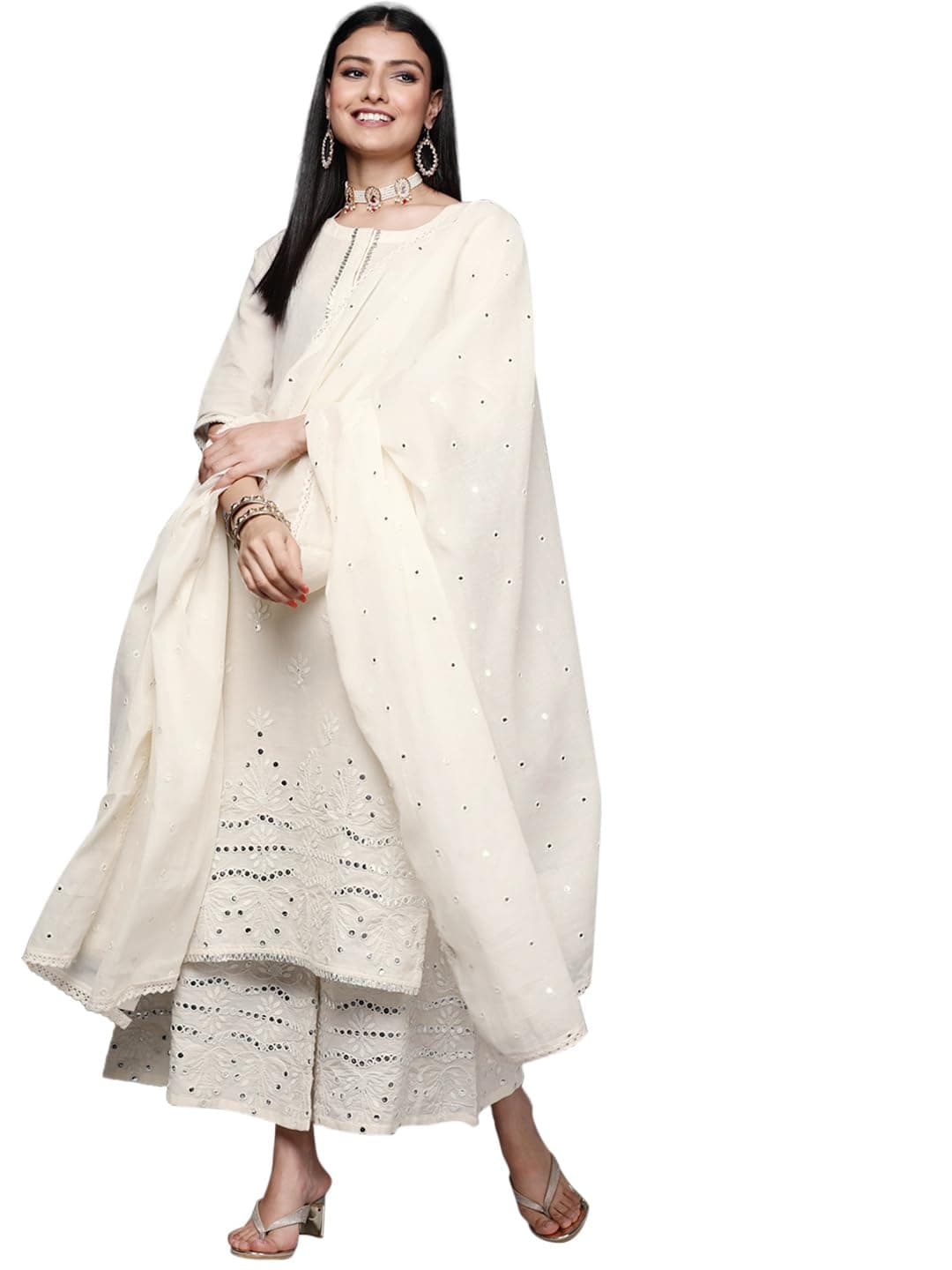 COD Available
libas
Libas Women's Embroidered Cotton Straight Kurta with Palazzos & Dupatta
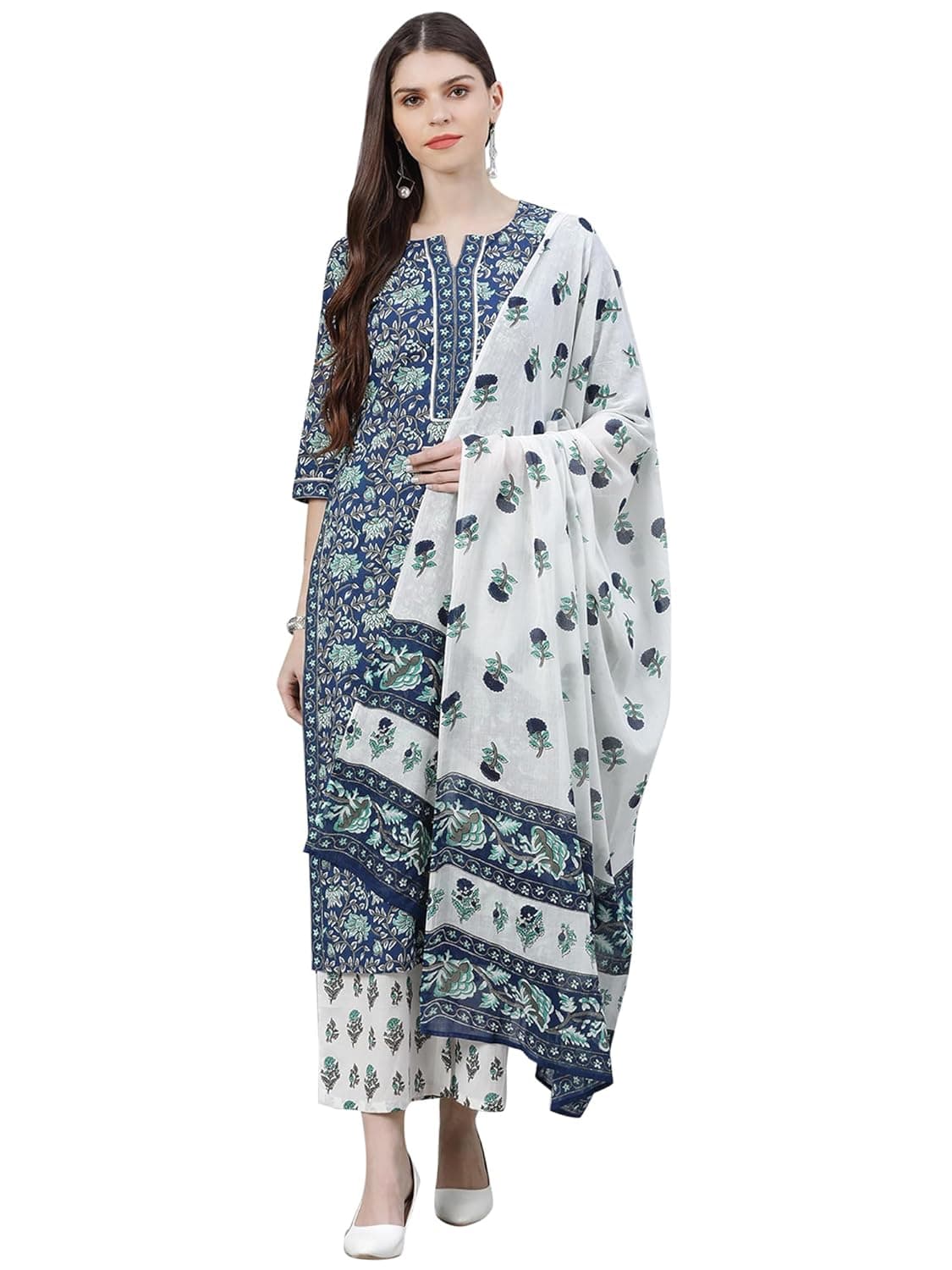 COD Available
libas
Libas Women's Cotton Printed Kurta Set Multicoloured
COD Availablelibas
Libas Printed Silk Blend Round Neck Kurta Pant Set Pink
Price Guide
| Tier | Price Range | What You Get |
|---|---|---|
| Daily wear | Rs 700–2,000 | Simple phulkari dupatta, scattered motifs, machine or partial hand work |
| Authentic handwork | Rs 2,000–7,000 | Full hand phulkari dupatta or odhni with silk thread |
| Bagh/heirloom | Rs 7,000–20,000+ | All-over bagh, master artisan work, collector or bridal quality |
Care & Maintenance
- Dry clean for valuable phulkari pieces — silk thread and khaddar cotton react differently to water
- Hand wash gently if necessary — cold water only, minimal agitation, no soaking
- Roll in a clean white towel to absorb water — never wring, as the dense embroidery can distort when pulled
- Dry in shade flat — direct sun fades silk thread colours over time
- Store folded in muslin or cotton — avoid plastic bags; silk thread needs to breathe
Styling Tips
Phulkari is so visually bold that it should be the only embellishment in an outfit. Drape a phulkari dupatta over a plain contrasting kurta (a solid red phulkari dupatta over an off-white kurta is a classic) and let the embroidery do all the work. For contemporary wear, a phulkari jacket over a straight kurta and palazzos is a modern ethnic look that photographs beautifully. Jewellery should be minimal — gold jhumkas or a simple chaand bali at most.
OUR VERDICT
Phulkari is one of Indian craft's most joyful traditions — it is literally 'flower work' made by women for women, stitch by stitch, to celebrate life's important moments. Owning an authentic piece connects you to that tradition and the living artisans sustaining it. At a good mid-range price point, phulkari dupattas are the single most impactful styling investment for Punjabi and pan-Indian festive occasions.