
History & Origin
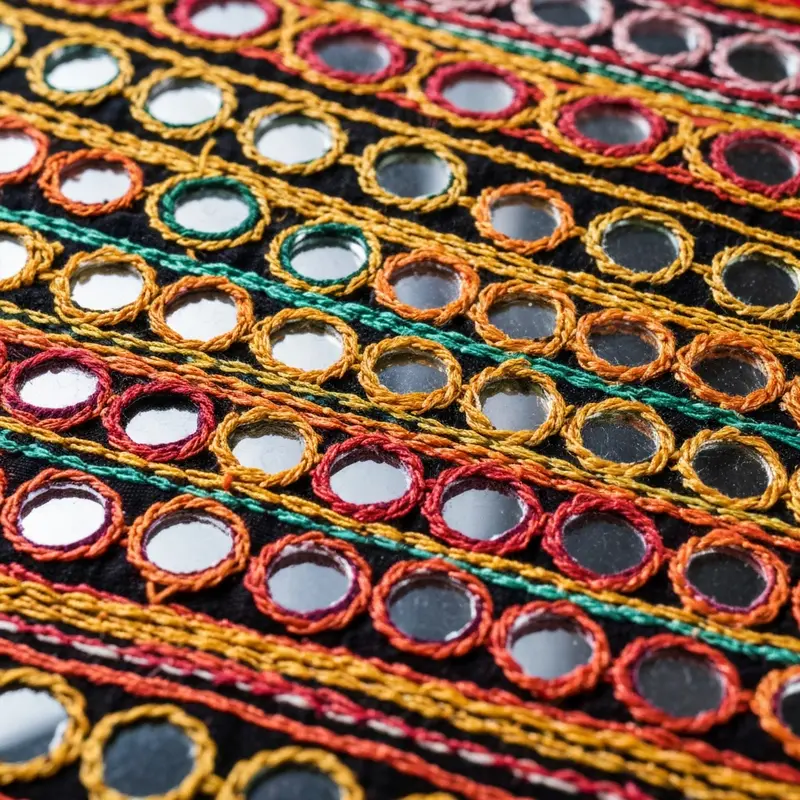
Mirror work has roots tracing to Persia and Afghanistan, brought to the Indian subcontinent through centuries of trade and migration. In Gujarat's Kutch region, different communities — Rabari, Ahir, Mutwa, Sindhi Memon — each developed distinctive mirror work vocabulary with different stitch frameworks, mirror sizes, and surrounding embroidery patterns. The mirrors in historical pieces were actually mica (abundant in the region), replaced by glass mirrors as trade networks expanded.
The 2001 Bhuj earthquake nearly destroyed Kutch's craft communities, but the extraordinary revival that followed — supported by NGOs, craft organisations like Khamir and Shrujan, and growing fashion industry attention — made Kutch mirror work internationally celebrated. Today Kutch has GI certification for several of its embroidery traditions, and Kutch artisans sell directly to global fashion brands. Mirror work has also spread commercially to mass market production in Rajasthan, Jaipur, and Mumbai factories.
How to Identify Authentic Mirror Work
- Mirror securing — genuine hand shisha work has a visible embroidery framework holding each mirror (chain stitch or buttonhole stitch ring around each piece); glued mirrors have no stitching
- Mirror quality — traditional work uses small, imperfect hand-cut mica or glass pieces with irregular edges; commercial mirror work uses perfectly round, machine-cut acrylic discs
- Pull test — tug gently on a mirror edge; hand-stitched mirrors resist firmly; glued mirrors can be peeled
- Surrounding embroidery — authentic regional mirror work has high-quality accompanying embroidery in the regional style (Rabari chain stitch, Mutwa satin stitch); cheap commercial versions have minimal or machine-embroidered surrounds
- Reflectivity — real glass mirrors give clear, sharp reflections; plastic 'mirrors' give hazy, coloured reflections
Types & Varieties
| Type | Characteristic | Price Range | Best For |
|---|---|---|---|
| Kutch shisha | Regional Kutch embroidery with small mica/glass mirrors in complex frameworks | Rs 2,500–15,000 | Collector pieces, significant occasions |
| Rajasthani mirror work | Larger mirrors with colourful thread surrounds, bold aesthetic | Rs 800–6,000 | Festive wear, Navratri, Diwali |
| Commercial mirror work | Machine-cut acrylic mirrors glued or minimally stitched, mass market | Rs 600–2,500 | Casual festive, daily occasion wear |
| Mirror dupatta | Georgette or cotton dupatta with mirror work panels | Rs 600–4,000 | Layering over plain suits for instant festive look |
Best Brands
Shrujan (Kutch NGO) produces exquisite authentic Kutch embroidery including mirror work at premium but fair artisan prices — buying here directly supports the craft communities. Khamir and Qasab (Kutch-based organisations) also offer certified authentic pieces. For commercial but well-made mirror work kurtis, Biba, Meena Bazaar, and various Rajasthani brands offer good value. Fabindia's mirror work range is consistently reliable for mid-market quality.
 COD Available
biba
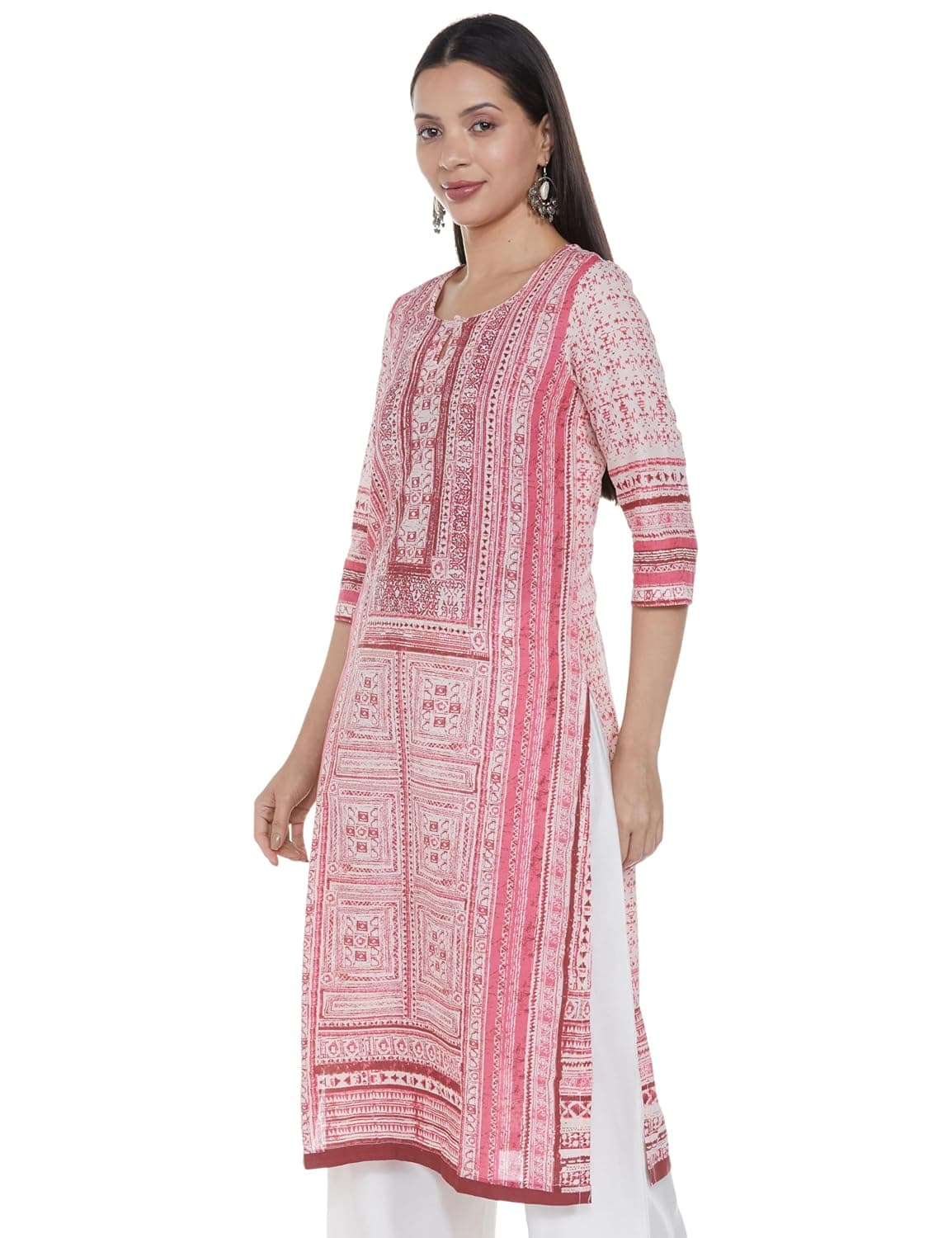
BIBA Women's Cotton Straight Printed Kurta
 COD Available
biba
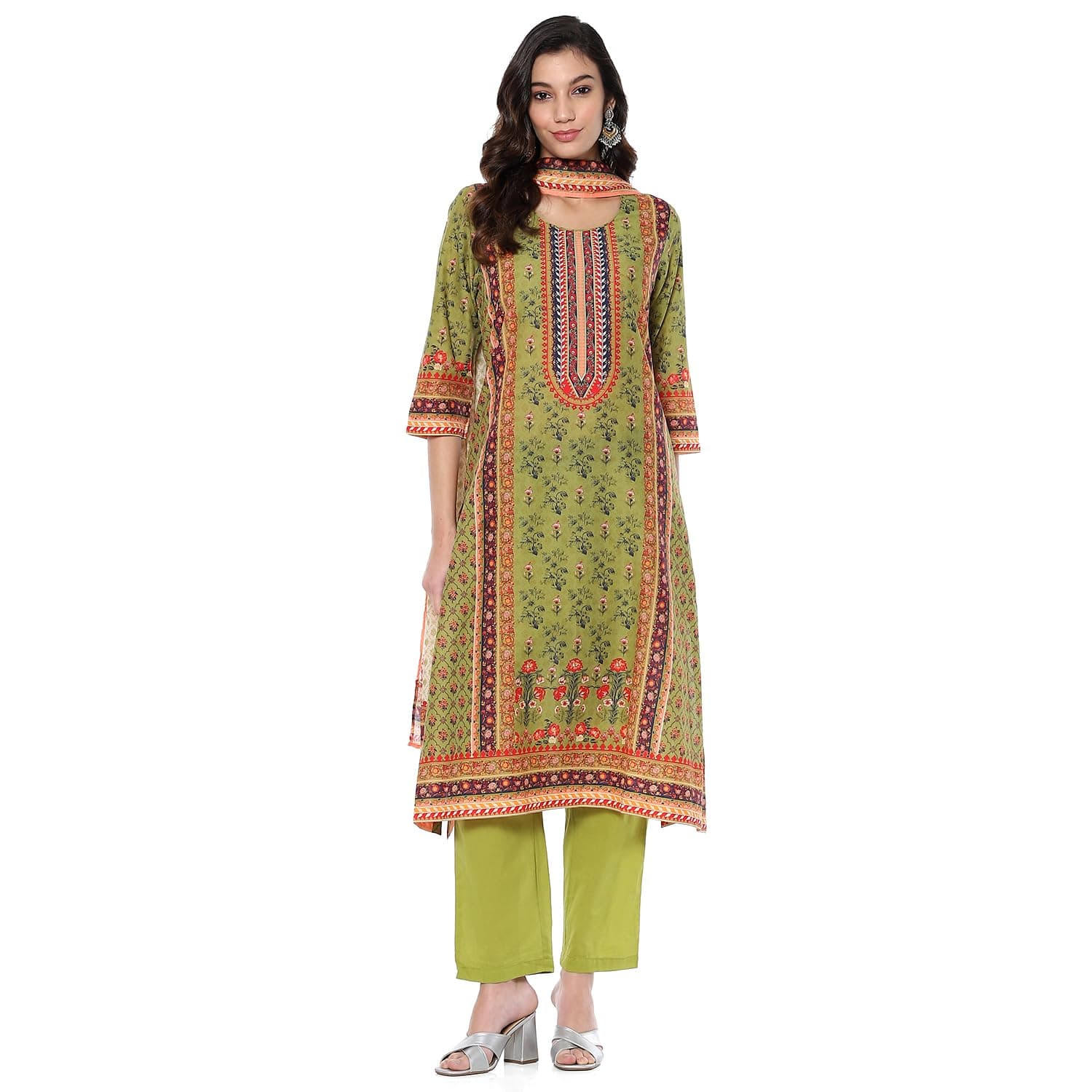
BIBA Women's Cotton Printed Kurta Set with Dupatta
 COD Available
libas
Libas Women's Embroidered Cotton Straight Kurta with Palazzos & Dupatta
 COD Available
libas
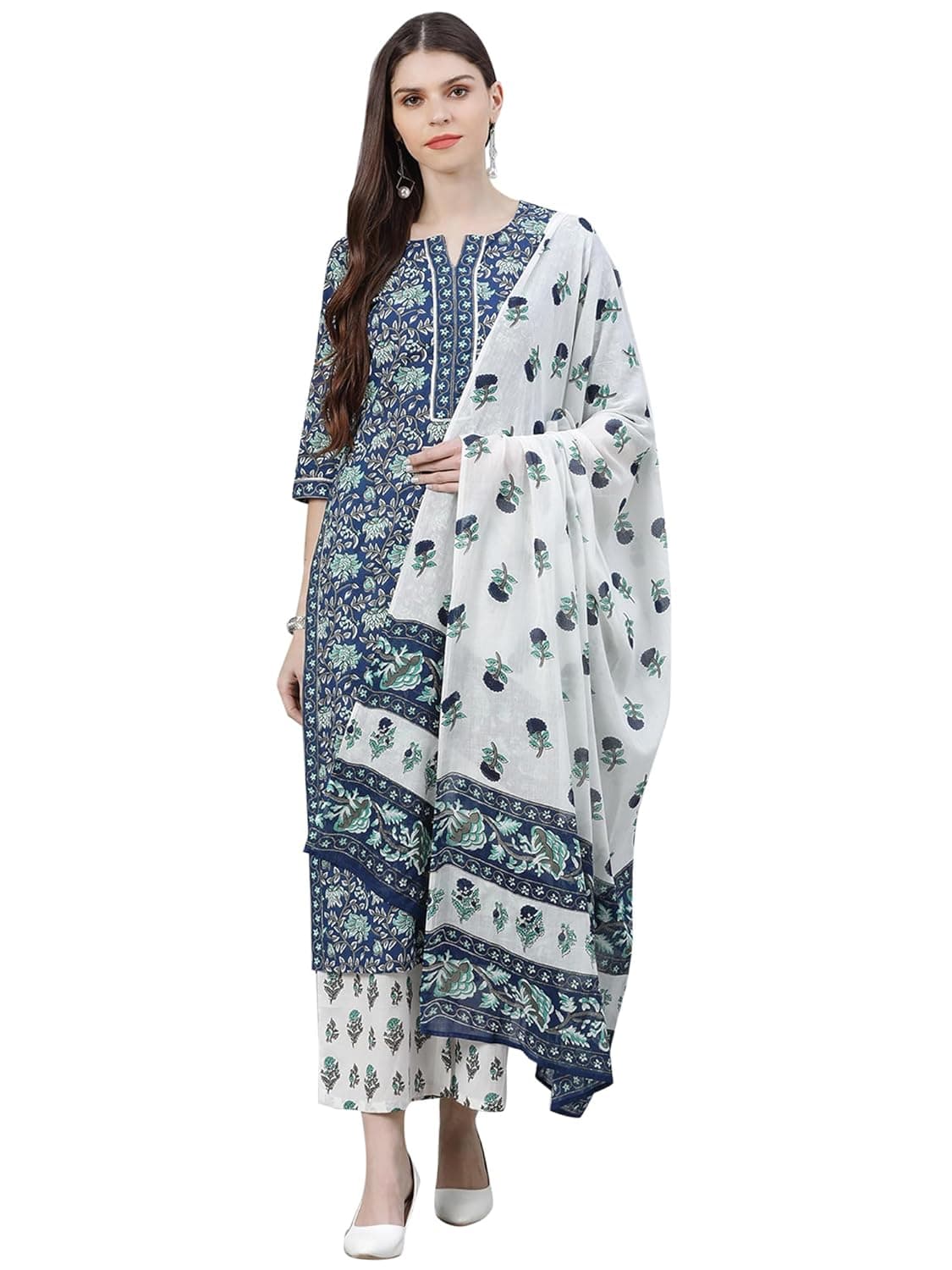
Libas Women's Cotton Printed Kurta Set Multicoloured
COD Availablelibas
Libas Printed Silk Blend Round Neck Kurta Pant Set Pink
 COD Available
m.r.p:
Women’s Kurta Set with Dupatta | 3 Piece Kurta Pant Set for Women | Ethnic Printed Kurta Suit | Cotton Blend Traditional Kurta Set | Festive, Casual
Price Guide
| Tier | Price Range | What You Get |
|---|---|---|
| Commercial | Rs 600–2,000 | Acrylic or glued mirrors, mass market, acceptable for casual wear |
| Quality handwork | Rs 2,000–6,000 | Hand-stitched mirrors, genuine regional embroidery |
| Authentic Kutch | Rs 6,000–15,000+ | Certified Kutch artisan work, heritage quality, real glass/mica |
Care & Maintenance
- Hand wash gently or dry clean — mirrors can crack under machine washing pressure and agitation
- Do not wring or twist — the stitching holding mirrors can loosen under stress
- Lay flat to dry — hanging heavy mirror-work garments stresses the fabric around mirror attachments
- Iron only around mirror areas, never directly on them — heat can crack glass mirrors or melt acrylic
- Store in a padded bag or wrapped in cotton — protect from compression that can crack mirrors
Styling Tips
Mirror work dazzles in motion and in candlelight or festive lighting — it was designed for exactly these conditions. A mirror work kurta or lehenga needs nothing else — no necklace, no sequin dupatta, no competing embellishment. Let the mirrors speak. For Navratri dandiya, a brightly coloured mirror work chaniya choli is the canonical look. For everyday fusion, a single mirror work jacket over a plain kurta and jeans makes an instant statement.
OUR VERDICT
Mirror work is one of those embroideries that stops people mid-sentence because of how it catches light. Authentic Kutch shisha work especially is a genuine art tradition where every stitch decision belongs to a specific community's vocabulary. Even if you only ever buy one mirror-work piece, make it authentic — the difference between a hand-stitched Kutch piece and a factory-glued commercial one is night and day in longevity, beauty, and craft respect.