
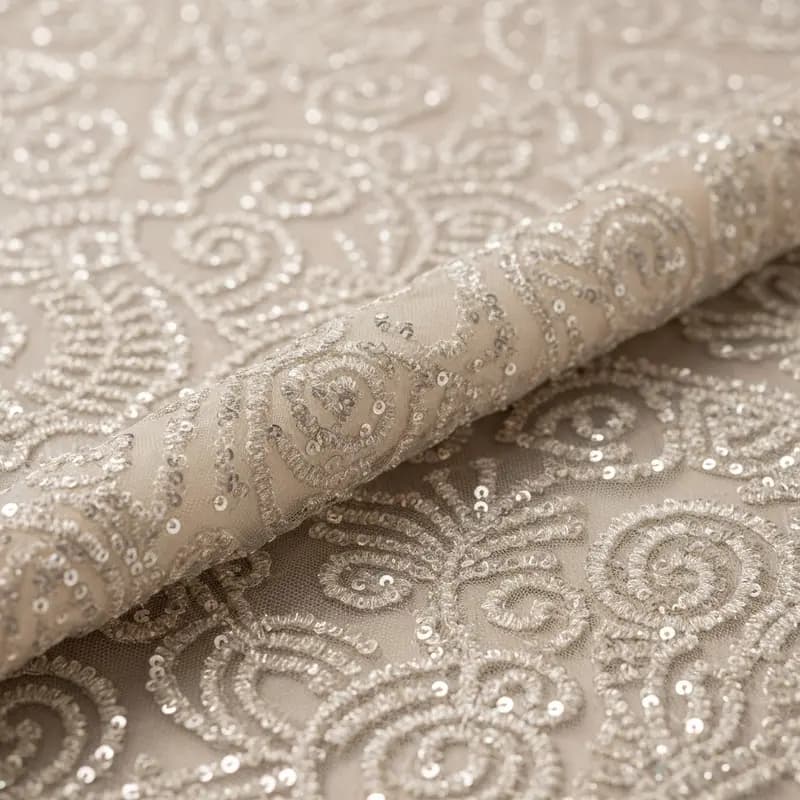
History & Origin
Tulle takes its name from the French city of Tulle, where fine silk net fabric was produced by hand from the 18th century. It entered the global fashion lexicon through European ballet and bridal wear. Net fabric as a broader category has older origins in lace-making traditions across Europe and Asia. In India, net fabric entered the mainstream textile market through the British colonial period and has since been thoroughly domesticated — Indian mills produce massive quantities of nylon and polyester net primarily for the bridal and party wear markets.
The Indian bridal industry's love affair with net is linked to embellishment: the open-mesh structure of net fabric is an ideal base for heavy embroidery, sequin work, stone setting, and zardozi. The net acts as a scaffold for these embellishments, holding them securely while the open weave keeps the overall garment lighter than a solid fabric base would be. Designer bridal lehengas in the Rs 1 lakh+ range very commonly use net as the primary or underlayer fabric.
How to Identify Authentic / Quality Net or Tulle
- Check the mesh consistency — quality net has uniform, regular hexagonal or diamond-shaped holes throughout the fabric; cheap net has irregular mesh with varying hole sizes
- Feel the edge — quality net cuts cleanly without immediate fraying; very cheap nylon net starts to ladder or run at the cut edge almost immediately
- Assess the weight — for a given embellishment load, quality net is consistently heavier due to better fibre density; very lightweight, almost weightless net will not support heavy embroidery well
- Check for colour evenness — quality net is uniformly dyed throughout; cheaper net may show patchy or uneven colour, especially in darker shades
Types / Varieties
| Type | Characteristic | Price Range | Best For |
|---|---|---|---|
| Soft Tulle | Very fine mesh, soft hand, excellent for veils and overlays | Rs 200 – Rs 800 per metre | Bridal veils, overlay layers in lehengas |
| Bridal Net | Medium density mesh, stiff enough for embroidery, good structure | Rs 400 – Rs 2,000 per metre | Embroidered sarees and lehengas |
| Glitter Net | Metallic or glitter threads woven into net mesh | Rs 600 – Rs 3,000 per metre | Party wear, festive sarees |
| Embroidered Net | Net with pre-embroidered motifs in thread, sequins, or beads | Rs 1,500 – Rs 8,000 per metre | Bridal and premium festive wear |
Best Brands
For bridal net sarees and lehengas, premium designer labels like Sabyasachi, Manish Malhotra, and Tarun Tahiliani are known for exceptional quality and craftsmanship in embroidered net. In the accessible segment, brands like Kalki Fashion, Satrani, and various Surat-based saree brands offer good-quality net pieces at mid-range prices. For fabric yardage, Surat is the primary wholesale centre for net fabric across all grades.
 COD Available
ishin
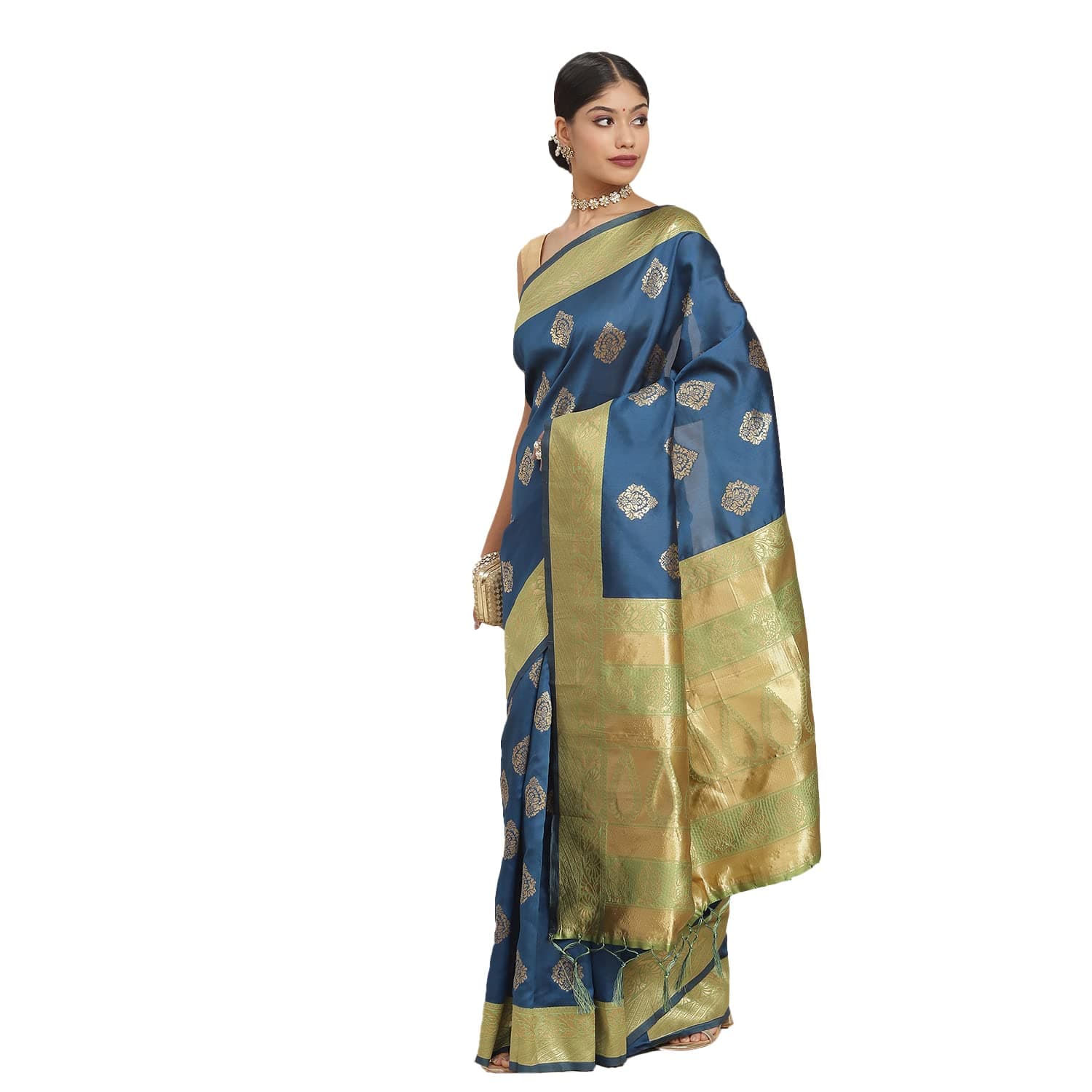
Ishin Women's Silk Blend Teal & Green Woven Design Saree with Blouse
 COD Available
ishin
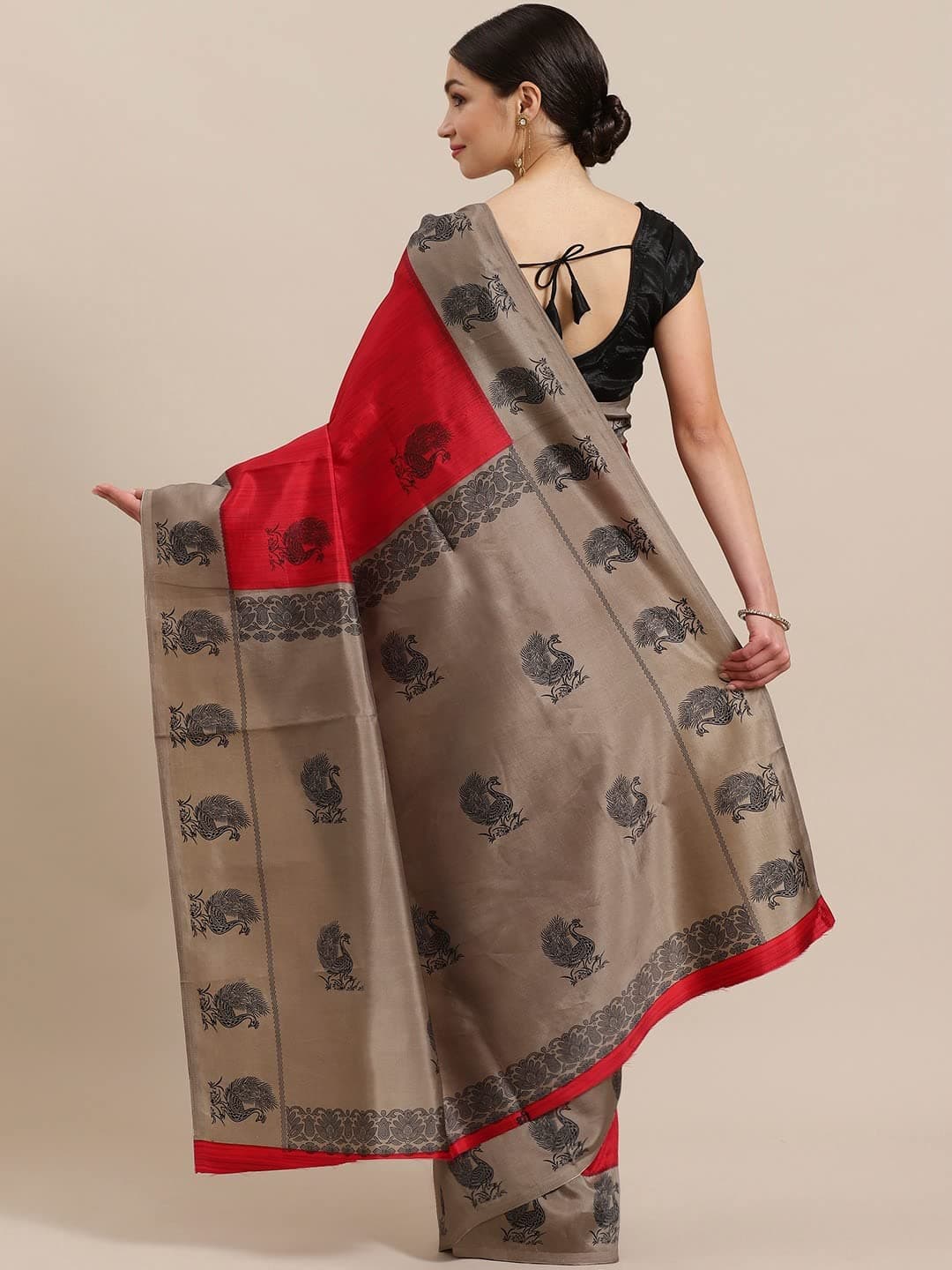
Ishin Women's Art Silk Maroon & Taupe Printed Saree
 COD Available
ishin
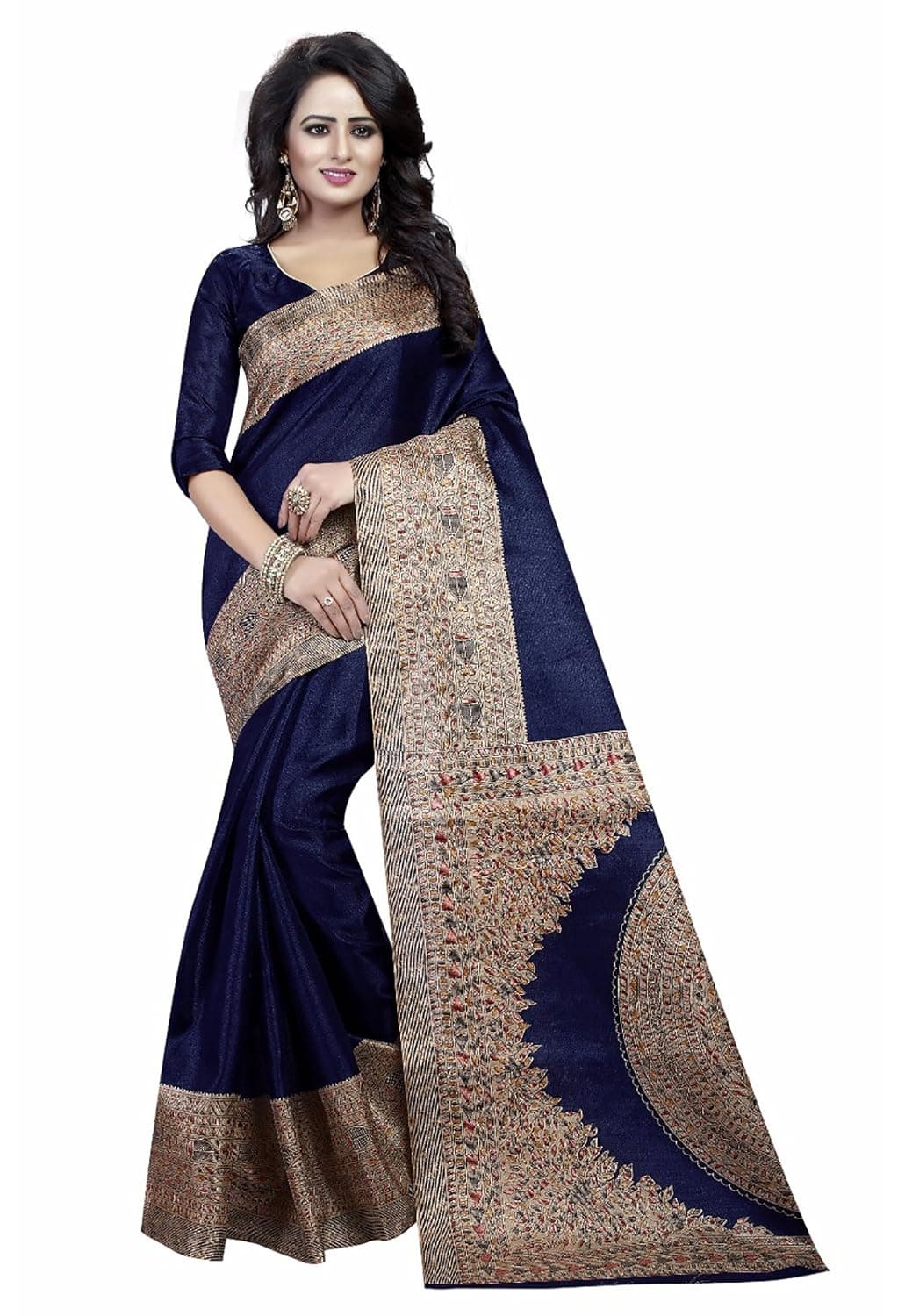
Ishin Women's Art Silk Navy Blue Saree with Blouse Piece
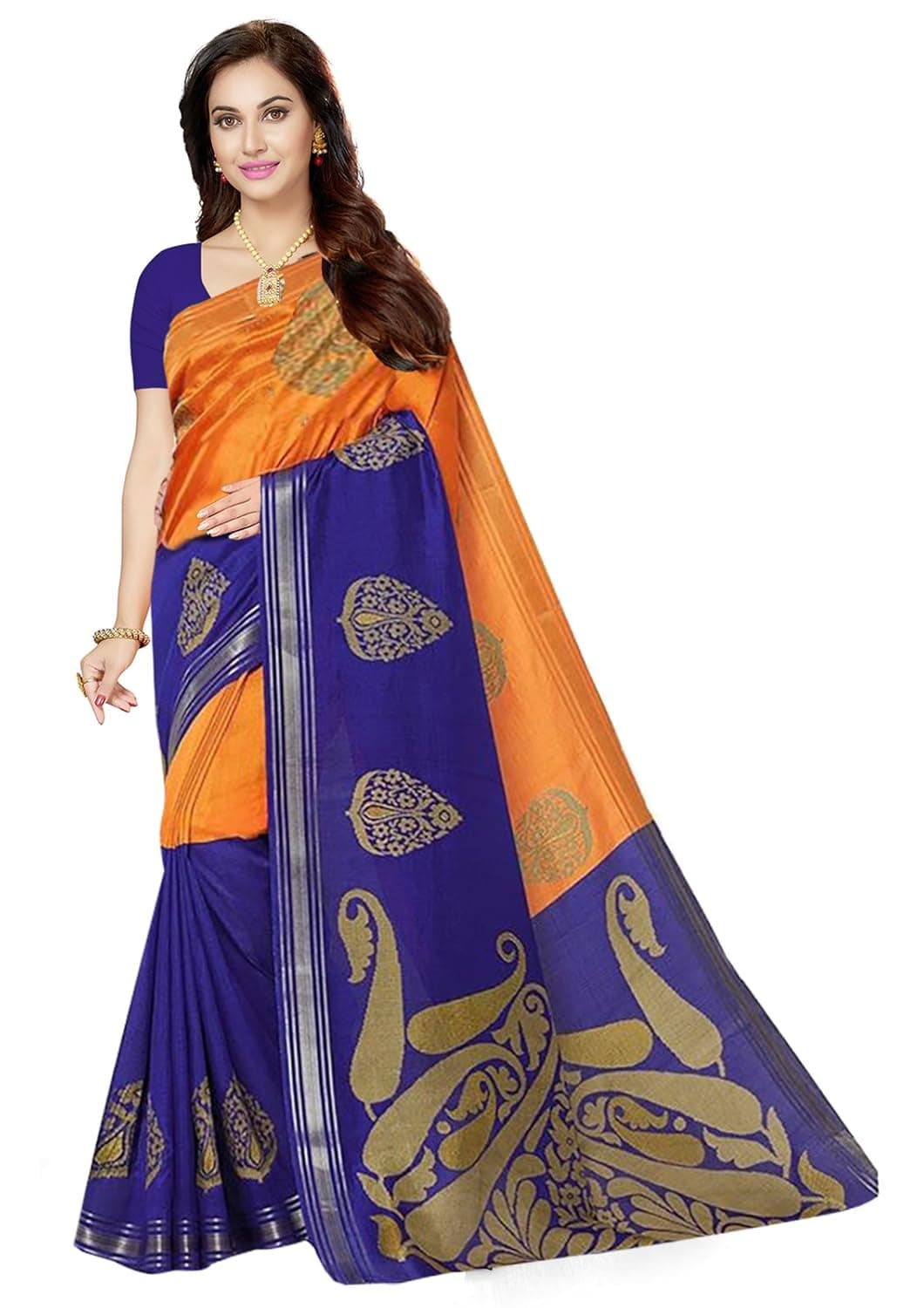 COD Available
ishin
Ishin Women's Art Silk Dark Blue & Orange Saree with Blouse
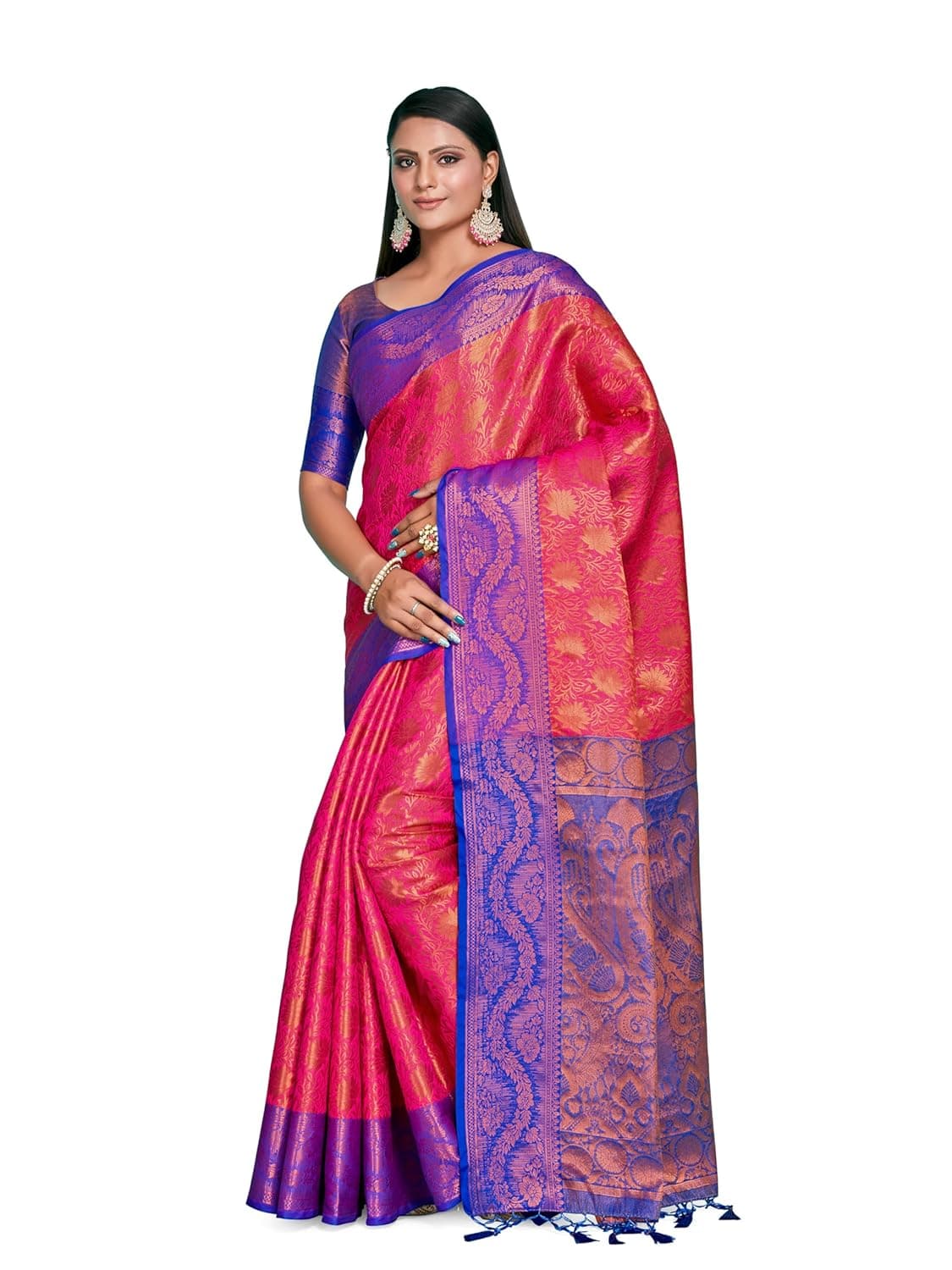 COD Available
mimosa
MIMOSA Women's Woven Design Kanjivaram Art Silk Saree Rani
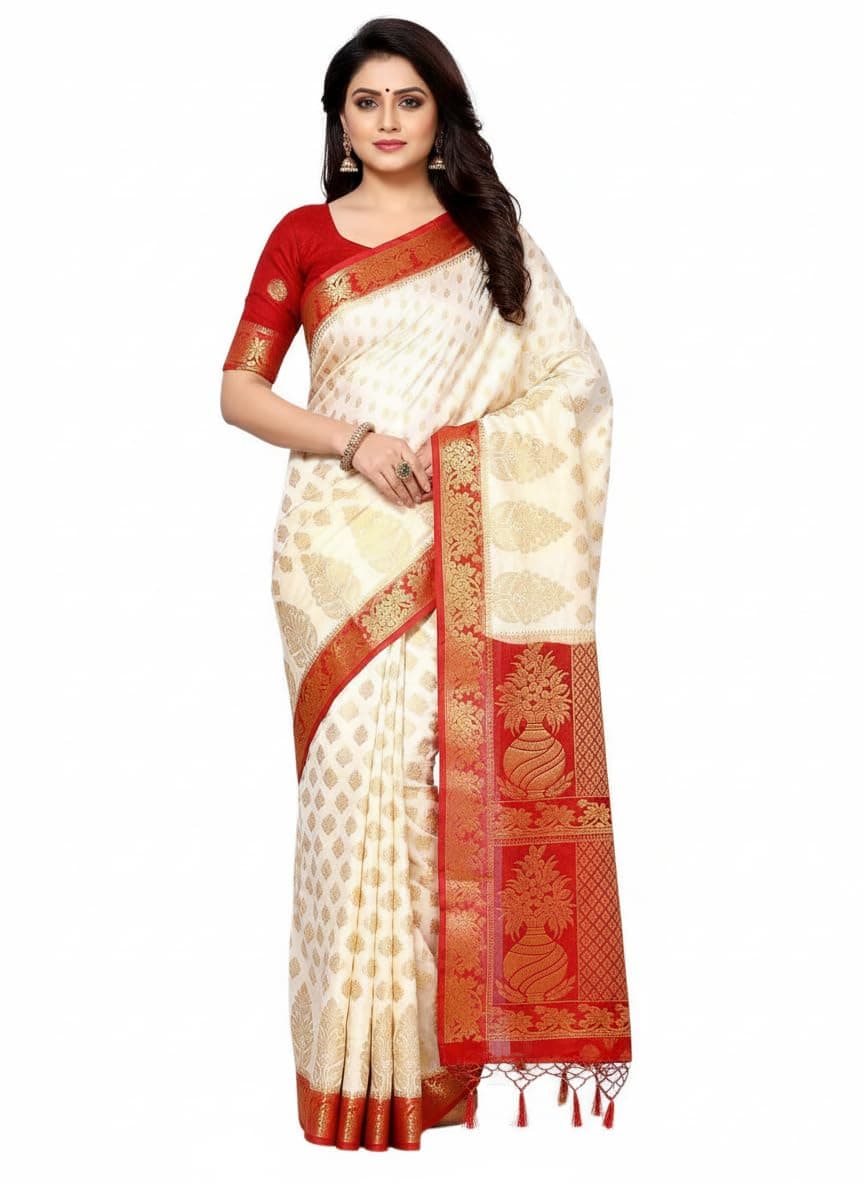 COD Available
mimosa
MIMOSA Women's Art Silk Saree Kanjivaram Style Beige
Price Guide
| Tier | Price Range | What You Get |
|---|---|---|
| Entry | Rs 200 – Rs 1,500 | Plain or glitter net saree or dupatta; festive, sparkly, suitable for one-time occasions |
| Mid | Rs 1,500 – Rs 5,000 | Embroidered net saree or lehenga; sequin or threadwork embellishment on decent quality net |
| Premium | Rs 5,000 – Rs 8,000+ | Heavy hand-embroidered or zardozi net; quality base net, dense artisanal work |
Care & Maintenance
- Hand wash or delicate machine cycle in cool water — net fabric's open mesh structure makes it vulnerable to snagging on rough surfaces or other garments in a standard wash
- Lay flat to dry rather than hanging — hanging wet net can stretch the mesh out of shape, especially softer tulle
- Store carefully to prevent snagging — keep net garments in a cotton dust bag or covered with tissue paper; loose embellishments on embroidered net can catch and pull the mesh
- Do not iron directly — use a steamer held at distance; if ironing is necessary, use lowest heat setting with a pressing cloth between iron and fabric
Styling Tips
Net's visual power lies in its ability to layer — a net saree over a contrasting lining creates a beautiful depth of colour that changes as the wearer moves. The classic styling choice for net sarees is a blouse in a contrasting colour that shows through the semi-transparent net, creating a two-tone effect. For heavily embroidered net sarees, keep jewellery moderate — the embellishments on the fabric are doing the work. For plain or lightly embellished net, statement jewellery complements the relative simplicity of the fabric base.
OUR VERDICT
Net and tulle are the unsung heroes of Indian bridal and festive fashion — they make heavy embellishment possible while keeping garments wearable, they create volume without bulk, and they layer beautifully for complex visual effects. Knowing the difference between grades of net helps you make smarter purchasing decisions, whether you're buying a Rs 500 party dupatta or a Rs 8,000 bridal saree.