
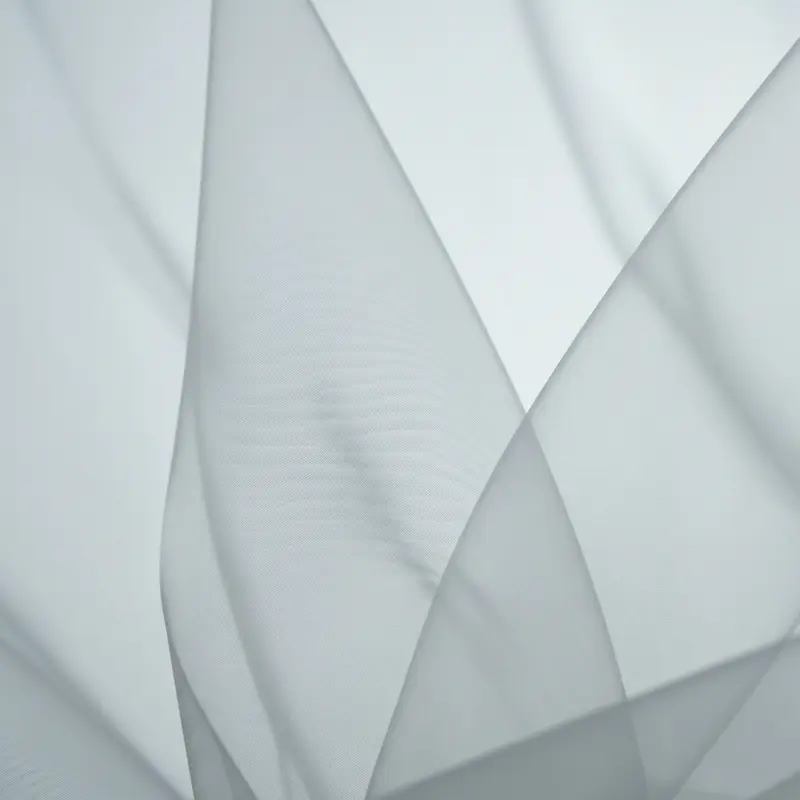
History & Origin
Organza derives its name from Urgench, a city in modern-day Uzbekistan that was historically a major silk trade centre on the Silk Road. The fabric was originally made exclusively from silk, and its production was a closely guarded craft secret for centuries. In India, organza became popular in luxury textile circles through trade, and traditional weavers in Kanjivaram and Varanasi adapted the weave structure to create distinctly Indian organza sarees — often with zari borders and embroidery that the fabric's stiffness holds perfectly.
The polyester and nylon organza revolution in the 1980s–90s made the fabric accessible to mass markets. Today, India is both a significant producer and consumer of all grades of organza. Banarasi organza — woven in Varanasi with zari patterns — is particularly celebrated, as is embroidered silk organza from bridal ateliers.
How to Identify Authentic / Quality Organza
- Touch test — silk organza has a natural subtle roughness from real silk filaments; polyester organza feels slightly plasticky or unnaturally smooth; nylon organza has a slippery quality
- Hold to light — genuine organza is sheer but with a clean, even weave structure visible through the fabric; look for consistent plain weave without loose threads or irregularities
- Burn test — silk organza burns slowly to ash with a burnt-hair smell; polyester organza melts and beads; nylon burns similarly to polyester with a chemical smell
- Check stiffness consistency — quality organza holds its shape consistently across the whole cloth; cheap organza may have uneven stiffness from irregular sizing treatment
Types / Varieties
| Type | Characteristic | Price Range | Best For |
|---|---|---|---|
| Silk Organza | Natural silk filaments, warm sheen, crisp but graceful drape | Rs 1,500 – Rs 12,000 | Bridal sarees, luxury fashion |
| Polyester Organza | Affordable, colour-fast, slightly stiffer, good for embellishment | Rs 500 – Rs 2,000 | Party wear, everyday festive |
| Banarasi Organza | Organza with woven zari patterns from Varanasi artisans | Rs 3,000 – Rs 12,000 | Bridal, festive sarees |
| Embroidered Organza | Organza with thread, sequin, or hand embroidery | Rs 2,000 – Rs 12,000+ | Party wear, lehengas, special occasions |
Best Brands
For bridal organza sarees and lehengas, designer labels like Tarun Tahiliani, Manish Malhotra, and Ritu Kumar are known for exquisite silk organza pieces. In the accessible range, Satrani and BIBA carry organza-blend party sarees. For fabric yardage, Varanasi-based weavers and Surat mills supply organza across the country through wholesale and retail channels.
 COD Available
ishin
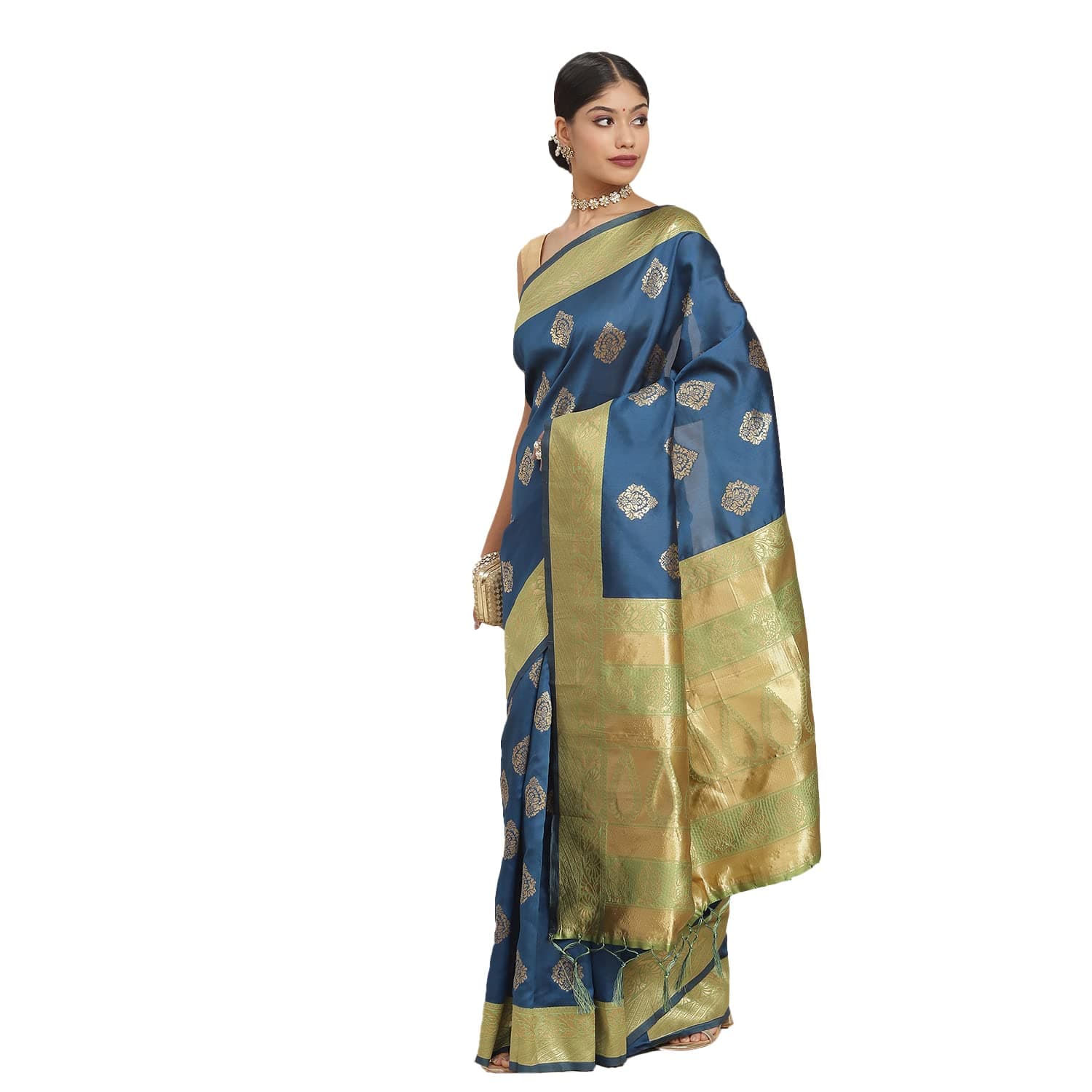
Ishin Women's Silk Blend Teal & Green Woven Design Saree with Blouse
 COD Available
ishin
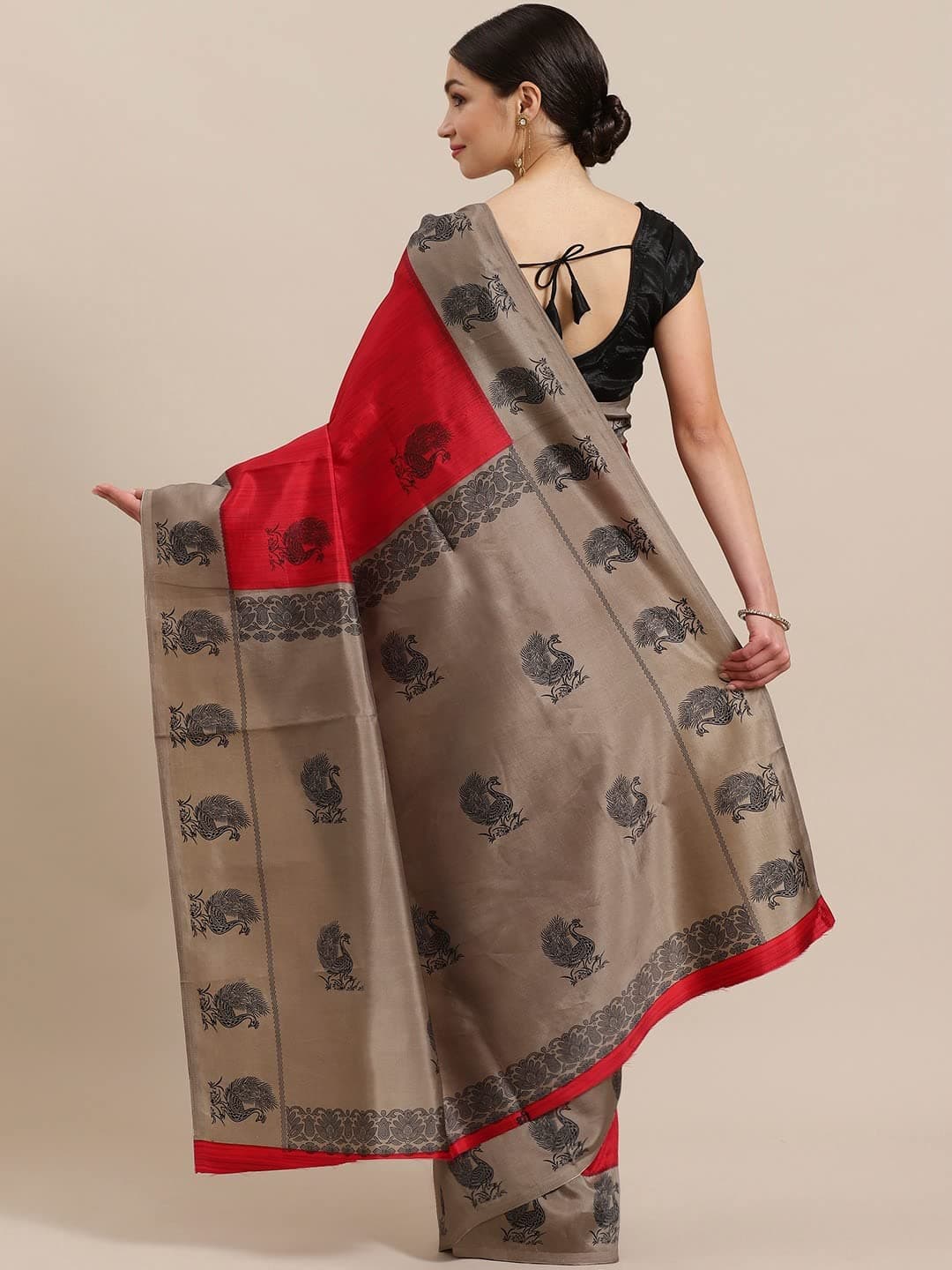
Ishin Women's Art Silk Maroon & Taupe Printed Saree
 COD Available
ishin
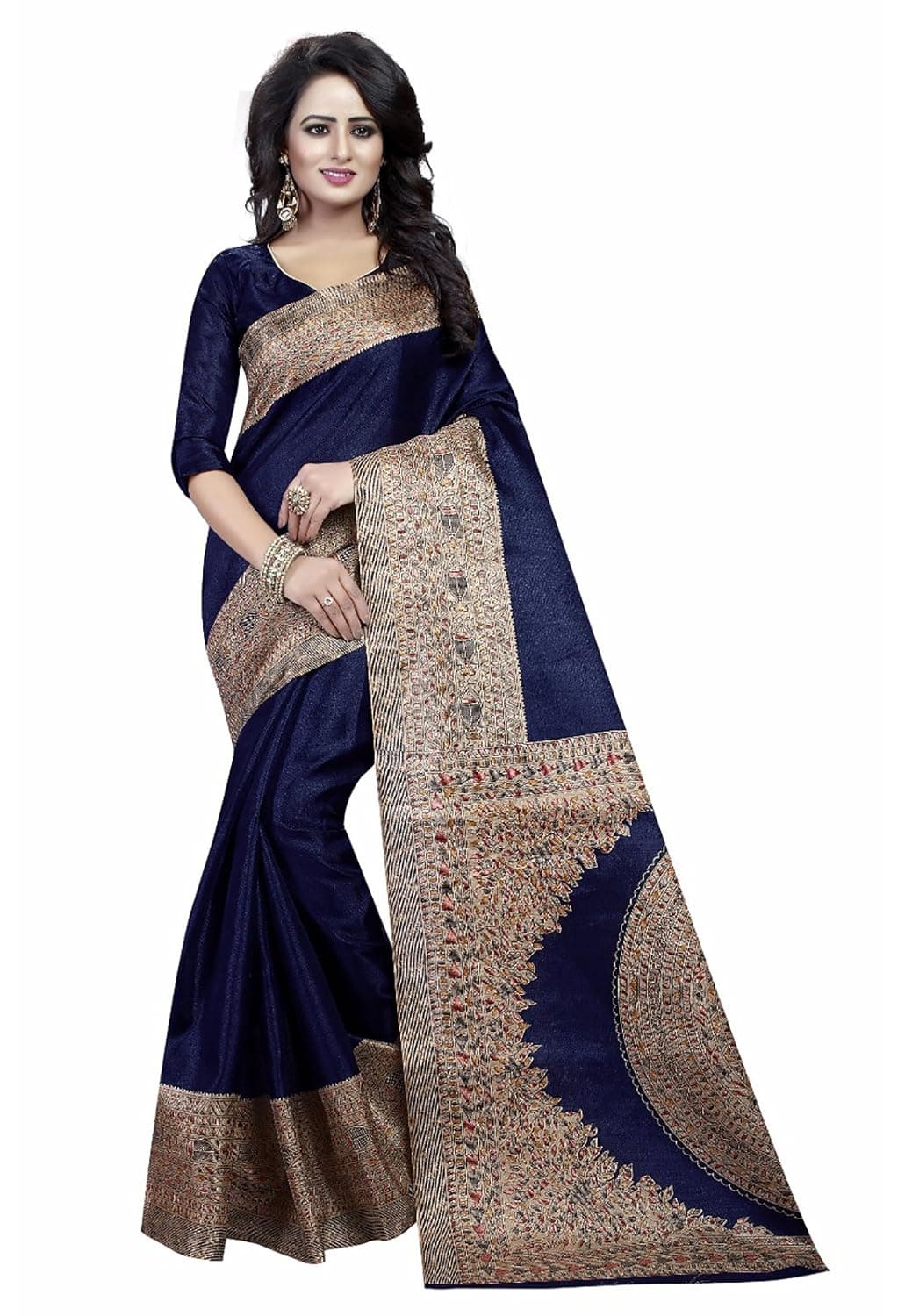
Ishin Women's Art Silk Navy Blue Saree with Blouse Piece
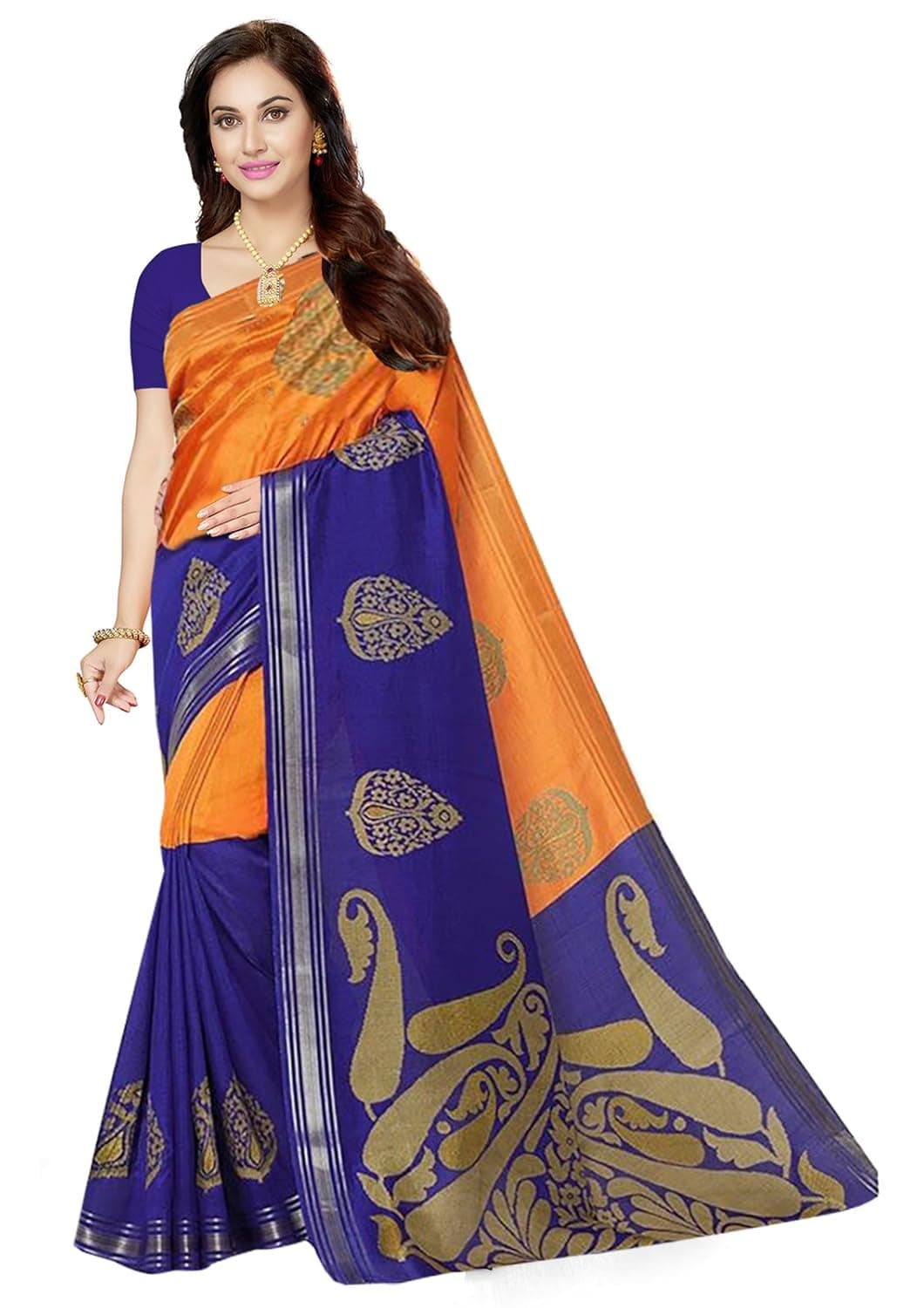 COD Available
ishin
Ishin Women's Art Silk Dark Blue & Orange Saree with Blouse
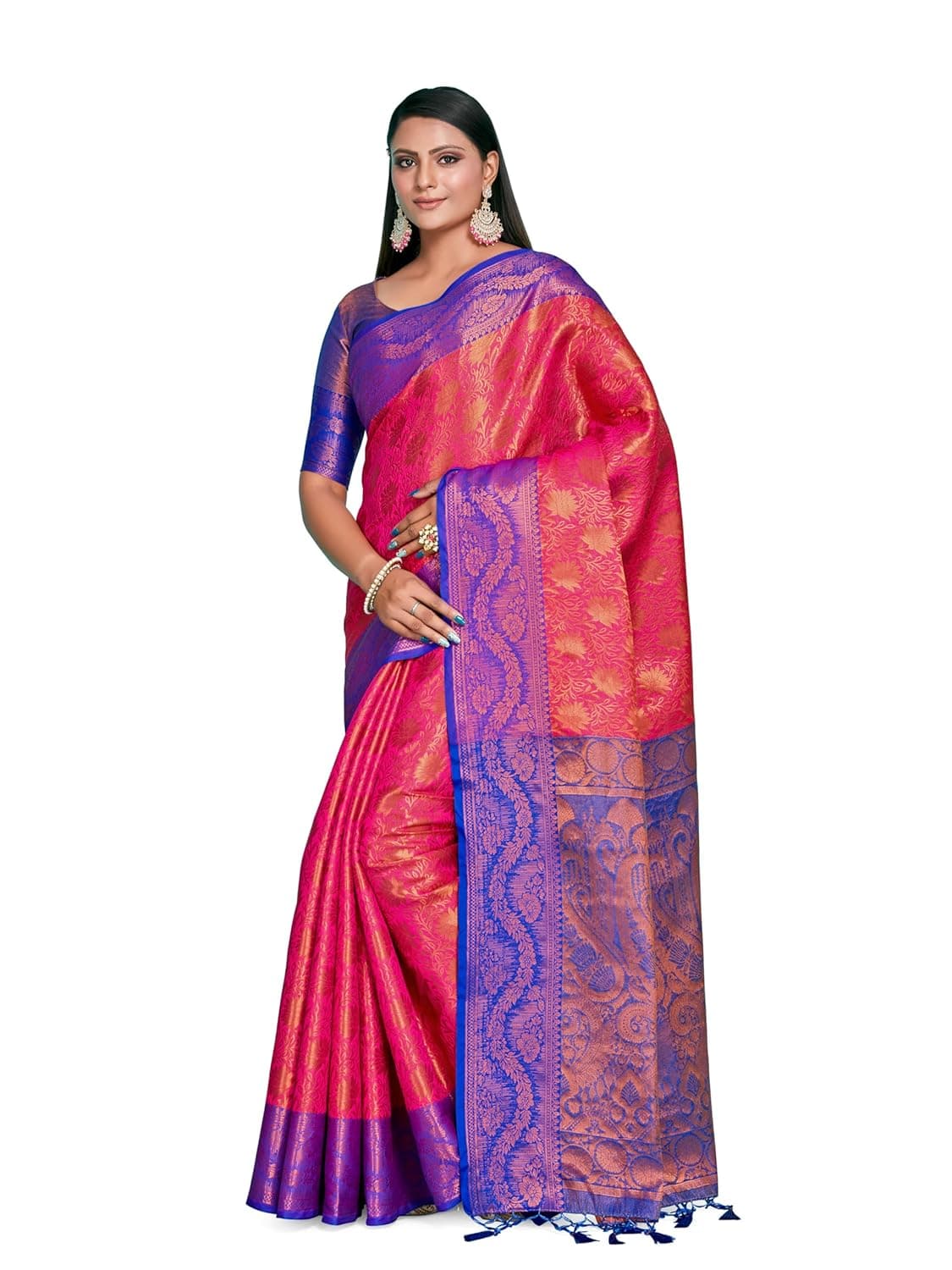 COD Available
mimosa
MIMOSA Women's Woven Design Kanjivaram Art Silk Saree Rani
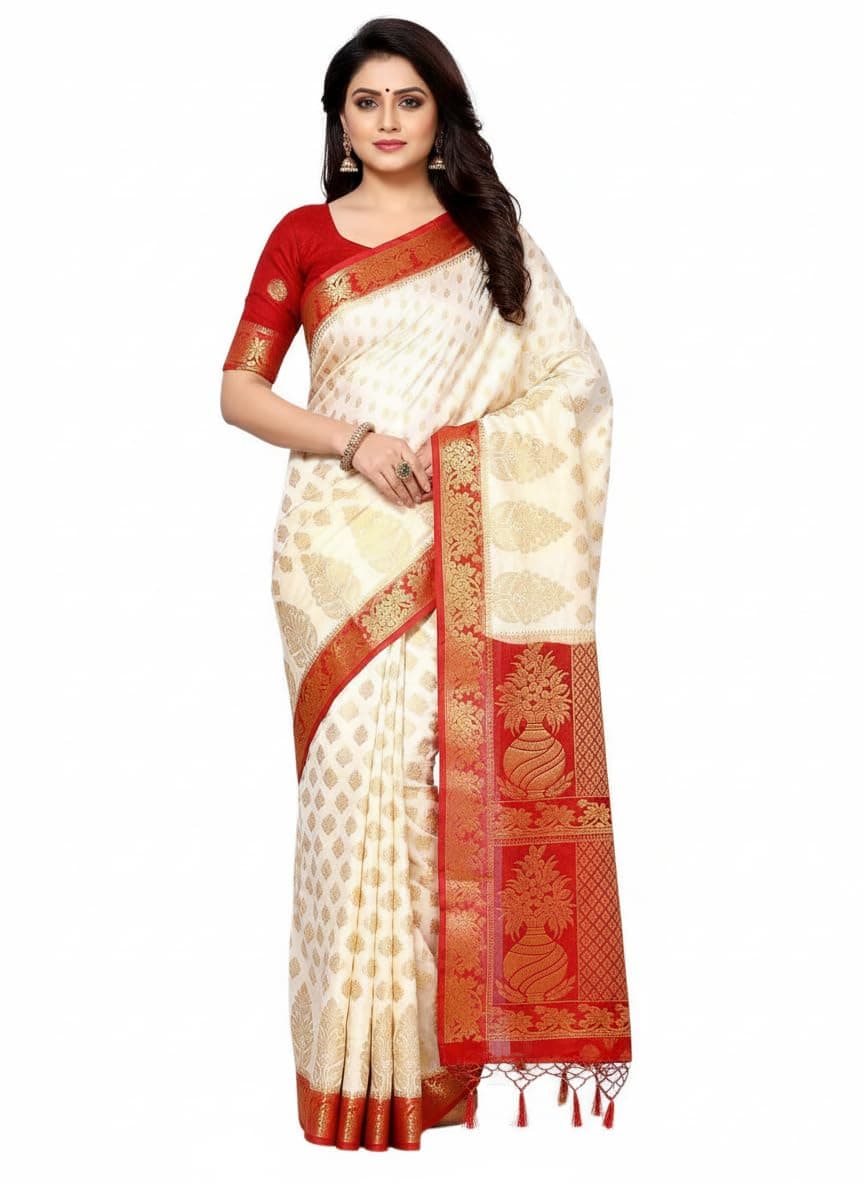 COD Available
mimosa
MIMOSA Women's Art Silk Saree Kanjivaram Style Beige
Price Guide
| Tier | Price Range | What You Get |
|---|---|---|
| Entry | Rs 500 – Rs 2,500 | Polyester or nylon organza saree; good structure, limited breathability |
| Mid | Rs 2,500 – Rs 6,000 | Silk-polyester blend organza or Banarasi organza; better drape and sheen |
| Premium | Rs 6,000 – Rs 12,000+ | Pure silk organza, Banarasi handloom organza, or heavily embellished organza pieces |
Care & Maintenance
- Silk organza should only be dry cleaned — hand washing can alter the sizing treatment that gives organza its characteristic crispness and the silk filaments are delicate when wet
- Polyester organza can be gently hand washed in cool water, but reshape immediately after washing to maintain its structure
- Store hanging or loosely rolled — folding organza creates sharp creases that can permanently mark the fabric
- Iron on low heat using a pressing cloth between iron and fabric — organza, especially the synthetic varieties, can scorch easily; always test on a hidden area first
Styling Tips
Organza's structural quality makes it the fabric of drama — it holds volume, creates shape, and photographs beautifully. For sarees, organza works best in styles with pronounced pleating and pallu — the fabric's stiffness means pleats stay crisp all day. Organza lehenga layers create the kind of volume that chiffon or georgette cannot. For contemporary Indo-Western looks, an organza jacket or cape over a plain kurta is a high-fashion statement. Pair organza with minimalist jewellery — the fabric itself is statement enough.
OUR VERDICT
Organza is the architect's choice of fabrics — it holds shape, takes embellishment beautifully, and photographs like a dream. For weddings and major festive occasions, a silk organza saree or lehenga is an investment in looking extraordinary. For everyday accessible festive wear, polyester organza delivers the structural look at a budget. Either way, organza earns its premium reputation in Indian ethnic fashion.